

You already know your fit is fire. The real challenge is capturing it in a way that hits as hard on screen as it does in person. To photograph streetwear outfits content that actually resonates, you need more than a decent phone and a brick wall. Street style outfit photography, the practice of documenting fashion in real urban environments, demands intention: the right gear, the right light, the right location, and the creative instincts to pull it all together. This guide covers every layer of that process, from prep to post-edit, so your images say exactly what your style does.
Table of Contents
- Key Takeaways
- How to photograph streetwear outfits content: gear and prep
- Choosing locations and timing for authentic shots
- Step-by-step guide to shooting on location
- Post-shoot editing and content presentation
- Legal and ethical considerations you cannot ignore
- My honest take on streetwear photography
- Gear up your next shoot with Anarxhy
- FAQ
Key Takeaways
| Point | Details |
|---|---|
| Gear doesn’t have to be expensive | Modern phone cameras with pro controls can produce premium streetwear content when used with intention. |
| Location shapes the story | Urban, gritty backdrops amplify streetwear energy far more than neutral or generic settings. |
| Golden hour is your best friend | Warm directional light during golden hour enhances textures and skin tones in outfit photography. |
| Ethics matter as much as aesthetics | Consent and model releases protect you legally and make your subjects trust you more. |
| Editing should serve the vibe | Consistent presets and cohesive cropping create a recognizable visual identity across your content. |
How to photograph streetwear outfits content: gear and prep
Before you ever step outside, your setup determines your ceiling. The good news is that phone cameras with 200MP sensors and built-in video stabilization now produce results that rival entry-level DSLRs. You do not need to spend thousands to create compelling streetwear imagery. What you do need is consistency and control.
If you are shooting with a dedicated camera, prime lenses at 28mm or 35mm are the go-to choice for streetwear photography. They keep you physically close to your subject, which adds honesty and context to the frame. Telephoto lenses create distance, both literally and emotionally, and that works against the raw energy streetwear photography demands.
Here is a quick prep checklist before any urban fashion shoot:
- Camera or phone: Set to manual or pro mode for full control over exposure and white balance
- Lens choice: 28mm or 35mm prime for intimacy; avoid zooms unless shooting from a distance for environmental context
- Battery and storage: Bring a backup battery and at least 64GB of memory
- Outfit planning: Coordinate with your subject ahead of time so colors and textures complement the planned backdrop
- Location scouted: Know your spots before the shoot, not during it
Pro Tip: If you are shooting on a phone, download a manual camera app that lets you lock focus and exposure separately. This single adjustment transforms phone footage from snapshot quality to intentional content.
| Tool | Best use | Budget level |
|---|---|---|
| 35mm prime lens | Intimate outfit portraits | Mid to high |
| Phone with pro mode | On-the-go content creation | Low to mid |
| Reflector (collapsible) | Fill shadows in harsh midday light | Low |
| Tripod or gorilla pod | Steady shots without a second person | Low |
Choosing locations and timing for authentic shots
Location is not background. It is character. Gritty urban backdrops and high-energy cityscapes communicate the streetwear ethos in a way that a clean studio wall never could. Cracked concrete, rusted metal shutters, layered graffiti, and brutalist architecture all carry visual weight that amplifies the outfit rather than competing with it.
The timing of your shoot changes everything about the mood. Golden hour light creates warm, directional illumination that wraps around textures and skin tones naturally. It is the difference between a photo that looks alive and one that looks flat. Blue hour, the 20 minutes after sunset, gives you a cooler, more cinematic atmosphere that works especially well for darker, more dystopian aesthetics.
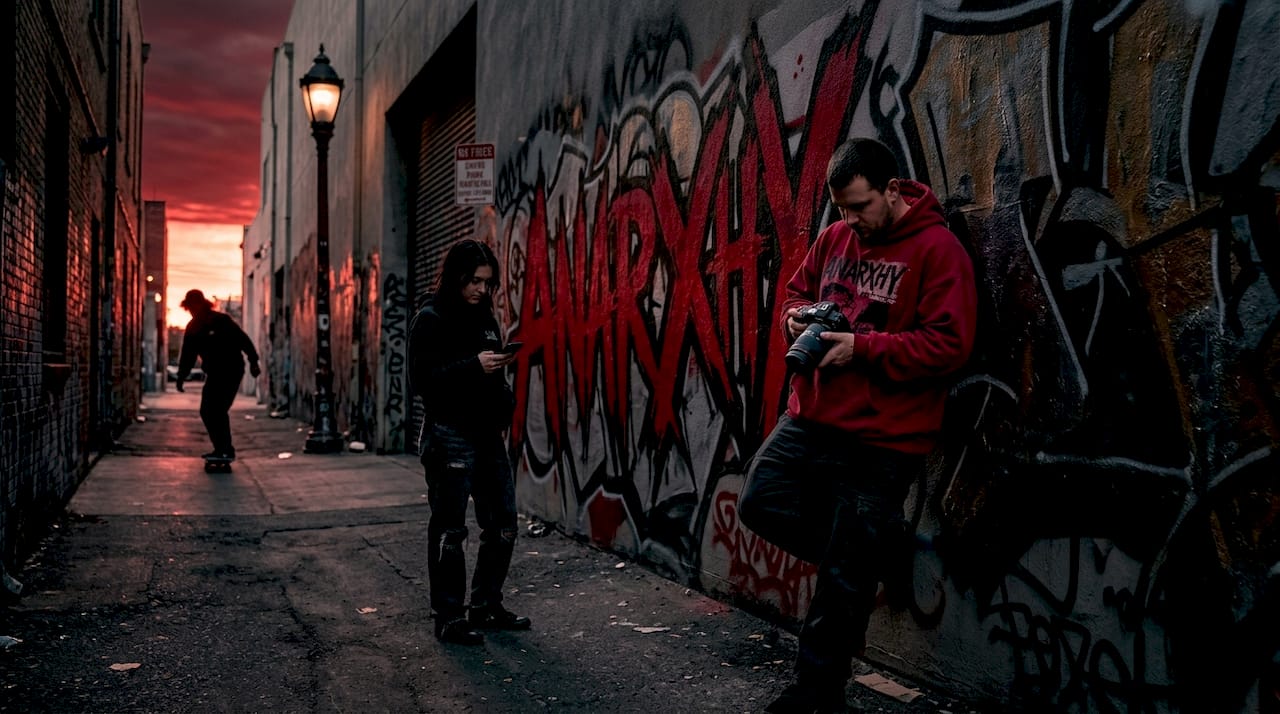
Midday harsh light is not automatically bad. Direct overhead sun creates sharp shadows that can add drama to angular silhouettes and graphic prints. The key is to position your subject so the light defines the outfit rather than washing it out.
Location scouting tips that actually work:
- Walk the neighborhood before the shoot and photograph potential spots with your phone
- Look for walls with texture, not just color. Peeling paint and raw concrete photograph better than smooth painted surfaces
- Check how light hits the location at your planned shoot time. A spot that looks great at noon can be completely in shadow by 4pm
- Avoid locations that are obviously overused. If you have seen it in ten other people’s content, your audience has too
- Industrial zones, parking structures, underpasses, and rooftops offer angles most photographers skip
Pro Tip: Arrive at your location 30 minutes before your subject. Walk the space, test a few angles, and identify your two or three strongest setups. You will shoot with far more confidence and waste less of your subject’s time.
Step-by-step guide to shooting on location
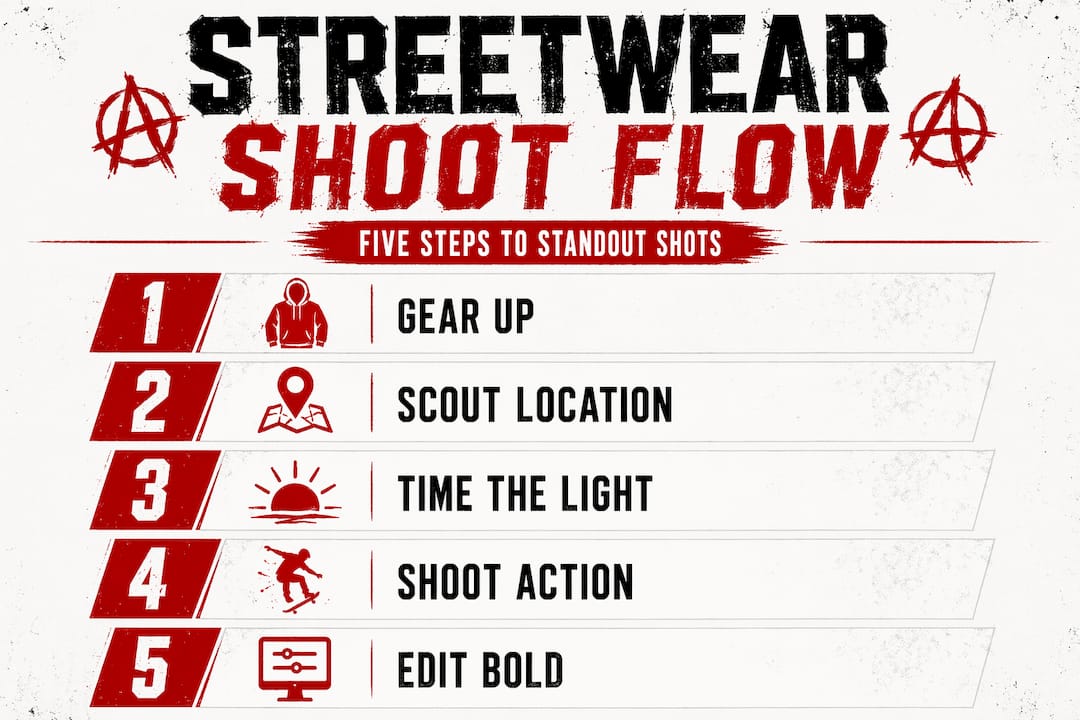
This is where preparation meets execution. Follow these steps to make the most of your time on location.
- Set your intentions before you shoot. Decide whether you are going for candid energy or posed editorial looks. Each requires a different mindset and approach from your subject.
- Get consent when it matters. For posed shots, always communicate clearly with your subject about how the images will be used. For candid street shots, public place photography is generally lawful for personal or editorial use, but commercial use changes the equation entirely.
- Nail your composition first. Frame the shot before your subject steps in. Use leading lines in the environment, doorways, sidewalks, and architectural edges, to draw the eye toward the outfit.
- Shoot full-body and detail shots. A complete outfit image establishes context. Close-up shots of logos, textures, and accessories tell the deeper story of the look.
- Capture movement. Ask your subject to walk toward you, turn, or look away. The decisive moment, that split second of natural movement, creates energy that static poses cannot replicate.
- Bracket your shots. Shoot the same setup at slightly different exposures and angles. You will have options in editing and you will catch moments you did not plan for.
- Review on location. Quickly check a few shots on your screen before moving to the next setup. Catching a focus issue or an unwanted element in the background saves you from discovering it after the shoot.
| Approach | Pros | Cons |
|---|---|---|
| Candid | Raw energy, natural expressions | Ethical and legal complexity for commercial use |
| Posed | Controlled composition, easier consent | Can feel stiff if subject is not comfortable |
| Directed candid | Best of both worlds | Requires strong communication with subject |
Pro Tip: Shoot in bursts during movement sequences. The best frame is rarely the first or last one. It is usually the third or fourth, when the subject has relaxed into the motion.
Post-shoot editing and content presentation
Great editing does not mean heavy editing. The goal is to reinforce the mood you captured on location, not to create a mood that was not there. Cohesive outfit storytelling that aligns apparel style with lighting and energy is what separates a strong lookbook from a random collection of photos.
Start with these basic adjustments before reaching for filters:
- Exposure and contrast: Bring up shadows slightly to reveal texture in darker fabrics. Increase contrast to add punch without blowing out highlights
- Color grading: Streetwear often looks strongest with slightly desaturated tones and lifted blacks, giving that raw, film-like quality
- Sharpening: Apply sharpening selectively to fabric textures and graphic elements. Avoid over-sharpening skin
- Cropping: For Instagram, shoot slightly wider than you need so you have flexibility in cropping for both square and portrait formats
Editing do’s and don’ts for streetwear content:
- Do use a consistent preset or color grade across a series of images to build a recognizable visual identity
- Do tell a story through sequencing. Lead with a strong full-body shot, follow with detail shots, and close with an environmental image
- Don’t over-smooth skin or remove natural imperfections. Authenticity is the entire point
- Don’t use filters that clash with the outfit’s color palette. A warm orange filter on a cool-toned monochrome look creates visual noise
- Don’t crop so tight that the environment disappears entirely. Context is part of the story
Legal and ethical considerations you cannot ignore
The ethical question in streetwear photography goes deeper than legality. As one perspective in the field puts it, the real question is not “can I photograph?” but “should I?” That distinction matters because how you treat your subjects shapes the authenticity of your work and your reputation as a photographer.
For commercial use, the rules are clear. Model releases are required when identifiable people appear in photos used for advertising, promotion, or licensing. This applies even to partial body shots if the person can be identified by other means. Many platforms and stock agencies require model releases for commercial licensing as a baseline condition.
Respecting your subject is not just the ethical choice. It is the creative one. People who trust you give you better photos.
For candid shoots in public spaces, personal and editorial use is generally protected. But the moment you monetize that content or attach it to a brand, the legal framework shifts. Carry a simple model release form on your phone or printed on location. If someone asks you to delete a photo, do it without argument. That moment of grace builds more goodwill than any image is worth.
My honest take on streetwear photography
I have shot streetwear in parking lots, on subway platforms, and in the kind of alleys that make your mom nervous. What I have learned is that the photographers who obsess over gear are usually the ones producing the least interesting work.
The images that have stayed with me, and the ones that got the most traction, came from moments of genuine connection with the subject and the location. I once shot an entire lookbook on a 35mm prime with a single reflector, and it outperformed a shoot I did with a full lighting kit because the subject felt comfortable enough to actually move.
My biggest shift came when I stopped treating ethics as a legal checkbox and started treating it as a creative tool. When I ask permission and explain my vision, subjects stop performing for the camera and start existing in front of it. That is the difference between a photo that looks like a photo and one that looks like a moment.
If you are just starting out, stop waiting for better gear or a better location. Shoot what you have access to, with what you have in your hands. The constraints will force you to be more creative than any budget ever could.
— Johnathan
Gear up your next shoot with Anarxhy
If the content is only as strong as the outfit, you need pieces that photograph with as much intention as they were designed with. Anarxhy builds streetwear for people who exist outside the mainstream, and that energy reads on camera.
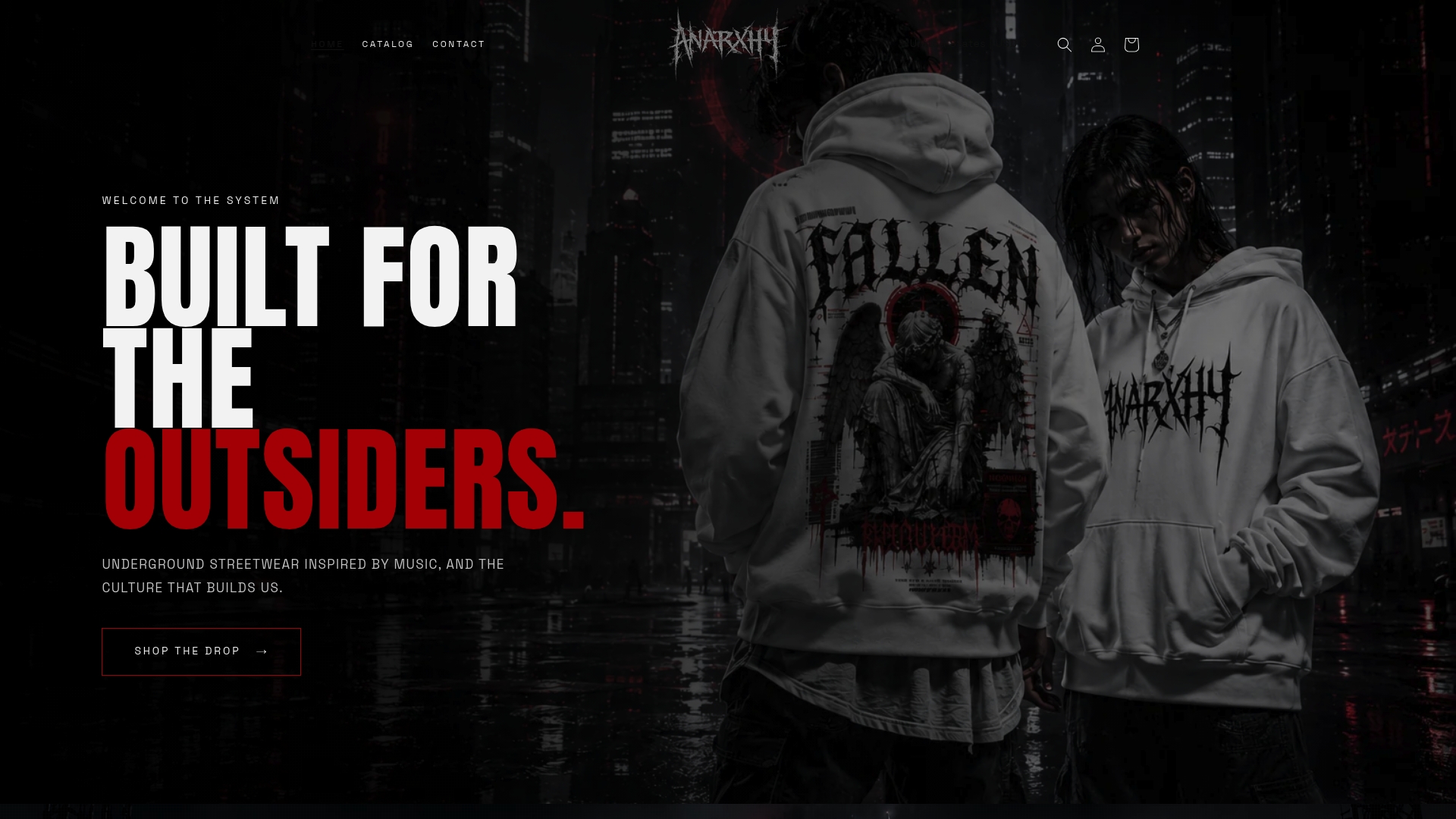
The DIGITAL DECAY hoodie and the FALLEN//001 drop are built for exactly the kind of gritty, urban fashion shoot this guide walks you through. Heavy textures, graphic elements, and colorways that hold up under both golden hour warmth and the flat gray of an overcast city. Check the new arrivals collection for the latest drops and find the piece that anchors your next shoot. Limited quantities, intentional design, and eco-conscious materials mean what you wear and what you photograph actually stands for something.
FAQ
What camera is best for streetwear photography?
A 35mm prime lens on a mirrorless or DSLR camera gives you the best results, but modern phone cameras with pro mode enabled can produce professional-quality streetwear content without the bulk or cost.
Do I need model releases for streetwear photos?
For personal or editorial use in public spaces, releases are generally not required. For commercial use, model releases are legally necessary whenever identifiable people appear in your images.
What time of day is best for shooting streetwear outfits?
Golden hour, the hour after sunrise or before sunset, produces the most flattering and atmospheric light for outfit photography. Blue hour works well for darker, more cinematic streetwear aesthetics.
Should I shoot candid or posed for streetwear content?
It depends on the story you want to tell. Candid shots carry raw energy but come with ethical and legal considerations for commercial use. Posed or directed candid approaches give you more control while still feeling authentic.
How do I make my streetwear photos look cohesive on social media?
Use a consistent color grade or preset across all images in a series, sequence your posts to tell a story from full-body to detail shots, and choose locations that share a visual language with the outfit’s aesthetic.