

Tour merchandise has always been more than a cotton souvenir you stuff in a drawer after the lights go up. The role of tour merch in subculture fashion is something fashion critics and cultural theorists now take seriously, and for good reason. Worn correctly, a vintage band tee or a limited-run hoodie communicates your entire cultural biography in seconds. It tells people where you’ve been, what you value, and which communities you belong to. This article breaks down how concert merch operates as identity shorthand, shapes subculture fashion trends, builds community, and increasingly intersects with sustainability movements in streetwear.
Table of Contents
- Key takeaways
- The role of tour merch in subculture fashion as identity shorthand
- Fan community and the psychology of belonging
- How merch shapes subculture fashion trends
- Sustainable merch and the pre-order shift
- How to buy and wear tour merch thoughtfully
- My take on where merch culture is actually headed
- Wear the culture, not just the brand
- FAQ
Key takeaways
| Point | Details |
|---|---|
| Merch as identity signal | Tour merch compresses cultural values into instantly readable fashion that signals community membership. |
| Scarcity drives belonging | Limited drops create psychological urgency that ties fan identity to access and exclusivity. |
| Merch shapes streetwear | Concert merch has directly influenced streetwear design language, nostalgia aesthetics, and collectible culture. |
| Pre-order models reduce waste | A 7 to 14 day pre-order window aligns production with real demand, cutting overstock and supporting longer wear habits. |
| Thoughtful buying matters | Planning purchases around exclusivity, timing, and ethics makes merch a more meaningful and sustainable choice. |
The role of tour merch in subculture fashion as identity shorthand
The academic term for what tour merch does is semiotic compression. It takes an entire world of values, sounds, aesthetics, and community references and collapses them into a single wearable object. Merch compresses brand values into fast, legible cultural signals that fans use to show who they are and which worlds they move through. You don’t need to explain your taste when you’re wearing a piece that already does it for you.
This is why the importance of band merchandise goes beyond revenue. A Metallica tee at a skate park in 1989 said something specific. A Kendrick Lamar tour hoodie at a sneaker drop in 2025 says something equally specific. The garment becomes a credential.
What makes this dynamic interesting is how timing and context affect its power. Worn too soon after a show, merch can read as straightforward endorsement, almost like an advertisement. Over time, it shifts into sincere expression. The piece earns meaning through wear, through life lived in it, through the distance between the event and the present moment. That evolution is what separates a fashion statement from a cultural artifact.
Here’s what makes merch uniquely powerful compared to other fashion signaling tools:
- It carries a timestamp. You were there, or you found it, or someone passed it to you. Each origin story adds layers.
- It signals taste without effort. No explanation required. The right person in the right room will recognize it immediately.
- It creates instant community. Two strangers wearing pieces from the same tour have an automatic shared reference.
- Exclusivity amplifies value. Items sold only at specific shows or pop-ups carry a scarcity that no general retail release can replicate.
Pro Tip: If you’re building a merch-based wardrobe with real subculture weight, prioritize pieces from smaller or regional acts. They tend to have shorter print runs, stronger scene credibility, and more distinctive design choices than arena-level merch.
Fan community and the psychology of belonging
Tour merch operates inside what you could call an emotionally charged micro-economy. Fans aren’t just buying a hoodie. They’re buying proximity to something that matters to them. They’re buying reassurance that they are part of something real.
Limited editions and timed drops manipulate access to belonging in ways that go far beyond standard supply and demand mechanics. When a drop sells out in minutes, the emotional stakes rise. The fans who got it feel validated. The fans who didn’t feel excluded. Both responses intensify attachment to the artist and the community.
“Scarcity in merch isn’t just a sales tactic. It’s a mechanism that controls who gets to feel like they belong, and that has real psychological consequences for fans.”
This is where the ethics get complicated. The impact of concert merch on fan communities is genuinely positive in many ways. It creates shared symbols, funds artists directly, and gives fans a tangible connection to music they love. But when scarcity is manufactured purely to drive FOMO rather than reflecting genuine production limits, it starts to exploit the emotional investment fans have already made.
Here’s how the psychology of merch drops typically plays out for fans:
- Anticipation builds. Announcements, teasers, and countdown timers prime emotional investment before a single item ships.
- Urgency kicks in. Limited quantities trigger loss aversion. Missing out feels worse than the item’s actual value would justify.
- Acquisition brings identity reinforcement. Getting the piece confirms belonging. It becomes part of how fans narrate their own story.
- The piece enters daily life. Worn regularly, it keeps the emotional connection active between shows and releases.
Understanding this cycle matters if you want to engage with merch thoughtfully rather than reactively.
How merch shapes subculture fashion trends
The tour merchandise influence on streetwear is not subtle if you know where to look. When Harry Styles’ Amsterdam pop-up drew five-hour lines with fans wearing curated outfits built around past tour pieces, that wasn’t just fan enthusiasm. That was a fashion event. The waiting line itself became a runway.
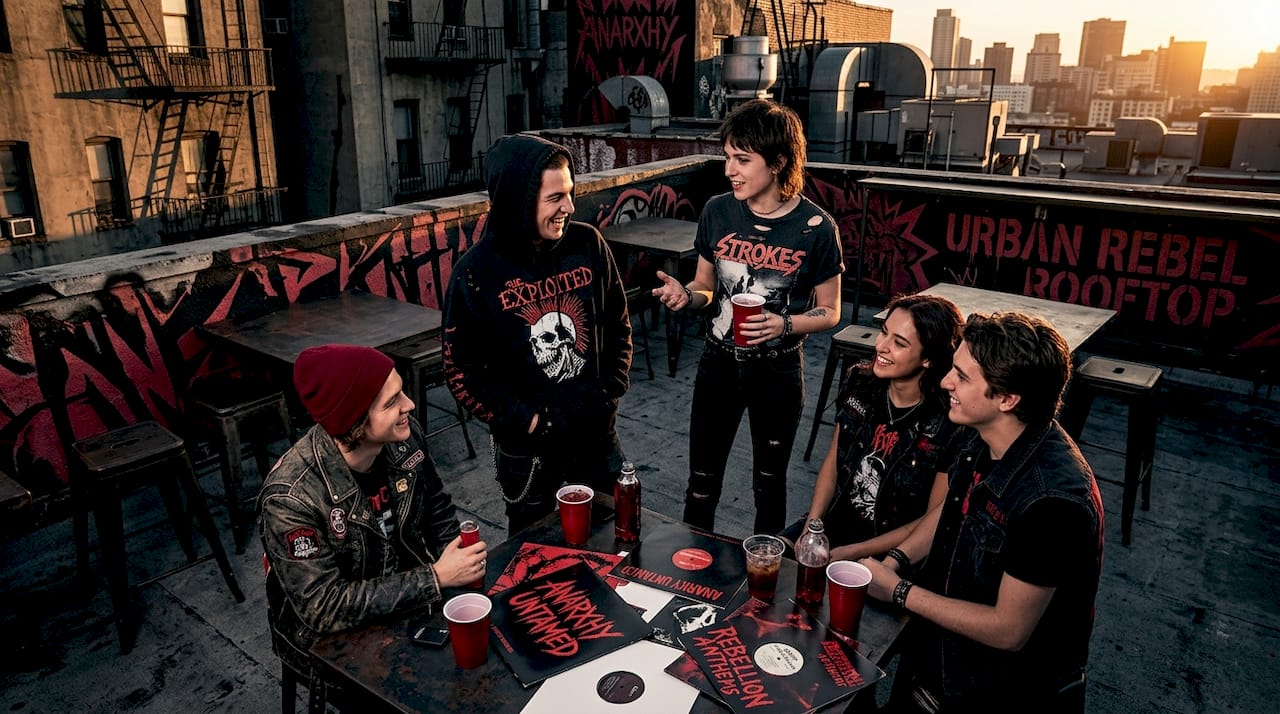
Fans have turned merch acquisition into a full aesthetic practice. They plan outfits around the piece they expect to buy. They photograph the experience. They treat the merch as a collectible fashion trophy that anchors an entire seasonal look. This behavior has fed directly back into streetwear design, where nostalgia, cultural capital, and exclusivity now drive more purchase decisions than technical innovation.
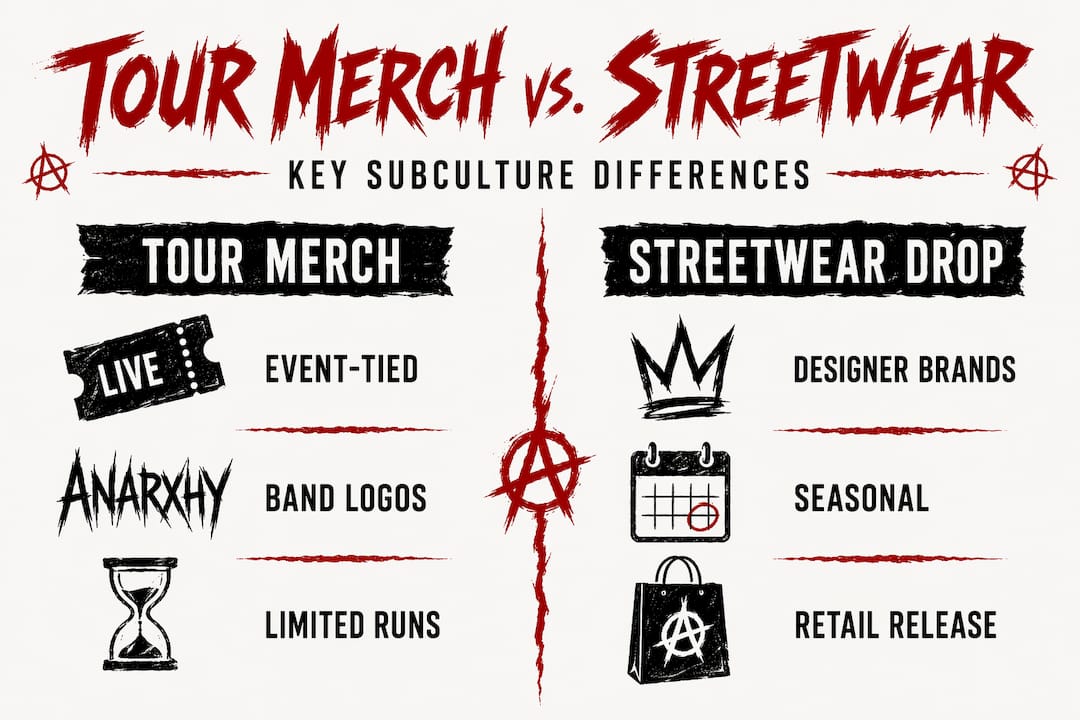
The table below shows how tour merch compares to standard streetwear drops across the factors that matter most to subculture fashion consumers:
| Factor | Tour merch | Standard streetwear drop |
|---|---|---|
| Exclusivity | Tied to specific event or location | Broad release, often restocked |
| Cultural capital | High. Tied to lived experience | Moderate. Tied to brand reputation |
| Nostalgia value | Increases significantly over time | Fades faster without cultural anchor |
| Community signal | Immediate and specific | Broader and less scene-specific |
| Resale potential | Strong for iconic tours | Variable, depends on hype cycle |
Manufacturing choices also communicate authenticity within scenes. Indie acts using handcrafted or on-demand production signal a different set of values than arena acts using mass production. The process becomes part of the message. In tight-knit subcultures, fans notice and care about these distinctions.
Sustainable merch and the pre-order shift
The sustainability conversation in fashion has finally reached merch culture, and the most practical solution is already gaining traction. The pre-order model uses a 7 to 14 day window where fans order before production begins, meaning items are made to match actual demand. No overstock. No landfill runs. No guessing.
This model also changes how fans relate to their purchases. When you wait two weeks for something to be made specifically because you ordered it, you’re less likely to treat it as disposable. That shift in mindset is exactly what the “wear longer” culture in streetwear has been pushing for years.
| Production model | Waste level | Fan engagement | Lead time |
|---|---|---|---|
| Pre-order (demand-aligned) | Very low | High. Builds anticipation | 7 to 14 days post-order |
| On-demand printing | Low | Moderate | 3 to 7 days |
| Bulk traditional printing | High. Overstock risk | Low post-event | Immediate at venue |
Beyond apparel, Universal Music Germany’s BioVinyl partnership with Optimal Media shows that even physical media production is moving toward renewable processes. These signals matter to streetwear-adjacent consumers who expect the brands and artists they support to align with their values.
Pro Tip: Before buying merch at a show, check whether the artist offers a pre-order window online. You’ll often get more design options, better sizing, and the satisfaction of supporting a production model that doesn’t create waste.
Transparency matters more than vague sustainability claims. Fans in subculture spaces are skeptical of greenwashing. Aligning drops to actual orders builds trust in a way that a “eco-friendly” label on a mass-produced tee simply doesn’t.
How to buy and wear tour merch thoughtfully
Younger fans increasingly plan which tour merch to buy before they even arrive at the venue, treating the acquisition as part of the full event experience and identity workflow. That intentionality is worth adopting more broadly.
Here’s a practical framework for engaging with tour merch in a way that’s both culturally meaningful and sustainable:
- Research before you go. Know which items are venue-exclusive versus available online. Prioritize the pieces you can’t get anywhere else.
- Buy for longevity, not impulse. Ask yourself whether you’ll wear this in two years. If the honest answer is no, skip it.
- Support pre-order when possible. Artists who offer pre-order windows are making a deliberate choice to reduce waste. Rewarding that choice with your purchase matters.
- Care for what you own. Wash merch inside out in cold water. Air dry when you can. Merch that lasts ten years has a fraction of the environmental cost of merch replaced every season.
- Think about the signal you’re sending. Merch from smaller or independent acts carries different cultural weight than mass-market pieces. Both are valid, but knowing the difference helps you build a wardrobe with real subculture depth.
- Resist the FOMO spiral. Not every limited drop deserves your money or your attention. Fan identity shouldn’t be held hostage by manufactured scarcity.
My take on where merch culture is actually headed
I’ve watched merch go from afterthought to cultural currency over the past decade, and what strikes me most is how few people in the fashion conversation give it the credit it deserves. When critics talk about subculture fashion trends, they reach for Supreme drops or archival Raf Simons pieces. Tour merch sits right next to those things in terms of cultural weight, but it rarely gets the same serious treatment.
What I’ve come to believe is that the most interesting thing about merch isn’t the object itself. It’s the story attached to it. The piece that means something is the one you stood in line for, the one a friend passed down to you, the one you wore the night everything clicked. That story is what separates merch from just another branded garment.
The commercial pressure on artists to manufacture scarcity and drive urgency is real, and I don’t think it’s going away. But I’ve also seen artists use merch in genuinely ethical ways, treating it as a direct relationship with their community rather than a revenue extraction tool. The pre-order model is the clearest example of that. It says: we’ll make exactly what you want, nothing more.
For anyone building a wardrobe at the intersection of music and streetwear, my honest advice is to treat merch as lived culture. Buy less. Buy intentionally. Wear it until it falls apart. The pieces that last are the ones that actually mean something.
— Johnathan
Wear the culture, not just the brand
If you’ve made it this far, you already understand that the best merch isn’t just clothing. It’s a statement about who you are and what you refuse to compromise on.
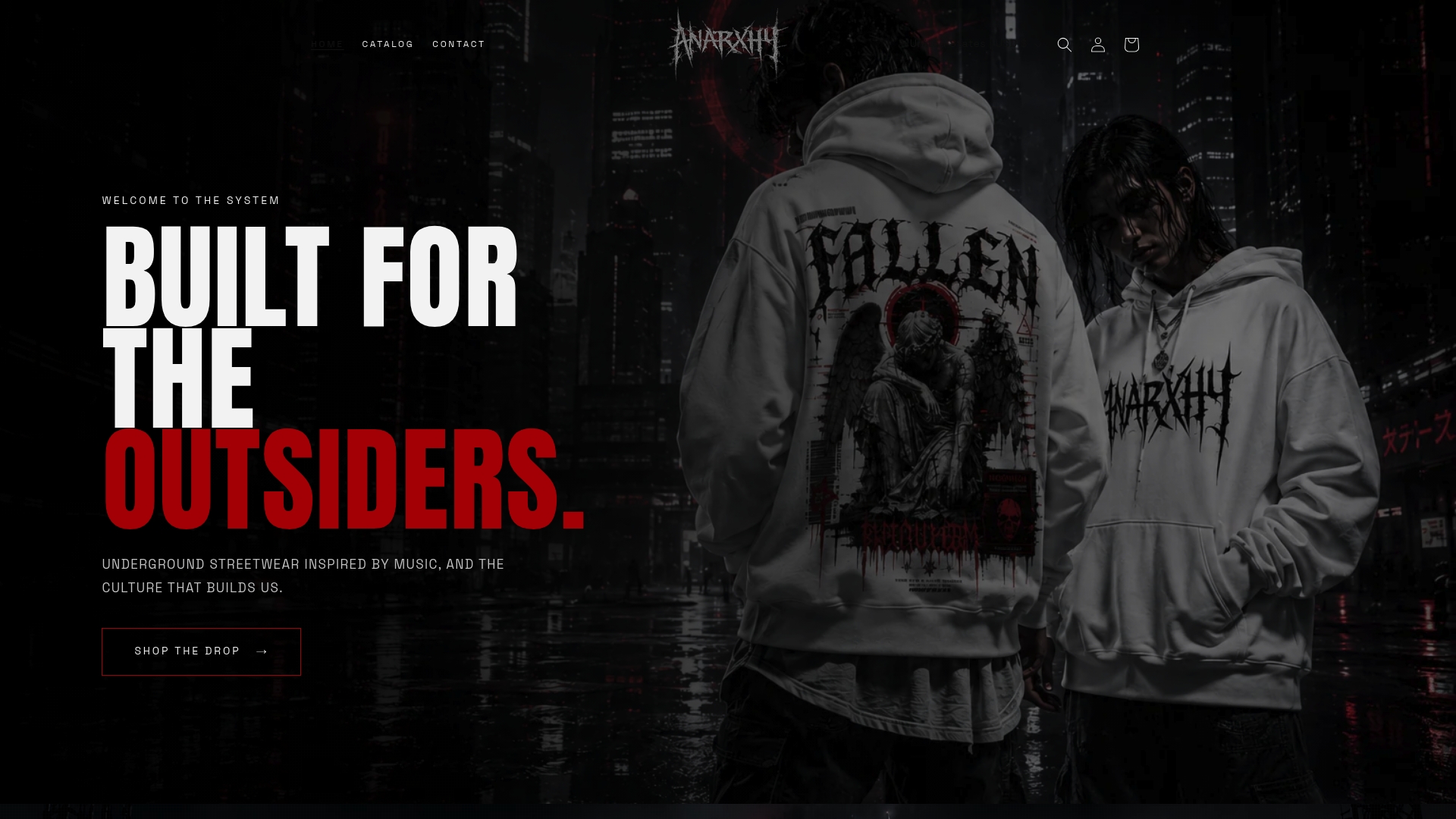
Anarxhy builds from exactly that premise. The SYSTEM ERROR hoodie is part of the DNR collection, designed for people who live at the edges of mainstream culture and want their wardrobe to reflect that honestly. The FALLEN//001 hoodie carries the same outsider DNA, built for the kind of person who treats getting dressed as a deliberate act. Both are made with eco-friendly materials, because Anarxhy believes that rejecting conformity and caring about the planet aren’t contradictions. Check the new arrivals to see what’s just dropped. Limited runs. No restocks. That’s not a sales tactic. That’s the point.
FAQ
What is the role of tour merch in subculture fashion?
Tour merch functions as identity shorthand within subcultures, compressing cultural values and community membership into a single wearable object that signals affiliation instantly. It also drives subculture fashion trends by introducing nostalgia, exclusivity, and scene-specific aesthetics into streetwear.
Why do limited merch drops create such strong fan reactions?
Limited editions and timed drops trigger loss aversion and tie access to belonging, making fans feel that missing out means being excluded from the community itself. This psychological mechanism intensifies emotional investment far beyond the item’s material value.
How does tour merch influence streetwear design?
Concert merch has introduced collectible culture, nostalgia aesthetics, and event-specific exclusivity into streetwear, with fans treating merch acquisition as a full fashion moment that feeds back into broader design trends.
What is the pre-order merch model and why does it matter?
The pre-order model uses a 7 to 14 day window where items are produced only after fans order them, eliminating overstock waste and supporting more intentional, longer-lasting consumer habits.
How can I build a merch wardrobe with real subculture credibility?
Prioritize venue-exclusive or limited-run pieces from artists whose values align with yours, buy for longevity rather than impulse, and support artists who use sustainable production models like pre-order drops.