

Dark alternative music fashion is a visual language that merges dark aesthetics with nonconformist music culture to create distinct, expressive styles. Known more formally as dark subculture fashion, it spans gothic, glitch goth, punk, and dark academia metal looks. Each substyle carries its own material logic, cultural references, and symbolic weight. If you want to style dark alternative music fashion with real intention, you need to understand what separates these categories before you build a single outfit. This guide breaks down every major substyle, gives you a step-by-step outfit framework, and flags the mistakes that make dark looks fall flat.
What defines style dark alternative music fashion in 2026?
Alternative music fashion is a nonconformist aesthetic language that reflects identity and artistic values. It does not follow seasonal trends. It follows subcultures, music scenes, and personal mythology. The look you wear communicates which corner of the outsider world you belong to.
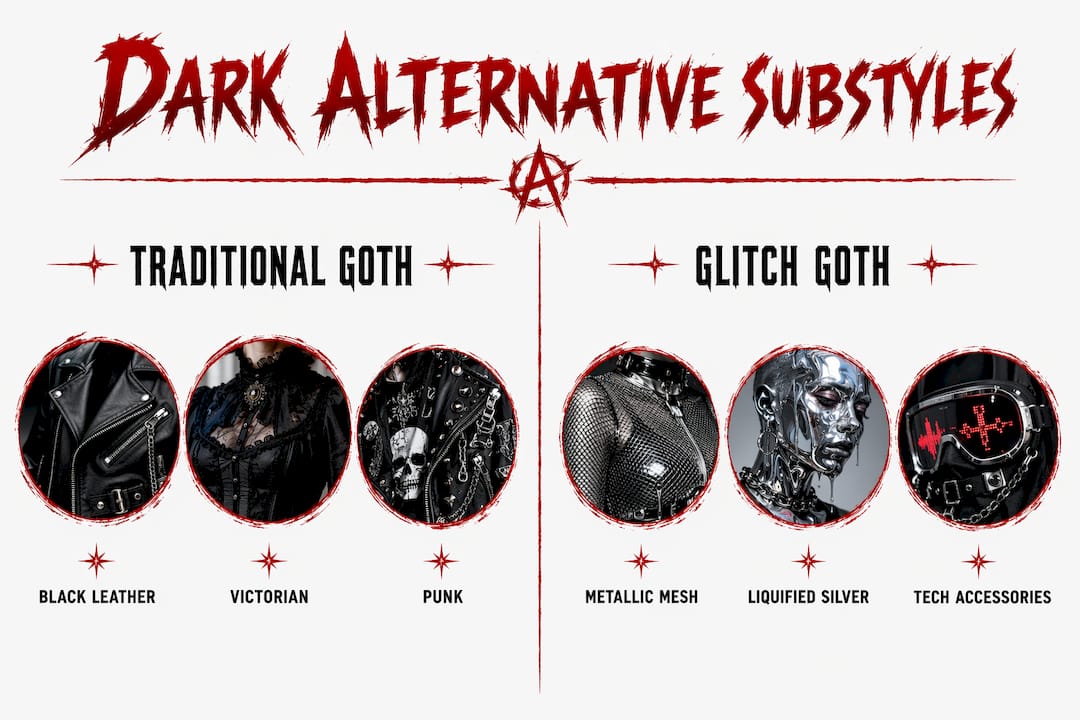
Three major substyles dominate the dark alternative space in 2026: traditional goth, glitch goth, and dark academia metal. Each one draws from a different cultural well. Traditional goth pulls from Victorian mourning dress and punk rebellion. Glitch goth responds to post-AI digital culture. Dark academia metal fuses the library with the mosh pit. Understanding the difference between them is the foundation of dressing with authority in this space.
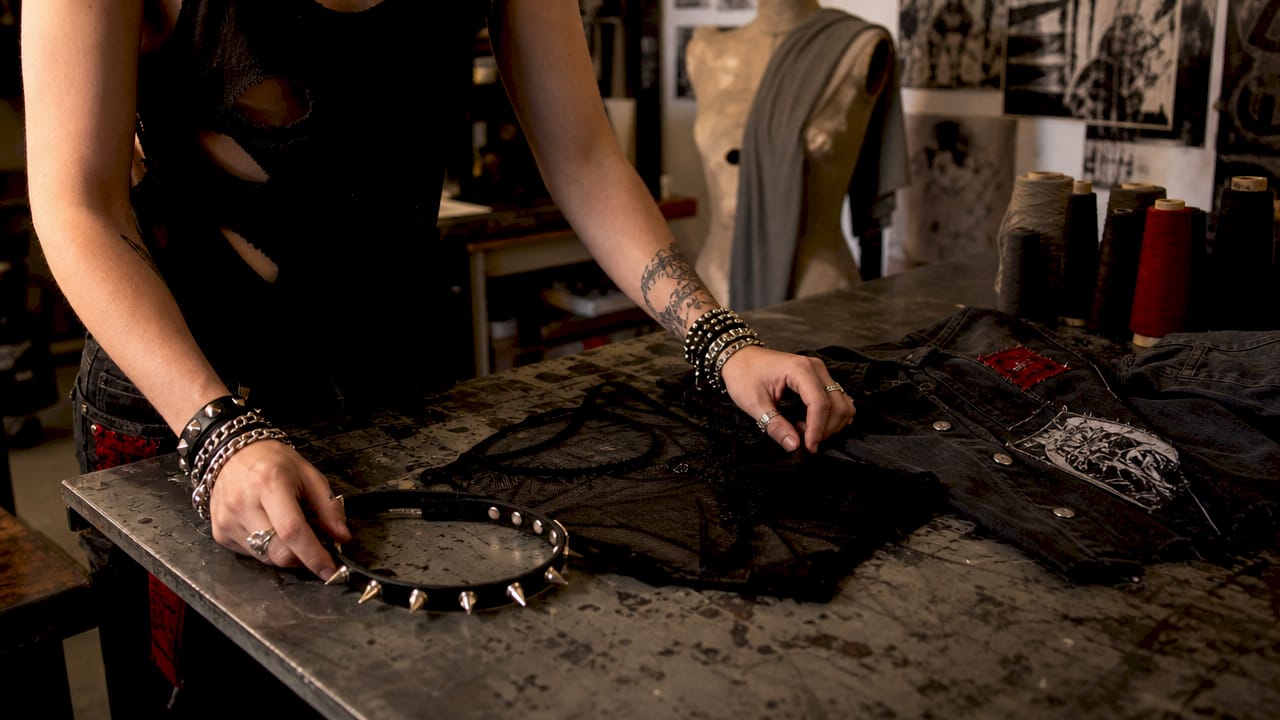
Music subcultures influence fashion in ways that go deeper than aesthetics. The clothes signal refusal. They say you opted out of the mainstream on purpose. That intentionality is what separates a well-executed dark alternative outfit from a costume.
What are the main dark alternative substyles and how do they differ?
The three core substyles differ by material behavior and cultural reference systems, not just color palette. Picking the right substyle starts with selecting one or two key references, like Victorian corsetry or neon tech elements, and building outward from there.
Traditional goth
The 2026 goth look relies on black and dark palettes with Victorian and punk-inspired elements. Victorian silhouettes like corsetry and lace define the structure. Punk details like leather, studs, and hardware add edge. Makeup features dark eyeliner and deep lipstick. Romantic goth styling takes this further by using Victorian dress codes with chokers, antique accessories, and soft dramatic shadows that replace polished perfection with dark longing.
Glitch goth
Glitch goth is the post-AI anti-aesthetic of 2026. It incorporates liquified silver effects, headphone cords worn as jewelry, and 3D-printed accessories. The style merges past and future cultural symbols and connects to cyberfeminism and digital artifact mysticism. Glitch goth styling conveys cultural commentary through imperfect, anti-optimized features that evoke friction and deliberate weirdness. This is not a polished look. The glitch is the point.
Dark academia metal
Dark academia metal fashion blends structured academic pieces like fitted blazers with band tees and combat footwear. Layering creates visual depth and meaning. The key rule is preserving metal identity within academic layers, which means the band tee stays visible. Burying it under a blazer defeats the purpose. The tension between the two worlds is the aesthetic.
| Substyle | Core materials | Key references | Signature piece |
|---|---|---|---|
| Traditional goth | Leather, lace, velvet | Victorian mourning, punk | Corset or studded belt |
| Glitch goth | Metallic mesh, 3D-printed resin | Cyberfeminism, digital glitch | Headphone cord jewelry |
| Dark academia metal | Wool blazer, cotton band tee | Academia, heavy metal | Blazer over band tee |
| Romantic goth | Silk, chiffon, antique metal | Victorian romance | Choker with antique pendant |
How to build an authentic dark alternative music outfit step-by-step
Building a dark alternative outfit works best when you start with one focal garment and layer outward. Trying to assemble everything at once produces visual noise, not identity.
- Choose your substyle anchor. Pick one cultural reference system: Victorian goth, glitch tech, or academic metal. Every other piece should support that reference, not compete with it.
- Select your focal garment. This is the piece that carries the most visual weight. A structured corset, a distressed band tee, or a metallic mesh top each signals a different substyle immediately.
- Layer for depth and texture. Dark academia metal layering works by placing a fitted blazer over a band tee, letting both elements stay visible. For goth, a lace overlay on a leather jacket adds texture without hiding the base.
- Apply the one focal, one supporting accessory rule. Gothic accessory styling recommends pairing a statement necklace with quieter earrings, or vice versa. One piece leads. The other supports. Both stay intentional.
- Add symbolic jewelry with purpose. Chainmail jewelry adds texture and motion without requiring multiple items. Because chainmail is visually active, keep the rest of the outfit plain and dark to avoid competing focal points.
- Finish with makeup and hair. Traditional goth calls for dark eyeliner and deep lip color. Glitch goth favors smudged, imperfect finishes. Dark academia metal works with minimal makeup and undone hair to keep the focus on the layered clothing.
Pro Tip: Pick your substyle’s single most recognizable material, like lace for romantic goth or metallic mesh for glitch goth, and make sure it appears somewhere in every outfit you build. That material becomes your visual signature.
What are common styling mistakes and how to avoid them?
Most dark alternative styling mistakes come from one source: trying to say too much at once. The outsider identity communicates better through restraint than through volume.
- Overcrowding accessories. Stacking five rings, two necklaces, and spiked cuffs on the same outfit creates visual clutter, not impact. Intentional restraint in gothic jewelry communicates outsider identity better than crowded accessories.
- Losing your substyle’s core identity when mixing. Dark academia metal fails when the band tee disappears under too many layers. The metal reference must stay visible. Covering it entirely turns the outfit into generic academia.
- Ignoring material logic. Substyles differentiate by material behavior, not just color. Wearing neon tech materials in a Victorian goth outfit creates contradiction, not fusion.
- Treating dramatic pieces as costumes. A corset worn with no other dark elements reads as costume. Pair it with dark denim, a leather jacket, or a structured blazer to anchor it in wearable territory.
- Mismatching color accents. Glitch goth uses silver and metallic tones as accents against dark bases. Introducing warm tones like burgundy or gold breaks the cold, digital mood of the substyle.
Pro Tip: Before leaving the house, remove one accessory. If the outfit still reads as your substyle, you found the right balance. If it loses its identity, put the piece back.
How to incorporate dark alternative fashion into everyday style
Dark alternative fashion works in daily life when you treat it as a tonal language rather than a full costume. You do not need every substyle element present to communicate the aesthetic.
Use statement accessories to anchor casual basics. A chainmail choker over a plain black crewneck reads as intentional dark style without requiring a full goth outfit. A 3D-printed resin ring or a distressed band tee under a blazer carries the same signal in a work-adjacent setting. For genre-inspired daily wear, the key is keeping the base clothing dark and neutral so the alternative piece stands out cleanly.
Subtle glitch goth nods work well for everyday settings. Metallic mesh layered under a dark hoodie, or headphone cord styled as a necklace, references the aesthetic without full commitment. These micro-signals communicate subculture fluency to those who recognize them.
| Setting | Recommended approach | Key piece |
|---|---|---|
| Casual daily | Dark base + one statement accessory | Chainmail choker |
| Work or school | Blazer over band tee, minimal accessories | Fitted dark blazer |
| Concert or event | Full substyle outfit, layered | Corset or metallic mesh top |
| Social gathering | Mixed alternative and mainstream pieces | Dark graphic tee |
Mixing alternative pieces with mainstream clothing is not a compromise. It is a skill. A dark graphic tee from a limited-drop brand paired with black jeans and clean boots reads as intentional style, not a half-formed aesthetic. The avant-garde streetwear space has normalized this kind of mixing, and dark alternative fashion benefits from it.
Key takeaways
Dark alternative music fashion communicates identity through material choice, substyle references, and intentional restraint, not volume of pieces.
| Point | Details |
|---|---|
| Substyle first | Identify your core reference system before selecting any garment or accessory. |
| Material over color | Each substyle is defined by specific materials like lace, metallic mesh, or wool, not just black tones. |
| Accessory restraint | One focal piece plus one supporting piece communicates outsider identity more clearly than stacking. |
| Layering with purpose | Keep both style references visible when mixing substyles, especially the band tee in dark academia metal. |
| Daily wearability | One alternative statement piece anchored by a dark neutral base works for everyday settings. |
What the dark alternative scene is actually teaching us about style
The most common mistake I see in this space is treating dark alternative fashion as a checklist. People buy the corset, the studded belt, and the platform boots, then wonder why the outfit feels like a costume. The problem is not the pieces. The problem is the absence of a point of view.
The substyles that resonate most right now, especially glitch goth, are built on cultural commentary. The imperfect, anti-optimized aesthetic is a direct response to AI-generated perfection flooding visual culture. When you wear a glitch goth outfit, you are not just wearing clothes. You are making an argument. That kind of intentionality is what separates someone who dresses in a subculture from someone who belongs to one.
My honest advice: pick one substyle and go deep before you mix. Spend a month only building traditional goth outfits. Learn what Victorian lace actually looks like against leather. Understand why the corset silhouette works with certain footwear and fails with others. Once you have that foundation, mixing substyles becomes a creative act rather than a guessing game. The readers who do this always end up with a more original look than those who try to blend everything from the start.
The 2026 dark alternative scene rewards specificity. Generic dark outfits are everywhere. A well-executed glitch goth look or a perfectly balanced dark academia metal outfit is still rare enough to stop people in their tracks.
— Johnathan
Anarxhy’s dark alternative collections worth knowing
Anarxhy builds clothing for exactly this audience. The brand’s outsider ethos and limited-drop model mean the pieces you find there are not showing up on everyone else.

The DIGITAL DECAY hoodie carries a dystopian aesthetic that fits naturally into glitch goth and dark alternative outfits. The FALLEN//001 hoodie works as a dark base layer for academic metal or traditional goth looks. Both are unisex and made with eco-friendly materials, which means the commitment to the outsider ethos extends past the design. Check new arrivals for the latest drops before they sell out.
FAQ
What is dark alternative music fashion?
Dark alternative music fashion is a nonconformist style rooted in alternative music subcultures, using dark palettes, symbolic materials, and layering to express identity outside mainstream culture. It includes substyles like goth, glitch goth, punk, and dark academia metal.
How does glitch goth differ from traditional goth?
Traditional goth draws from Victorian and punk references using lace, leather, and dark makeup. Glitch goth is a post-AI aesthetic built on digital imperfection, metallic mesh, 3D-printed accessories, and anti-optimized design choices.
What is the best way to start building a dark alternative outfit?
Start with one substyle reference, choose a focal garment that represents it, then layer and accessorize outward. Keep accessories to one focal piece and one supporting piece to maintain visual clarity.
Can dark alternative fashion work for everyday wear?
Yes. One statement alternative accessory, like a chainmail choker or a band tee under a blazer, paired with a dark neutral base reads as intentional style in most daily settings without requiring a full substyle outfit.
What makes dark academia metal different from regular dark fashion?
Dark academia metal specifically combines structured academic pieces like fitted blazers with heavy metal staples like band tees and combat boots. The defining rule is keeping both references visible in the same outfit, which creates the tension that defines the style.