

Music subcultures influence fashion by turning clothing into a deliberate visual language that signals identity, resistance, and group belonging. From Dick Hebdige’s foundational theory on punk style to Live Nation data showing over 80% of concertgoers experiment with new looks at live events, the connection between sound and style runs deeper than aesthetics. Understanding why music subcultures influence fashion means reading the coded symbols stitched into every safety pin, oversized hoodie, and DIY patch. Digital platforms like TikTok now accelerate that process from local scene to global trend in weeks, not years.
Why music subcultures influence fashion through symbolic dress
Subcultural fashion is defined as a system of coded clothing that signals membership and opposition to mainstream culture. This is not accidental styling. It is deliberate communication.
Dick Hebdige, in his 1979 work Subculture: The Meaning of Style, introduced the concept of style as homology. He argued that subcultural clothing reflects the values, tensions, and worldview of the group wearing it. A punk’s ripped shirt is not just torn fabric. It is a rejection of consumer culture’s expectation that clothing should be pristine and purchased.
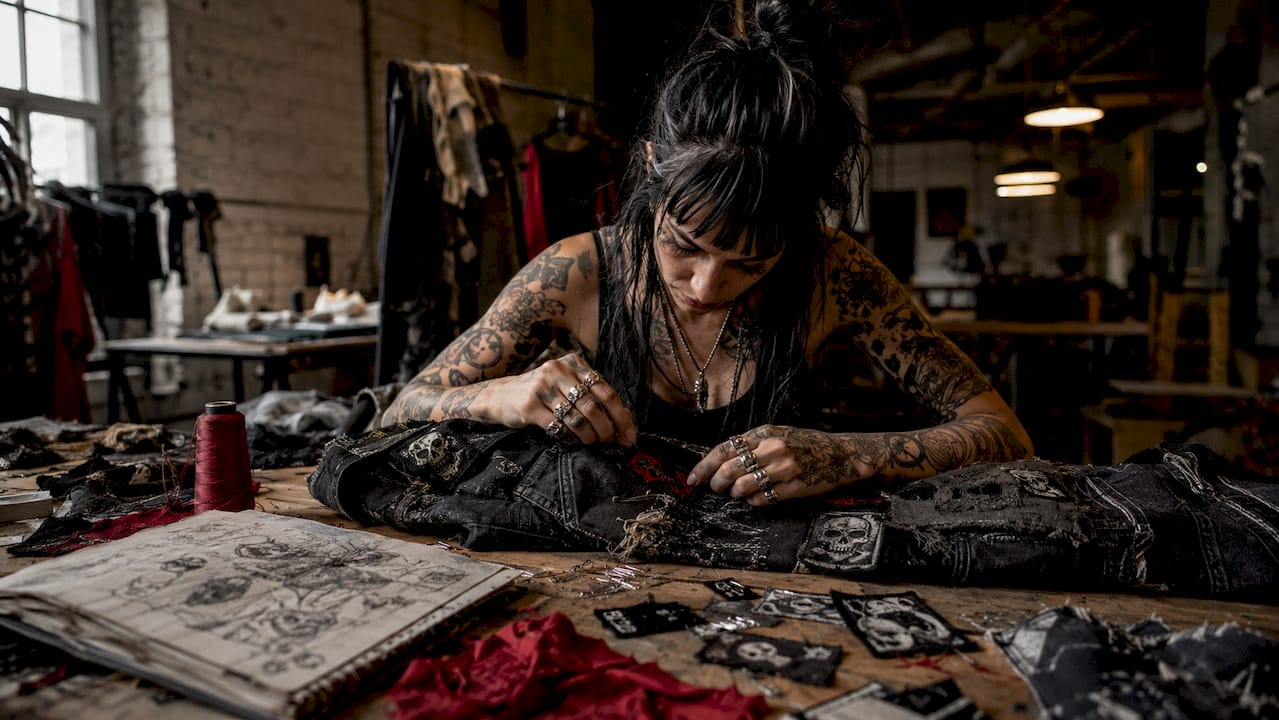
The semiotic function of style means that clothing in music subcultures operates on two levels simultaneously. Insiders read the micro-signals correctly. Outsiders see only chaos or provocation. That gap is intentional. The shock value is the message.
This is why the impact of music on fashion is so persistent. Clothing becomes a form of social critique that does not require words.
How ordinary objects become subcultural symbols
Punk subculture repurposed safety pins, school uniforms, and bin liners into statements of refusal. These were not expensive materials. They were cheap, accessible objects stripped of their original function and reloaded with new meaning.
- Safety pins signified holding things together when society had fallen apart
- Bleached or torn denim rejected the polished look of mainstream fashion
- Band T-shirts worn to destruction signaled authentic participation, not casual fandom
- DIY patches and hand-painted jackets marked the wearer as a creator, not a consumer
Pro Tip: When you adopt a subcultural style, research the original symbolic meaning behind each element. Wearing a specific patch or pin without knowing its context strips the garment of its cultural weight and reduces it to decoration.
How subcultural styles become mainstream trends
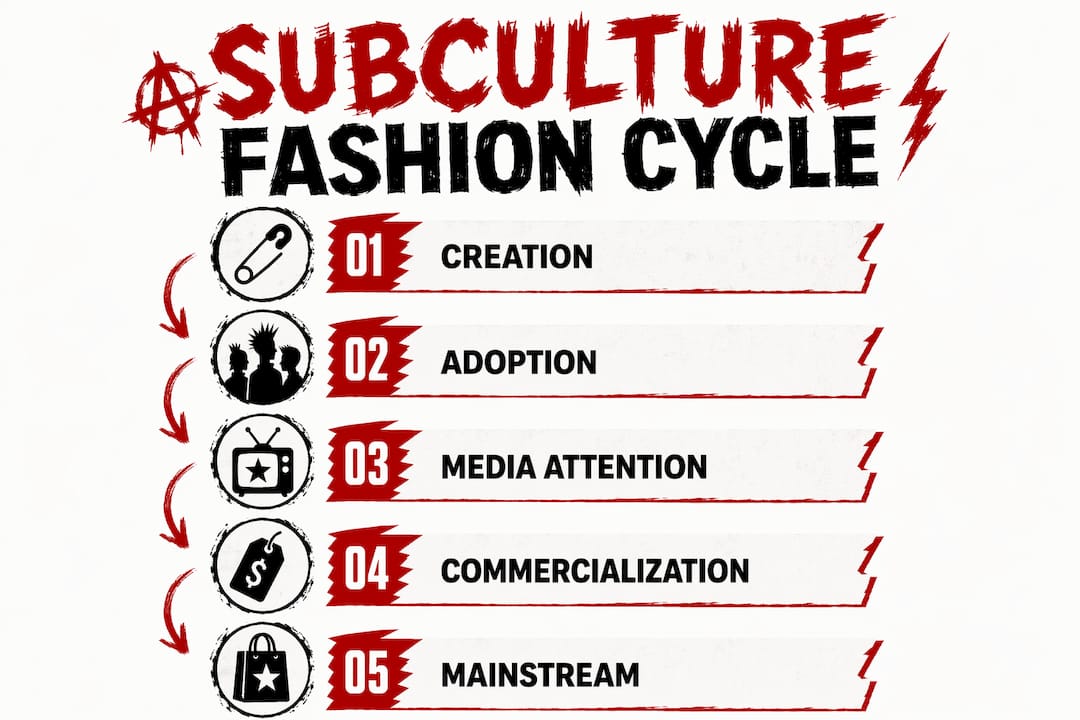
Rebellious fashion motifs start as insider markers and get commercialized as media interest grows. This cycle is predictable, and it has repeated across every major music subculture of the last 60 years.
The process follows a consistent pattern. A subculture develops a visual identity tied to its music and values. Media coverage makes those visuals visible to a wider audience. Retailers recognize commercial potential and begin producing accessible versions. The original subcultural meaning dilutes as the style becomes a trend.
| Subculture | Original Style Signal | Mainstream Adoption |
|---|---|---|
| Punk | DIY safety pins, torn clothing | Mass-produced ripped jeans at chain retailers |
| Goth | Black lace, dark palettes, Victorian references | Gothic-inspired collections at fast fashion brands |
| Hip Hop | Oversized silhouettes, gold chains, sportswear | Luxury brands adopting streetwear proportions |
| Rave | Neon, reflective fabrics, utilitarian pockets | Festival fashion collections at department stores |
| Grunge | Flannel shirts, combat boots, thrift-store layering | Flannel as a mainstream fall staple |
The speed of this cycle has accelerated sharply. What once took a decade now takes 18 months or less. Subcultures are vulnerable to rapid mainstreaming, which forces designers and fans to constantly update their visual codes to maintain authenticity.
Pro Tip: If you want to stay ahead of the mainstreaming curve, follow independent music blogs and underground venue social accounts rather than fashion publications. The next subcultural style shift shows up in the crowd before it shows up on a runway.
Do live music events drive fashion experimentation?
Live music events are the primary engine of subcultural fashion adoption, not social media feeds or magazine spreads. Music fashion influence stems more from active audience participation at concerts than from artist aesthetics alone.
Live Nation data from 2025 shows that over 80% of concertgoers experiment with new looks to dress like their favorite artists. Gen Z leads this behavior, with 88% participation at live events. That figure reflects something more than costume play. It shows that concerts function as fashion laboratories where identity gets tested in real time.
Concert cosplay creates collective effervescence. Fans dressing in shared visual codes experience a sense of community that reinforces both musical and stylistic identity. The clothing becomes a memory object, embedding the experience of the event into the garment itself.
Key behaviors driving fashion experimentation at live events include:
- Fans sourcing vintage and thrift pieces to build authentic looks before shows
- Group coordination of outfits within friend circles attending the same concert
- Post-event sharing of looks on social platforms, extending the fashion moment beyond the venue
- Artists observing crowd aesthetics and incorporating fan-driven elements into future merchandise
Fan participation turns fashion into living stories. Customization and motif choices embed identity and memories within clothing beyond costume. A jacket worn to three concerts carries a different weight than one bought off a rack.
How does digital media accelerate subcultural fashion?
TikTok, Instagram, and YouTube create fast iterations and feedback loops that fashion retailers monitor to anticipate trends. This has fundamentally changed how subcultural fashion spreads and evolves.
A local scene in Chicago, Seoul, or São Paulo can generate a visual aesthetic that reaches global audiences within days of a single viral video. Algorithmic amplification does not care about geography. It rewards visual distinctiveness, which is exactly what subcultural fashion produces.
The cycle now runs as follows. A subculture develops a new visual code. A fan posts content wearing that code. The algorithm pushes it to users with related interests. Retailers identify the trend through social listening tools. Fast fashion versions appear within weeks. The original subculture remixes the code again to reclaim distinctiveness.
Viral replication and fan remixing drive fast cultural trend iteration within subcultures. Each remix cycle produces a slightly updated version of the original aesthetic, which is why subcultural fashion never fully disappears. It just evolves.
Pro Tip: Follow hashtags tied to specific music genres rather than broad fashion hashtags. Searching #gothicmetal or #ukdrill on Instagram surfaces subcultural fashion codes weeks before they reach mainstream trend reports.
The role of music videos in this process cannot be overstated. Artists like Billie Eilish, Tyler the Creator, and Playboi Carti use visual aesthetics as deliberately as they use sound. Retailers and fashion houses now treat music video releases as trend forecasting events, monitoring every frame for emerging style signals.
What are the main types of music subculture fashion styles?
Punk, goth, hip hop, and grunge each carry distinctive fashion elements that reflect their cultural values and ideologies. Understanding these types helps you read the visual language of music culture and style more accurately.
Here is a breakdown of the core music-inspired fashion styles and their defining characteristics:
- Punk: Safety pins, DIY patches, leather jackets, band tees, and deliberately destroyed clothing. The ideology is anti-establishment and anti-consumerist. The punk aesthetic directly feeds contemporary streetwear through its rejection of polished presentation.
- Goth: Black lace, Victorian silhouettes, dark palettes, silver jewelry, and platform boots. Goth fashion draws on themes of mortality, romanticism, and outsider identity. It remains one of the most internally consistent subcultural aesthetics across decades.
- Hip Hop: Oversized silhouettes, gold chains, sportswear brands, and sneaker culture. Hip hop fashion is inseparable from its economic and racial politics. The shift from Adidas tracksuits in the 1980s to luxury brand adoption in the 2000s tracks the genre’s commercial trajectory precisely.
- Rave: Neon colors, reflective fabrics, utilitarian cargo pockets, and body-conscious cuts. Rave fashion prioritizes freedom of movement and visibility in dark spaces. Its influence on festival fashion and athleisure is direct and well-documented.
- Grunge: Flannel shirts, combat boots, thrift-store layering, and deliberately unkempt presentation. Grunge fashion from Seattle in the early 1990s continues to influence contemporary wardrobes through its normalization of thrift culture and anti-glamour aesthetics.
- Metal: Band merchandise, black clothing, studded leather, and long hair culture. Metal fashion signals tribal loyalty through specific band affiliations. The economics of band merchandise show how deeply clothing functions as both identity marker and revenue stream within this subculture.
Each of these styles serves as direct inspiration for contemporary fashion designers, streetwear labels, and independent brands. The key is recognizing that each item carries a history that predates its current commercial form.
Key takeaways
Music subcultures influence fashion because clothing functions as a coded visual language that expresses identity, resistance, and community belonging across every genre and generation.
| Point | Details |
|---|---|
| Clothing as symbolic language | Subcultural fashion encodes meaning through specific objects, colors, and DIY methods that insiders read differently from outsiders. |
| Mainstreaming follows a predictable cycle | Every major subculture from punk to hip hop sees its visual codes commercialized after media exposure, diluting original meaning. |
| Live events drive adoption | Over 80% of concertgoers experiment with new looks at shows, making live music the primary engine of subcultural style diffusion. |
| Digital platforms accelerate the cycle | TikTok and Instagram compress the timeline from local scene to global trend from years to weeks through algorithmic amplification. |
| Authenticity requires context | Adopting subcultural styles without understanding their semiotic origins reduces meaningful garments to surface-level aesthetics. |
Why subcultural fashion still matters more than trend reports
I have spent years watching fashion cycles repeat themselves, and the one thing that never changes is this: the most interesting clothing always comes from people who are not trying to be fashionable. It comes from people who are trying to say something.
The semiotic layers in subcultural fashion are what separate a meaningful wardrobe from a collection of garments. When you understand that a specific cut, color, or construction method carries a history of resistance, community, or grief, you wear it differently. You carry that history with you.
The mainstreaming of subcultural styles is not inherently destructive. It becomes destructive only when the context is stripped away entirely. The best approach is to learn the original codes before you adopt them. Read Hebdige. Dig into the scene histories. Understand why a safety pin meant something in 1977 before you pin one to your jacket in 2026.
Digital culture has made subcultural fashion more accessible and more disposable simultaneously. The speed of trend cycles means that genuinely new visual languages emerge faster than ever, but they also get commodified faster than ever. The antidote is depth. Go deeper into the scenes you are drawn to rather than skimming the surface of many.
Fashion as a living cultural expression means it is always in motion. The subcultures shaping style today are not the ones on the front pages. They are in the underground venues, the Discord servers, and the local shows. That is where the next visual language is being written right now.
— Johnathan
Dress the outsider: music-inspired streetwear from Anarxhy
If the connection between music subcultures and fashion resonates with you, Anarxhy builds that relationship into every drop. The brand’s collections draw directly from the outsider ethos of punk, goth, and dystopian streetwear, using eco-friendly materials that do not compromise on visual impact.
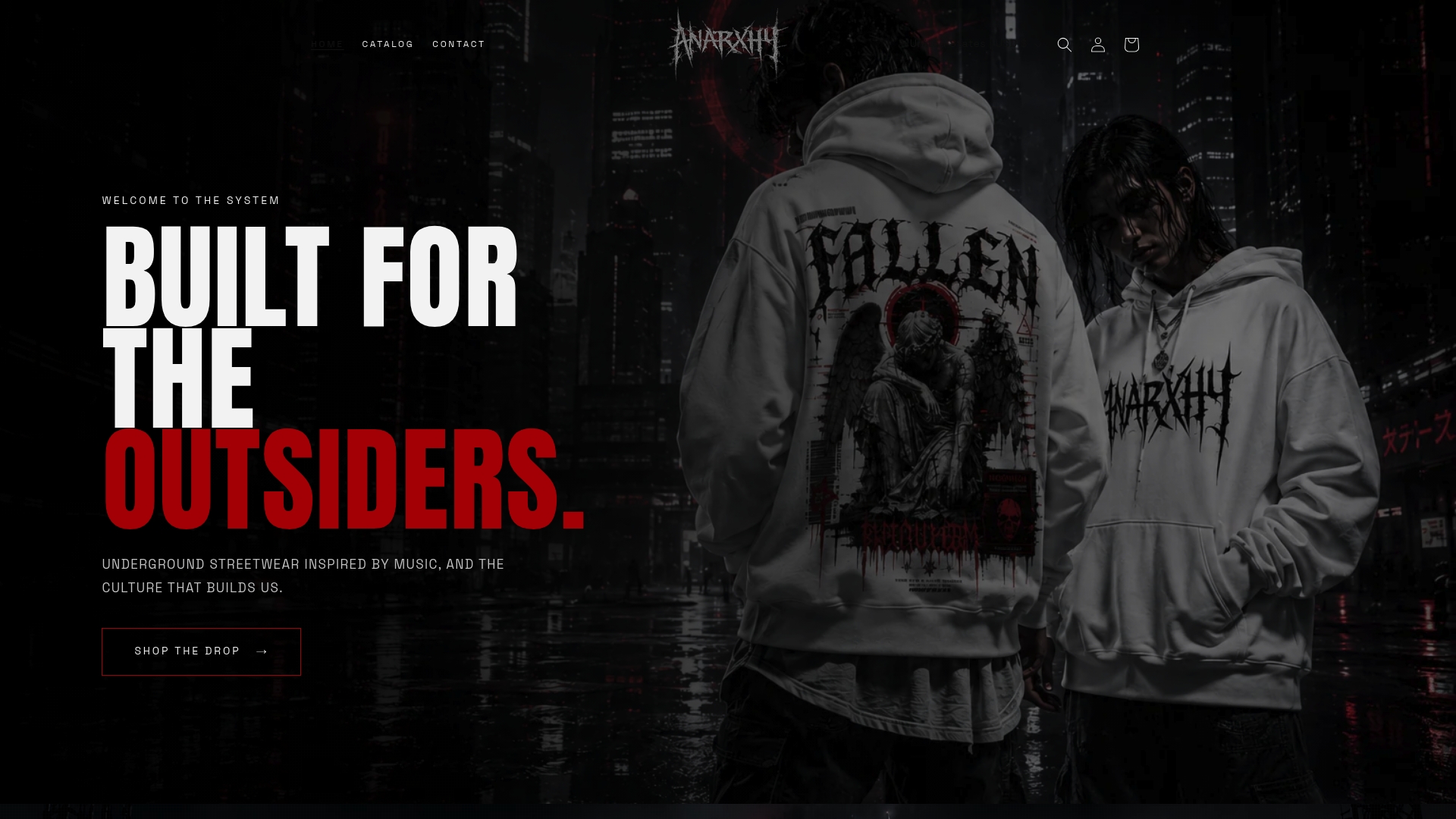
The DIGITAL DECAY hoodie and the SYSTEM ERROR hoodie both reflect the kind of coded visual language this article describes. These are not trend pieces. They are statements. Anarxhy’s limited drops mean each release carries the scarcity and intentionality that subcultural fashion demands. Check the new arrivals to see what the current collection says.
FAQ
Why do music subcultures influence fashion so strongly?
Music subcultures use clothing as a visual language to signal identity and resistance to mainstream culture. Because fashion is visible and immediate, it becomes the most direct way for subculture members to communicate shared values without words.
What are the main types of music subculture fashion styles?
Punk, goth, hip hop, rave, grunge, and metal each carry distinct fashion codes. Punk favors DIY destruction, hip hop uses oversized silhouettes, and goth relies on dark Victorian references, with each style reflecting the ideology of its originating music scene.
How does social media change subcultural fashion trends?
TikTok, Instagram, and YouTube compress the timeline from local scene to global trend from years to weeks. Algorithmic amplification pushes distinctive subcultural visuals to mass audiences, accelerating both adoption and commercialization.
How does concert attendance affect personal style?
Live Nation data shows over 80% of concertgoers experiment with new looks at events, with Gen Z reaching 88% participation. Concerts function as fashion laboratories where subcultural identity gets tested and reinforced through collective dressing.
How can you adopt subcultural fashion authentically?
Research the semiotic origins of each style element before incorporating it into your wardrobe. Understanding why a specific item carries meaning, whether a safety pin, a flannel, or a band tee, is what separates authentic subcultural style from surface-level trend adoption.