

Punk-inspired streetwear is defined by the deliberate collision of raw counterculture aesthetics with modern, wearable silhouettes. To style punk-inspired streetwear outfits that actually land, you need three things: a strong foundation of core pieces, selective punk accents that carry personal meaning, and the restraint to know when to stop. The difference between a compelling punk look and a Halloween costume is almost always proportion and intention. Anarxhy was built around exactly this tension: the outsider ethos expressed through clothing that functions in the real world, not just on a mood board.
What are the foundational pieces for punk-inspired streetwear?
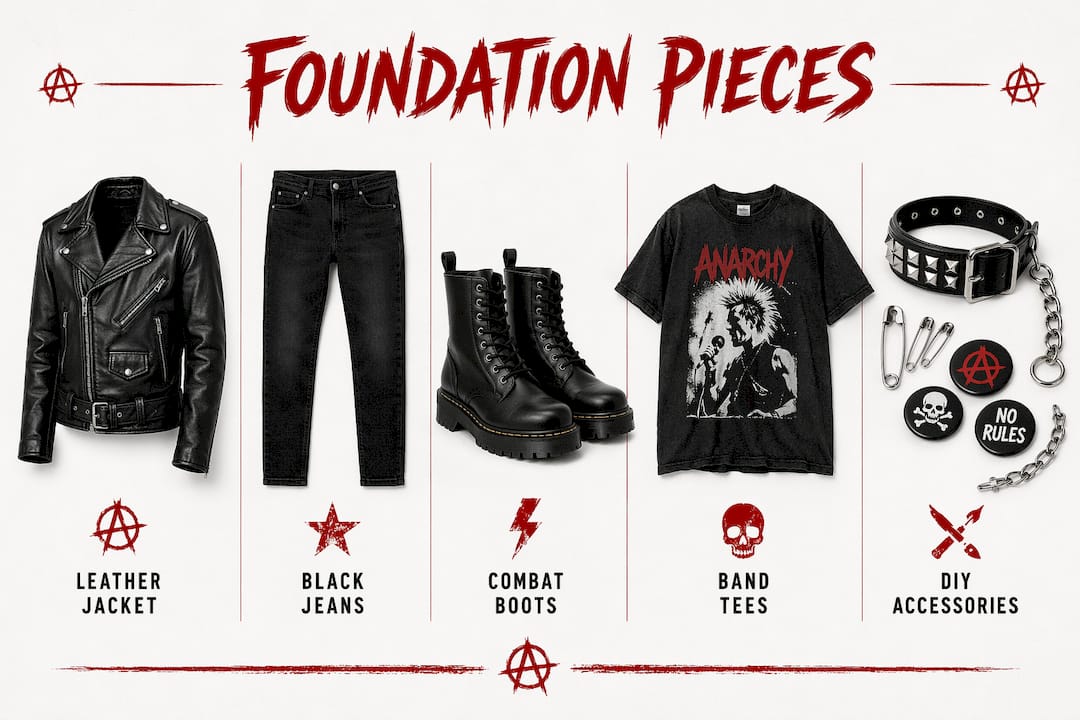
Every credible punk-inspired streetwear outfit starts with the same three anchors: a quality leather or denim jacket, well-fitting black jeans, and sturdy boots. These are not suggestions. They are the structural skeleton that everything else hangs on.
The jacket is your most important investment. A black leather moto jacket or an oversized denim jacket with raw edges gives you instant visual authority. Fit matters here more than anywhere else. An oversized leather jacket paired with fitted black jeans creates the kind of silhouette contrast that reads as intentional rather than accidental. Skinny jeans with chunky combat boots or Doc Martens work the same way: the proportional tension is the point.
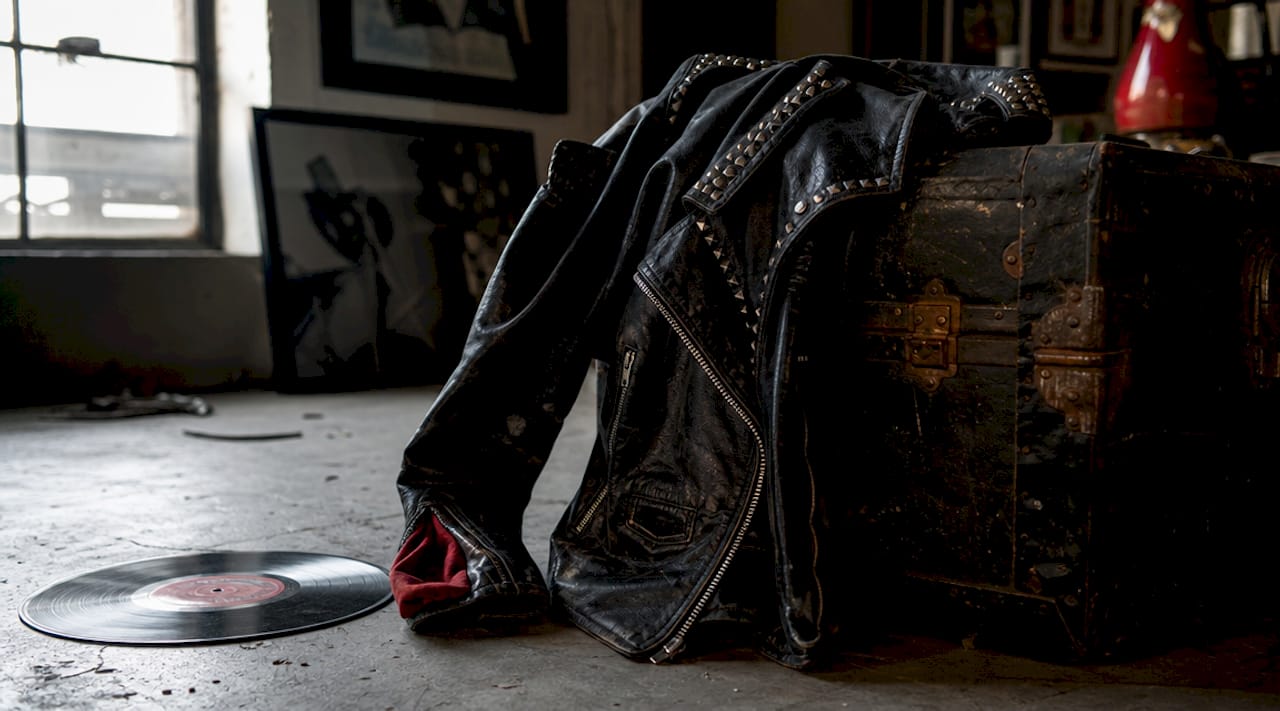
Black jeans are the most versatile base in this wardrobe. Ripped or distressed versions add texture without requiring any additional accessories. A clean pair of straight-leg black jeans, on the other hand, lets a louder jacket or boot do the talking. Both approaches are valid. The key is deciding which element in your outfit gets to be the loudest voice.
Boots deserve more credit than they typically get in streetwear conversations. Combat boots, platform boots, and classic Doc Martens 1460s all carry the weight of punk history while remaining genuinely practical footwear. They ground the outfit literally and visually.
Pro Tip: Start every outfit build with your jacket and boots chosen first. Once those two pieces are locked in, every other decision becomes easier because you already know the outfit’s energy.
Beyond these three anchors, band tees from genuine artists you actually listen to add credibility that no amount of hardware can replicate. A vintage or well-worn graphic tee communicates personal taste rather than aesthetic performance. Plaid and flannel shirts worn open over a band tee add layering depth without competing for attention.
| Foundation Piece | Why It Works |
|---|---|
| Leather or denim jacket | Creates visual authority and anchors the outfit’s energy |
| Well-fitting black jeans | Versatile base that supports both loud and minimal styling |
| Combat boots or Doc Martens | Grounds the silhouette and carries punk history authentically |
| Band tee | Communicates genuine personal taste and cultural credibility |
| Plaid or flannel shirt | Adds layering depth without competing with statement pieces |
Mixing textures like leather with denim, or layering a mesh top under a cotton tee, keeps the look visually interesting without tipping into costume territory. Texture contrast is one of the most underused tools in streetwear styling.
How to accessorize punk streetwear without overdoing it
The single biggest mistake in punk-inspired styling is accessory overload. Piling on safety pins, chain belts, studded boots, and multiple hardware pieces simultaneously dilutes the entire look. Each element competes for attention and the result reads as costume rather than conviction.
The rule is simple: one statement punk accessory per outfit. If you are wearing a studded belt, the chain wallet stays home. If you have a heavily patched jacket, the safety pins on your jeans become unnecessary noise. Restraint is not compromise. It is the thing that makes the one piece you do wear actually register.
Common punk accessories worth owning and rotating:
- Studded belt: Replaces a plain belt and adds hardware without requiring any other change to the outfit
- Safety pins: Used on a collar, cuff, or single seam, they reference punk history with precision
- Chain wallet: Adds movement and texture to a plain trouser or jeans combination
- Patches: Sewn or ironed onto a jacket back or sleeve, they communicate identity and affiliation
- Spiked or chunky rings: Low-commitment hardware that works with almost any outfit
Pro Tip: When adding patches, place them with intention rather than filling every available surface. A single large patch on a jacket back reads as a statement. Ten small patches covering every inch reads as clutter.
DIY customization is where punk accessories become genuinely personal. Hand-placing pins along a collar seam, sewing a patch from a band you saw live, or adding a hand-stitched slogan to a jacket lining all transform a purchased garment into something that belongs specifically to you. This is the difference between wearing punk and doing punk. For guidance on how band merch shapes streetwear identity, the connection between music and clothing runs deeper than most people realize.
What distinguishes punk from post-punk aesthetics in streetwear?
Punk and post-punk are related but visually distinct. Understanding the difference helps you build outfits with a clearer point of view rather than blending everything into an undefined “edgy” aesthetic.
Classic punk is raw, confrontational, and hardware-heavy. The color palette leans black, red, and white. Silhouettes are tight or deliberately torn. The visual language is aggressive and immediate. Think the Sex Pistols era: ripped tees, bondage trousers, safety pins as structural elements, and leather as armor.
Post-punk and the indie sleaze revival take a more artful, experimental approach. Skinny ties, white belts, shag haircuts, and art-school references replace the confrontational hardware of classic punk. The palette expands to include muted tones, washed-out colors, and retro-leaning prints. The mood is moody and cerebral rather than aggressive. Bands like Joy Division and Siouxsie and the Banshees defined this visual register.
| Aesthetic | Key Pieces | Color Palette | Mood |
|---|---|---|---|
| Classic punk | Ripped tees, bondage trousers, studded leather | Black, red, white | Confrontational, aggressive |
| Post-punk | Skinny ties, white belts, shag cuts | Muted, washed, dark | Moody, cerebral, artful |
| Indie sleaze | Low-rise jeans, band tees, smudged liner | Mixed, retro-toned | Nostalgic, irreverent |
The most interesting modern outfits borrow from both registers. A post-punk silhouette, like a slim black trouser with a tucked-in band tee, gains edge when you add a single classic punk element such as a studded belt or a patched jacket. Understanding avant-garde streetwear aesthetics gives you the vocabulary to make these combinations deliberately rather than accidentally.
What fit and proportion tips make punk streetwear look cohesive?
Fit is the variable that separates a compelling punk streetwear outfit from a messy one. The jacket or outer layer is the anchor. Every other decision flows from it.
If your jacket is oversized and structured, balance it with something fitted below. Slim black jeans or straight-leg trousers keep the silhouette from reading as shapeless. If your jacket is fitted and cropped, you have more room to experiment with volume below. Wide-leg trousers or a midi skirt with combat boots creates an unexpected contrast that works precisely because it is unexpected.
Proportion contrast is the technique most people overlook:
- Oversized jacket plus fitted jeans plus chunky boots: classic punk silhouette with modern proportions
- Fitted leather jacket plus wide-leg trousers plus platform boots: post-punk energy with contemporary volume
- Cropped moto jacket plus floral midi dress plus Doc Martens: the soft-tough contrast that defines modern punk-inspired dressing
That last combination deserves more attention. Mixing soft and tough elements, like a floral dress under a leather jacket, or a lace top under a denim vest, creates visual tension that reads as intentional and personal. It avoids the all-black-everything trap that makes some punk outfits feel one-dimensional.
Pro Tip: Avoid multiple competing hardware focal points in a single outfit. If your jacket has heavy hardware, choose plain-toe boots. If your boots are statement pieces, keep the jacket relatively clean. One focal point per outfit, always.
How to use DIY customization for authentic punk expression
DIY is not a styling technique. It is the political and philosophical core of punk fashion. Vivienne Westwood and Rei Kawakubo used unconventional materials, safety pins, and altered garments to make clothing a direct act of subversion. When you add a hand-painted slogan to a jacket, you are participating in that tradition, not just referencing it.
DIY expressions via patches and pins transform garments into personal manifestos. The distinction matters: a mass-produced jacket with factory-applied studs is a product. A jacket you have altered yourself is a statement.
Practical ways to personalize your punk-inspired pieces:
- Sew patches by hand rather than ironing them on. Hand-stitched patches stay longer and look more intentional.
- Distress your own denim by sanding, cutting, or bleaching specific areas rather than buying pre-distressed pieces.
- Paint slogans or symbols on jacket linings, trouser hems, or the inside of a collar where only you know they exist.
- Upcycle thrifted pieces by cutting, resizing, or combining them with other garments. The upcycled streetwear concept aligns directly with punk’s rejection of disposable fashion culture.
- Add pins to unexpected places: the inside of a lapel, the back of a collar, or a single pin on a trouser cuff rather than clustered on a jacket front.
“Punk fashion is more than trend styling. It is political self-expression through unconventional materials and DIY intervention.” — The Conversation
The modern translation of Westwood-era punk is not about replicating the 1977 aesthetic. It is about applying the same principle: small, intentional, personal interventions that make a piece feel like yours rather than anyone else’s. That is what separates punk-inspired streetwear from punk cosplay.
Key takeaways
Punk-inspired streetwear works when you build from three foundational pieces, add one statement punk accent, and let DIY personalization carry the authenticity that no amount of purchased hardware can replicate.
| Point | Details |
|---|---|
| Start with three anchors | Leather jacket, black jeans, and combat boots form the non-negotiable foundation. |
| One statement accessory | Choose a single punk accent per outfit to maintain impact and avoid costume effects. |
| Know your aesthetic register | Classic punk and post-punk have distinct visual languages; blend them deliberately, not accidentally. |
| Proportion drives cohesion | Treat your jacket as the anchor and balance silhouettes above and below it intentionally. |
| DIY makes it yours | Hand-applied patches, pins, and painted details transform purchased pieces into personal statements. |
Why restraint is the most punk thing you can do
I have been watching punk-inspired streetwear cycle through trend cycles for years, and the pattern is always the same. The people who wear it best are the ones who look like they are not trying. That is not an accident. It is the result of knowing exactly which one thing to add and having the confidence to stop there.
The instinct when you are new to this aesthetic is to layer everything at once: the patched jacket, the studded belt, the chain wallet, the safety pins, the band tee, the platform boots. I understand the impulse. It feels like more punk equals more commitment. But the opposite is true. The most compelling punk-inspired outfits I have seen in person are almost always built around one strong piece and three quiet ones.
What I have found through years of watching this space is that DIY customization is where people either commit to the ethos or reveal they are just wearing a costume. A jacket you have actually altered, even in a small way, reads completely differently than one you bought off a rack. The music rebellion connection is real: punk clothing was always about communicating something specific, not just looking a certain way.
My honest advice is to start with one piece you own right now and do something irreversible to it. Cut a hem. Sew a patch. Paint two words on the inside lining. That act of commitment is more punk than any amount of hardware you could buy.
— Johnathan
Discover Anarxhy’s punk-inspired streetwear
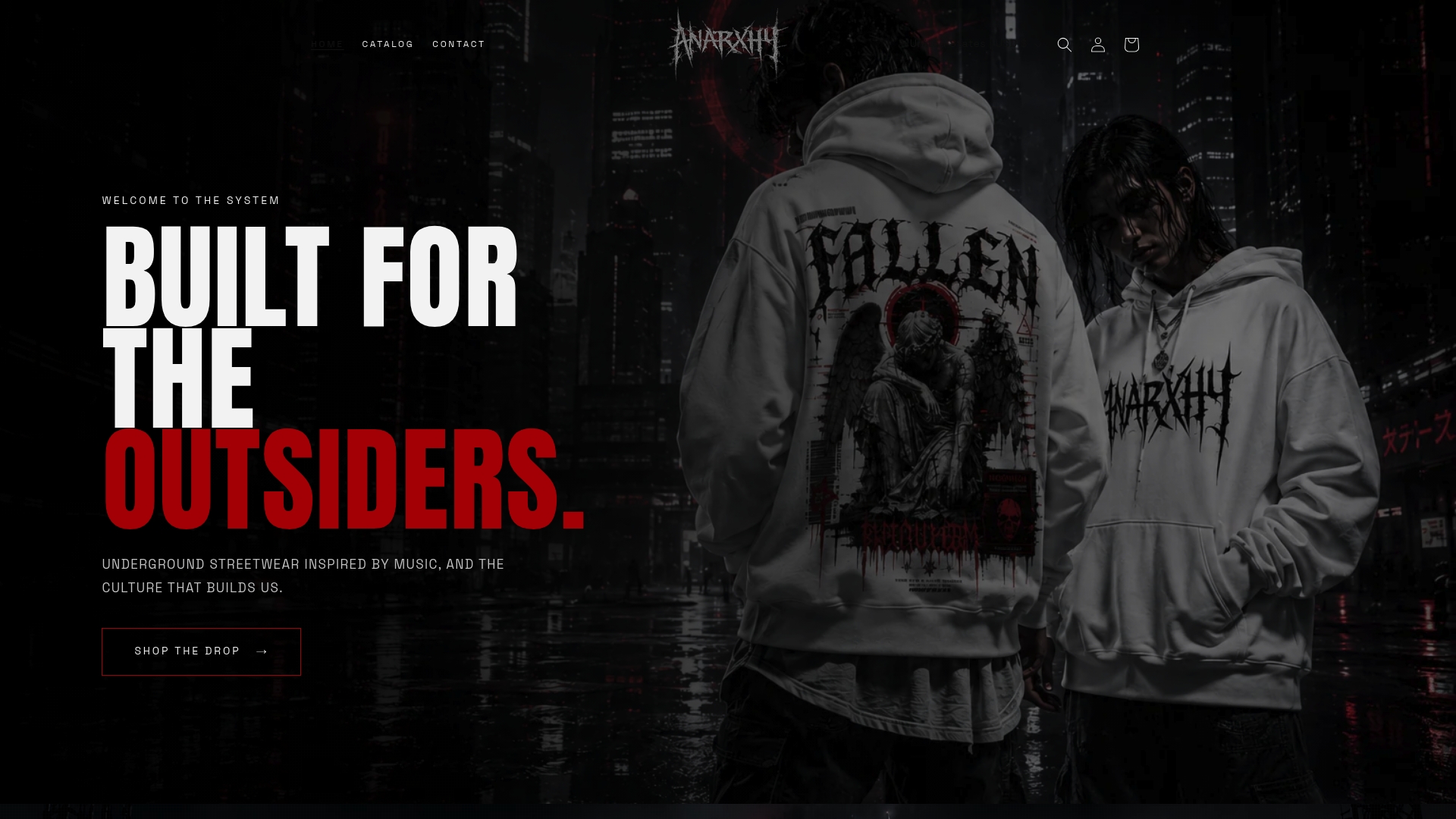
Anarxhy builds clothing for people who take the outsider ethos seriously. The DIGITAL DECAY hoodie and the FALLEN//001 unisex hoodie are designed with the same principle this article is built on: strong foundational pieces with deliberate, meaningful details rather than surface-level punk signaling. Anarxhy uses eco-friendly materials, so the commitment to counterculture extends beyond aesthetics into how the clothing is actually made. If you are building a punk-inspired wardrobe from pieces that carry real intention, new arrivals at Anarxhy are worth exploring. Limited drops mean the community stays tight and the pieces stay rare.
FAQ
What are the core pieces for punk-inspired streetwear?
The three non-negotiable foundation pieces are a leather or denim jacket, well-fitting black jeans, and combat boots or Doc Martens. Everything else, including accessories and DIY details, builds from this base.
What is the post-punk clothing aesthetic?
The post-punk aesthetic uses artful, experimental styling with skinny ties, white belts, muted color palettes, and art-school references, distinguishing it from classic punk’s confrontational hardware and aggressive silhouettes.
How do I avoid looking like I’m wearing a costume?
Use one statement punk accessory per outfit and build the rest of the look around quiet, well-fitting basics. DIY personalization, like hand-sewn patches or painted details, adds authenticity that purchased hardware cannot replicate.
How did punk music shape modern streetwear?
Punk music created a direct link between sound, politics, and clothing. Designers like Vivienne Westwood translated the confrontational energy of punk bands into garments that used unconventional materials and DIY construction as acts of subversion, a principle that still drives punk-inspired streetwear today.
Can I mix punk and post-punk elements in one outfit?
Yes, and the most interesting modern outfits do exactly that. A post-punk slim silhouette gains edge from a single classic punk accessory like a studded belt or patched jacket. The key is choosing one element from each register rather than layering both heavily.