

Upcycled streetwear is defined as the practice of transforming discarded, vintage, or waste garments into higher-value street-ready clothing through creative reconstruction rather than raw material production. This is not thrift flipping or deadstock rebranding. Designers like Ari Serrano and luxury houses like Miu Miu have pushed the concept into serious cultural territory, proving that upcycled fashion sits at the intersection of craft, identity, and genuine environmental responsibility. For anyone who wears their values as loudly as their aesthetic, understanding this concept changes how you see every garment you own.
What is the upcycled streetwear concept, exactly?
Upcycled streetwear is a design practice that takes materials with an existing life history and reconstructs them into something with greater cultural and material value. The standard industry term is upcycled fashion, and within streetwear specifically, it describes garments built from sourced waste rather than virgin fabric. Orsola de Castro, co-founder of Fashion Revolution, calls upcycling “anti-industry” because it demands locating waste streams and rebalancing a system built on overproduction. That framing matters. It positions upcycled streetwear not as a trend but as a deliberate rejection of how fashion has operated for decades.
The concept differs from what is sustainable fashion in a broader sense. Sustainable fashion covers organic materials, ethical labor, carbon reduction, and circular business models. Upcycled streetwear is one specific method within that space, and arguably the most creatively demanding one. Every piece begins with a garment or textile that already exists, which means the designer works within constraints that no amount of budget can remove.
How is upcycled streetwear made from discarded materials?
The creation process starts long before a needle touches fabric. Sourcing and sorting discarded textiles is the most challenging first step in scaling upcycled production, and it separates serious practitioners from brands that use the label loosely. Materials come from thrift stores, street finds, textile waste bins, and global vintage markets. Each source carries different risks and rewards.
Once materials are sourced, the process follows a specific sequence:
- Assessment and cleaning: Every piece is evaluated for structural integrity, staining, and fabric condition. Ari Serrano has recounted illness and machine damage from working with unknown-condition materials in early projects, which is why hygiene protocols are non-negotiable.
- Disassembly: Garments are taken apart at seams to understand what usable panels exist. The designer works with what survives, not what they wish they had.
- Pattern adaptation: Because fabric condition varies piece to piece, pattern design must flex around usable panels rather than dictating fixed cuts. This is why no two upcycled pieces are identical.
- Reconstruction: New silhouettes are built from the recovered panels, often combining materials from multiple source garments. Hand-finishing is common because machine consistency is impossible when working with irregular inputs.
- Documentation: Credible upcyclers communicate the garment’s life story, including cleaning, repairs, and reconstruction steps. Transparency in sourcing is directly tied to brand credibility.
Miu Miu’s Upcycled 2026 collection demonstrates this at a luxury scale, sourcing vintage shirts and chinos globally and rebuilding them into new silhouettes with creative hand-finishing. Each piece reflects the variability of its source material, which is the point, not a flaw.
Pro Tip: If you are sourcing your own materials to experiment with upcycling, always wash finds in a separate machine cycle with a disinfecting agent before cutting. Ari Serrano learned this the hard way, and your sewing machine will thank you.
What distinguishes upcycled streetwear from other sustainable fashion practices?
The word “sustainable” covers a lot of ground, and not all of it is equal. Here is how upcycling compares to the most common alternatives:
| Practice | What it involves | Environmental complexity |
|---|---|---|
| Upcycling | Reconstructing existing garments into new, higher-value pieces | High creativity, complex to measure impact due to added resources |
| Recycling | Breaking down materials to create new fibers or fabrics | Extensive processing, loses material integrity |
| Deadstock use | Sewing new garments from unsold surplus fabric | Lower waste than virgin production, but not true upcycling |
| Resale and repair | Extending garment life through secondhand markets or mending | Measurable displacement rate, lower creative transformation |
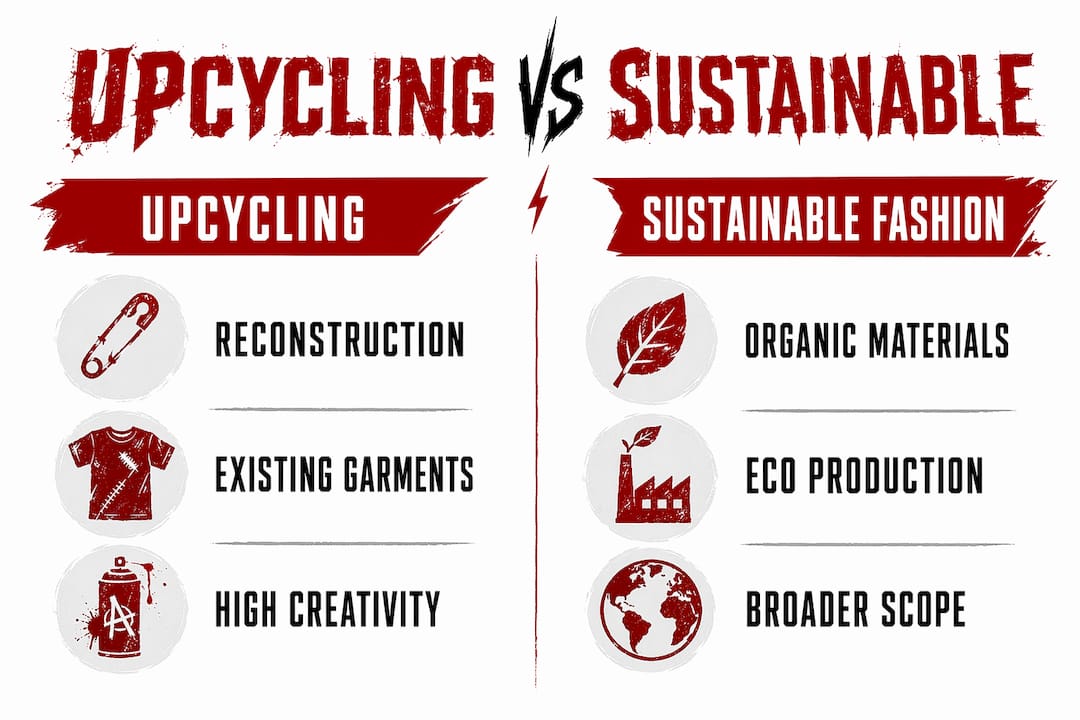
The distinction between upcycling and deadstock use is where most marketing confusion lives. Authentic upcycling requires detailed knowledge of a garment’s life story, including cleaning, repairing, and reconstructing. Using leftover fabric rolls from a manufacturer is a legitimate sustainability practice, but calling it upcycling dilutes the term and misleads buyers who are paying for something more specific.
Calculating the actual environmental benefit of upcycling is genuinely complex. Methodologies like displacement rate work well for resale and repair models but are less accurate for upcycling because the process adds new resources, thread, hardware, dyes, and labor, which changes the equation. This does not make upcycling less valuable. It means the value is partly environmental and significantly cultural and creative. Upcycling preserves more material integrity than traditional recycling, which requires breaking materials down extensively before rebuilding them into usable form.
How does upcycled streetwear express identity and cultural rebellion?
The cultural dimension of upcycled streetwear is what separates it from eco-conscious basics. Ari Serrano describes his practice as starting from thrifted and street-found materials to create pieces that express identity and surprise. That word, surprise, is doing serious work here. When a garment is built from materials with a prior life, it carries visual and textural information that no new fabric can replicate.
“Making upcycling cool is the challenge and the mission.” — Ari Serrano
This ethos directly challenges fast fashion’s core promise, which is that you can buy a specific look, replicated exactly, at low cost. Upcycled streetwear refuses that logic. The piece you wear cannot be copied because the source material no longer exists in that form. That is a radical statement in a culture built on mass reproduction.
The cultural implications run deeper than aesthetics:
- Anti-conformity by design: Because no two pieces are identical, upcycled streetwear physically cannot produce the uniform looks that fast fashion delivers. Wearing it signals a deliberate rejection of trend cycles.
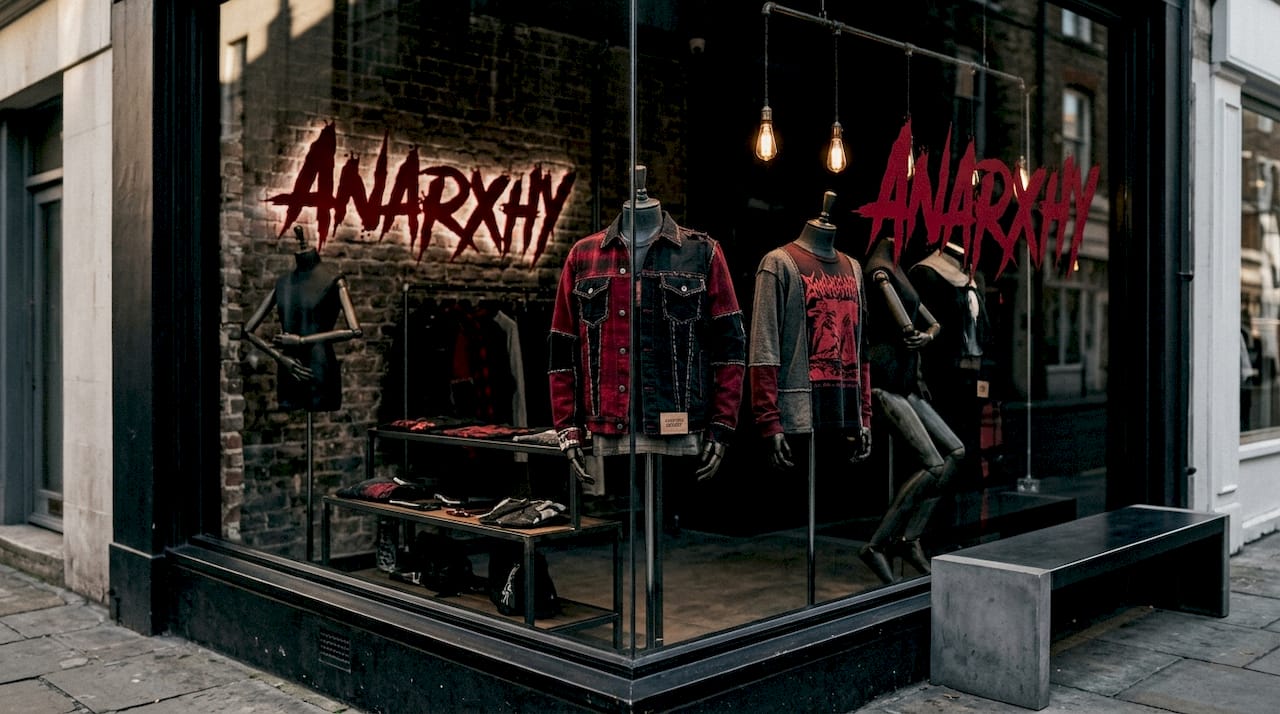
- Community through scarcity: Limited and one-of-a-kind pieces create a different kind of community, one built around shared values rather than shared aesthetics. Brands like Anarxhy operate on this principle, using limited drops to build connection among people who feel disconnected from mainstream culture.
- Subculture credibility: Streetwear has always drawn from music, rebellion, and outsider identity. Upcycled pieces carry literal history in their fabric, which aligns with subculture fashion’s tradition of repurposing and recontextualizing cultural artifacts.
The result is clothing that functions as both personal statement and cultural commentary. You are not just wearing something different. You are wearing proof that the system can be worked against itself.
How to style upcycled clothes without losing the impact
Styling upcycled streetwear requires a different mindset than building a coordinated outfit from scratch. The piece itself is the anchor, not the accessory.
- Let the garment lead. Upcycled pieces often have asymmetry, mixed textures, or unexpected color combinations. Build around them with neutral basics rather than competing elements. A reconstructed patchwork jacket works best over a plain white tee and dark denim, not layered with another statement piece.
- Embrace the mismatch. Upcycled clothing trends in 2026 lean into deliberate contrast: vintage-weight fabrics paired with technical materials, distressed panels next to clean cuts. Forcing a polished coordination defeats the point.
- Photograph it properly. One-of-a-kind pieces deserve documentation. Learning how to photograph streetwear outfits with intention captures the texture and detail that make upcycled garments worth sharing.
- Care with precision. Upcycled garments often combine fabrics with different wash requirements. Check every component before laundering. Cold water, gentle cycles, and air drying protect reconstructed seams that may not have the structural redundancy of factory-sewn garments.
- Wear it as a conversation. The story behind an upcycled piece is part of its value. Knowing where the fabric came from, who made it, and what it was before adds a layer of meaning that fast fashion simply cannot offer. That story is worth telling when someone asks.
Pro Tip: When shopping for upcycled streetwear, ask the brand directly about their sourcing process. If they cannot tell you where the materials came from or how the garment was cleaned and reconstructed, the “upcycled” label may be marketing rather than practice.
Key takeaways
Upcycled streetwear is the most creatively demanding form of sustainable fashion because it requires working within the constraints of existing materials to produce something of greater cultural and material value.
| Point | Details |
|---|---|
| Definition is specific | Upcycling means reconstructing existing garments, not just using surplus fabric or selling secondhand. |
| Process is complex | Sourcing, cleaning, disassembly, and pattern adaptation all precede any actual construction. |
| Environmental math is nuanced | Upcycling adds resources during reconstruction, making impact harder to calculate than resale models. |
| Cultural value is real | One-of-a-kind pieces physically cannot be mass-replicated, making them genuine anti-conformity statements. |
| Styling requires restraint | Let the upcycled piece anchor the outfit; competing elements undercut its visual and cultural weight. |
Why upcycled streetwear is the most honest thing happening in fashion right now
I have spent years watching sustainability become a marketing category rather than a practice. Brands slap “eco-conscious” on a recycled polyester tee and call it a movement. Upcycled streetwear, done correctly, cannot be faked in the same way. The constraints are built into the process. You cannot mass-produce something that requires individual sourcing, assessment, and reconstruction of each piece. That structural honesty is rare.
What strikes me most about designers like Ari Serrano is that they absorbed the difficulty rather than engineering it away. Getting sick from unknown materials, breaking machines, working with what you find rather than what you want. That is not a brand story. That is a practice. And the clothing that comes out of it carries that weight in a way you can actually feel when you hold it.
The challenge for buyers is developing the literacy to tell the difference. Deadstock labeled as upcycled, resale framed as circular fashion, recycled fiber marketed as reclaimed. The vocabulary is being stretched to cover practices it was not built for. The answer is specificity. Ask where the material came from. Ask what happened to it before it became the garment in your hands. Brands that can answer those questions are the ones worth supporting.
Anarxhy’s approach, building around outsider identity and limited drops with genuine material consciousness, points toward what this space looks like when it is done with conviction rather than compliance.
— Johnathan
Discover Anarxhy’s upcycled streetwear collection
Anarxhy builds for people who do not fit the mainstream mold, and that starts with the materials. Every piece in the DNR line reflects the brand’s commitment to eco-conscious construction and designs that cannot be replicated anywhere else.
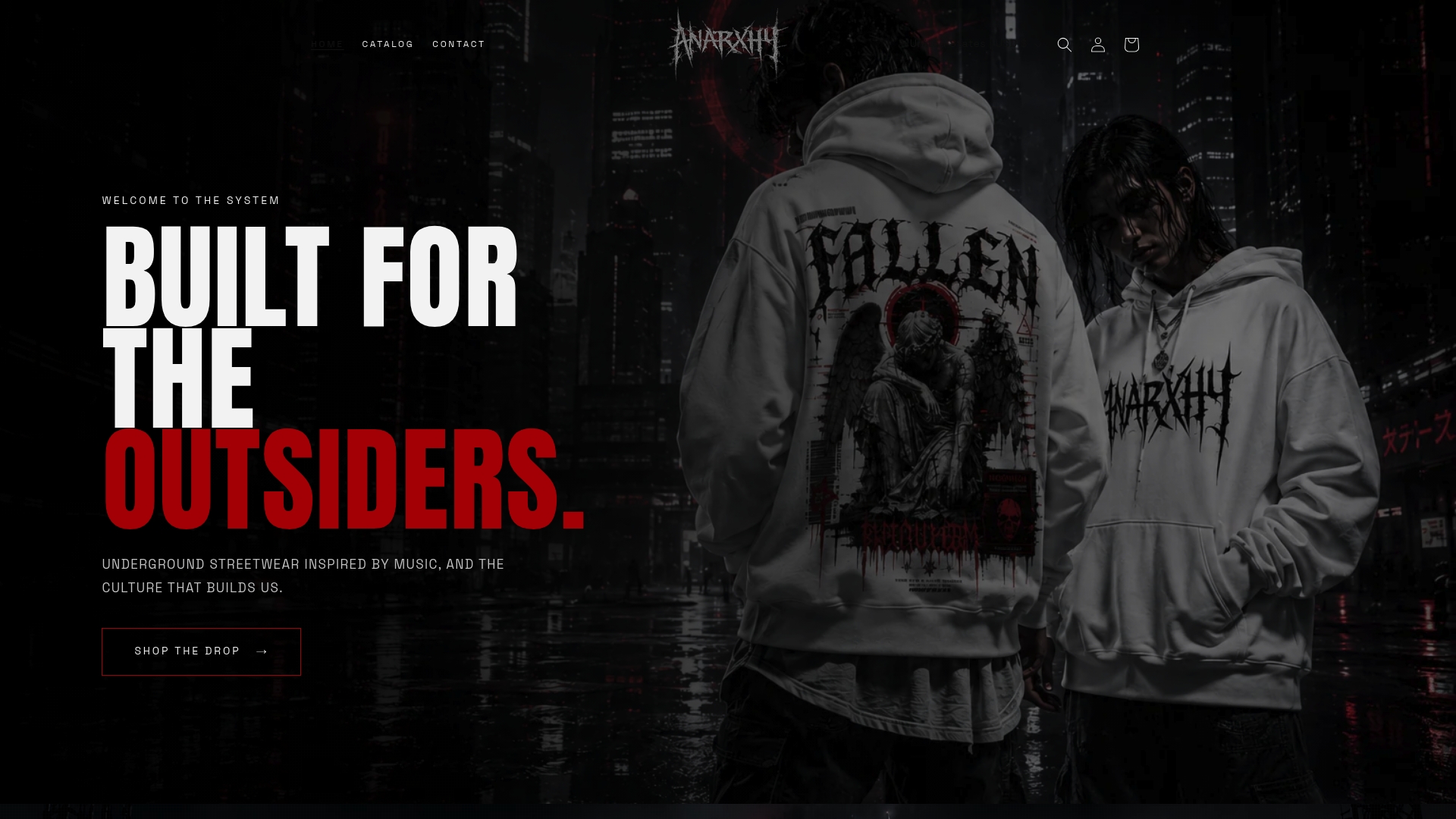
The SYSTEM ERROR hoodie and the DIGITAL DECAY hoodie are built for the kind of person who wants their clothing to say something real. Both pieces carry the dystopian aesthetic and rebellious identity that define Anarxhy’s Signal Lost series. If you want to see what is dropping next, the new arrivals page is where limited pieces surface first. This is not fast fashion. It is the opposite.
FAQ
What is the upcycled streetwear concept in simple terms?
Upcycled streetwear is the practice of taking discarded or vintage garments and reconstructing them into new, higher-value street-ready pieces. Each item is one-of-a-kind because the source materials cannot be replicated.
Is upcycled streetwear actually eco-friendly?
Upcycled streetwear reduces demand for virgin fabric production and diverts textiles from landfill, but its environmental impact is complex because reconstruction adds new resources like thread, hardware, and labor. It is more environmentally sound than fast fashion, though harder to quantify than simple resale.
How is upcycling different from using deadstock fabric?
Authentic upcycling requires sourcing garments with an existing life history and reconstructing them, while deadstock use involves sewing new garments from unsold surplus fabric. Marketing deadstock as upcycling dilutes the term and misleads buyers.
Why are upcycled streetwear pieces more expensive?
Each piece requires individual sourcing, cleaning, assessment, disassembly, and reconstruction, none of which can be automated at scale. The labor and craft involved in producing a single garment far exceeds what goes into a standard production run.
What upcycled clothing trends are defining 2026?
The dominant trend in 2026 is deliberate material contrast: vintage-weight fabrics combined with technical textiles, asymmetrical cuts driven by panel availability, and visible reconstruction details treated as design features rather than flaws. Brands like Miu Miu and independent designers like Ari Serrano are both pushing this direction from opposite ends of the market.