

Fashion communicates rebellion through deliberate opposition to dominant dress codes, turning garments into a coded language of refusal. Scholars like Roland Barthes established that clothing operates as a sign system, where meaning is constructed through cultural context rather than fabric alone. How fashion communicates rebellion is not a single gesture. It is a layered process involving material alteration, shared cultural decoding, and social consequences that validate the message. From enslaved people subverting mandated textiles in antebellum America to contemporary streetwear cultures rejecting corporate aesthetics, clothing has always carried the weight of dissent.
How does fashion function as a language to express rebellion?
Rebellion in dress is resistance against established fashion norms used to challenge dominant culture. The key word is opposition. Rebellion is directional, meaning it only makes sense in relation to what it pushes against. A torn jacket means nothing in isolation. Worn by a punk in 1977 London, it signals a deliberate rejection of tailored respectability.
Roland Barthes’ semiotic framework explains this precisely. Garments carry primary meanings (a coat keeps you warm) and secondary, mythological meanings (a coat signals status or conformity). Fashion as a myth system allows wearers to reassign those secondary meanings, stripping a garment of its original cultural code and replacing it with a new one. This is how rebellious fashion works: not by inventing new clothes, but by remythologizing existing ones.
Contemporary designers push this further. Balenciaga’s trash-to-luxury aesthetic deliberately inverts cultural classification by presenting garbage bags and construction materials as high fashion. The shock is the point. By forcing observers to confront their own assumptions about value and beauty, the design communicates defiance through the mechanics of inversion and grotesque. Nonconformity in fashion is embedded in sign systems, not just surface style.
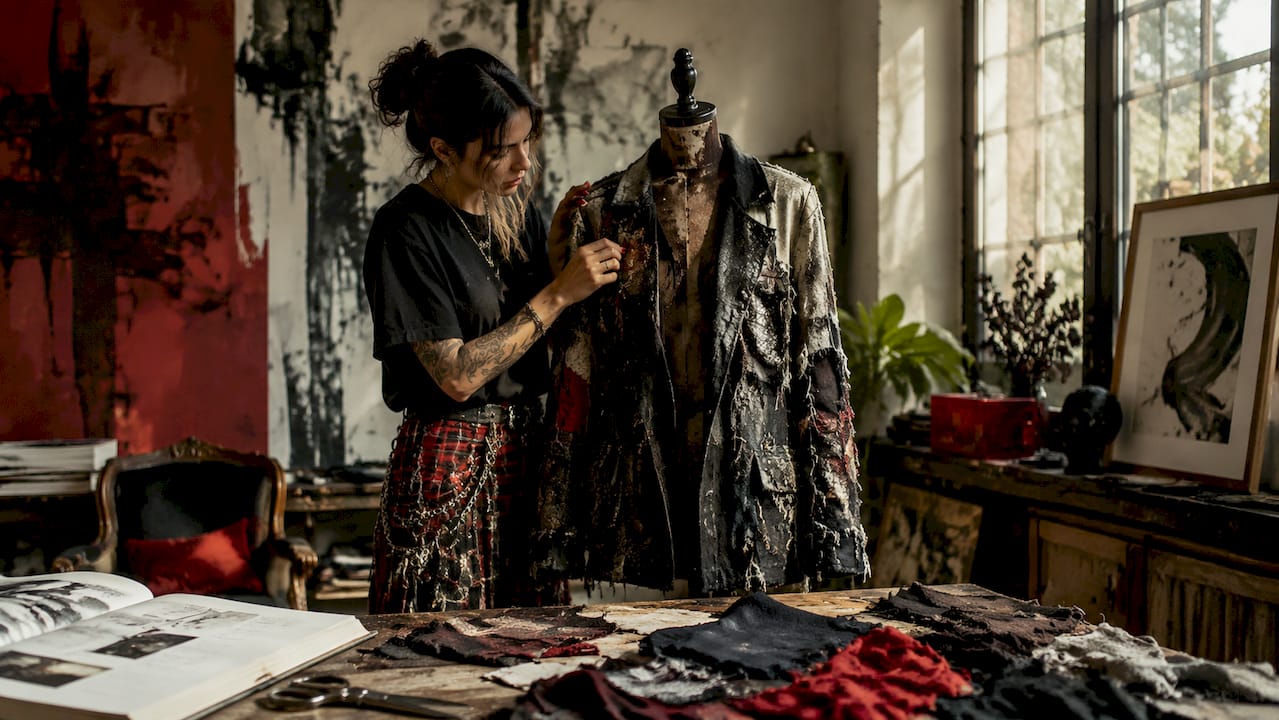
Pro Tip: When analyzing a rebellious outfit, ask three questions: What norm does it oppose? Who can decode that opposition? What happens to the wearer as a result? Those three layers reveal whether the fashion is genuinely communicating defiance or simply performing it.
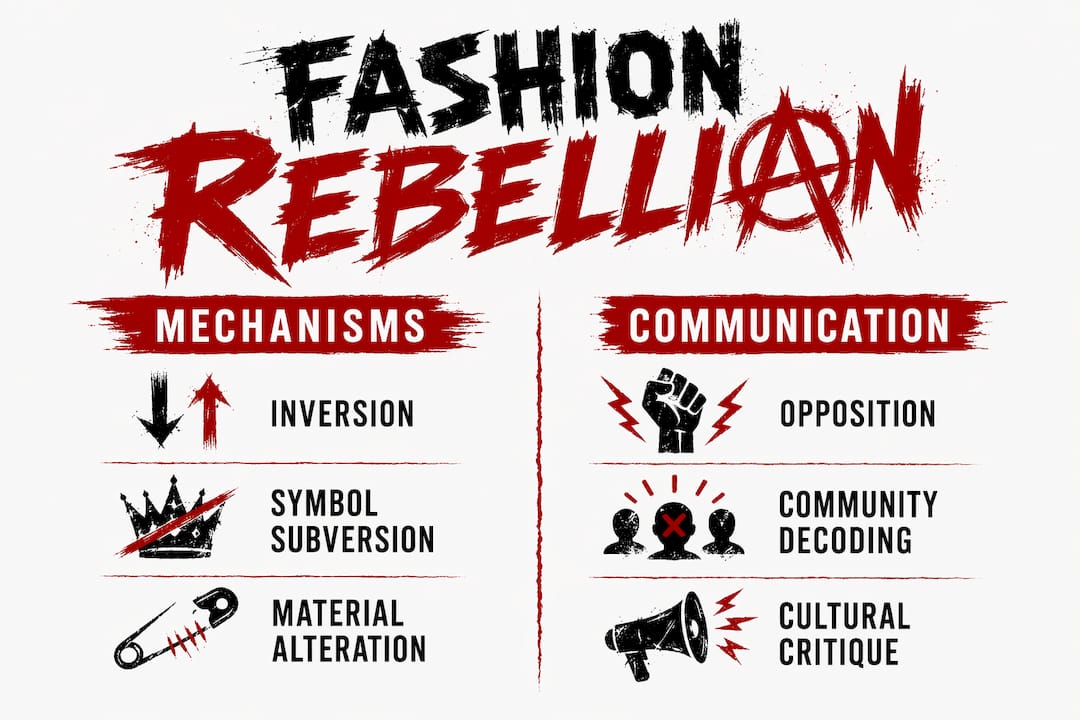
| Mechanism | How it communicates rebellion |
|---|---|
| Inversion | Turns high-status symbols into markers of refusal (e.g., luxury brands worn ironically) |
| Alteration | Modifies mandated or expected garments to signal resistance within constraints |
| Shock aesthetics | Uses grotesque or transgressive visuals to disrupt normalized dress ideologies |
| Remythologizing | Strips a garment’s default cultural meaning and replaces it with a new, oppositional one |
What historical and cultural examples illustrate fashion rebellion?
History provides the clearest proof that fashion as a form of rebellion is not a modern invention. It is a survival strategy, a political act, and a community language that predates any runway.
-
Enslaved people’s textile resistance. Enslaved people in antebellum America were forced to wear coarse osnaburg fabric, a material designed to mark their status and limit their self-expression. They transformed required textiles by treating the fabric with dirt or bark to alter its color and texture. The result was a coded vocabulary recognizable within their community but invisible to overseers. This is fashion rebellion at its most precise: a message sent within a shared frame, hidden from those who held power.
-
South African pantsula style. In apartheid-era South Africa, pantsula fashion (sharp trousers, two-tone shoes, and specific cap styles worn by Black urban youth) was read by the state as criminality. Police targeted pantsula style as a marker of political refusal, which paradoxically amplified its power. When the state names your clothing a threat, the clothing becomes a symbol of resistance whether you intended it or not.
-
Ambedkarite fashion in India. Anti-caste movements in India have used assertive clothing to challenge upper-caste visual norms. Ambedkarite fashion incorporates political imagery, blue (the color associated with B.R. Ambedkar), and design choices that visually assert Dalit identity and dignity. Wearing these garments carries real social risk, which makes the act of wearing them a genuine political statement.
-
Suffragette needlecraft banners. British suffragettes used embroidered banners as protest tools in the early 20th century. The domestic craft of needlework, coded as feminine and compliant, became a vehicle for political messaging. The subversion was in the medium itself: a form of labor associated with obedience was repurposed to demand rights.
Each of these examples shares a structure. There is a dominant dress code, a deliberate deviation, a community that can read the deviation, and a social consequence that confirms the message landed. The connection between music rebellion and clothing follows the same pattern, where subcultures build shared visual languages that outsiders cannot fully decode.
How can fashion rebellion be covert or hidden in plain sight?
Not all rebellious fashion announces itself. Some of the most powerful style and social protest happens quietly, inside systems that appear to offer no room for dissent.
-
Alter what you are told not to alter. The most direct form of covert rebellion is changing something “you’re not supposed to change.” Enslaved people who modified their mandated osnaburg fabric were doing exactly this. The alteration itself was the message. When constrained choices are modified, the modification signals agency within a system designed to eliminate it.
-
Use domestic craft as a political tool. Needlecraft has a long history as subversive protest, allowing resistance to hide in plain sight. Women embroidering samplers or banners appeared to be performing expected domestic roles. The content of those stitches told a different story. The appearance of compliance was the cover.
-
Embed meaning in materials, not just silhouettes. Covert rebellion often lives in fabric choice, color, or construction technique rather than in obvious symbols. A garment made from upcycled streetwear materials communicates a rejection of fast fashion’s disposability without requiring a slogan. The material is the message.
-
Build a community that can read the code. Covert rebellion requires an audience that shares the decoding frame. Without that shared knowledge, the message disappears. Pantsula wearers in South Africa understood what the style meant. The state understood it too, which is why it was policed. The power of hidden rebellion depends entirely on who can see it.
Pro Tip: Look beyond obvious symbols like band tees or political slogans when reading fashion statements of dissent. The most subversive choices are often in texture, construction, or material sourcing. Ask what the garment refuses to be, not just what it declares.
What social dynamics make fashion rebellion legible and potent?
Rebellion is most powerful when opposition is socially recognized, not just felt by the wearer. This distinction separates personal style from genuine fashion rebellion. A person can feel defiant in any outfit. The rebellion only becomes legible when a community, an institution, or an authority reads it as such.
Three dynamics determine whether a fashion statement of dissent actually communicates:
-
Shared cultural frames. Subcultures function as decoding communities. Punk, pantsula, and Ambedkarite fashion all require an audience that knows the visual grammar. Without that shared frame, the message is noise. This is why rebellious fashion trends tend to emerge from tight communities before they reach broader culture.
-
Institutional response. When authorities police a style, they confirm its meaning. South African police targeting pantsula wearers did not suppress the style. They amplified it by treating clothing as a political act. The same logic applies to slogan clothing banned from schools or workplaces. The ban is the validation.
-
Personal risk. How clothing expresses defiance is partly measured by what the wearer stands to lose. Anti-caste fashion in India carries social and sometimes physical risk for wearers. That risk is what separates a fashion statement from a fashion rebellion. When wearing something costs you something, the garment carries weight.
The interaction between wearer intention, observer perception, and social consequence creates a feedback loop. Intention alone is not enough. A person wearing a safety pin in 1977 London was participating in a shared punk grammar that gave the gesture meaning. The same safety pin worn today without that context communicates nothing specific. Fashion rebellion requires all three layers: material deviation, cultural decoding, and social consequence.
The 1960s Carnaby Street revolution in London illustrates this perfectly. Youth fashion there was not just about color or cut. It was a visible rejection of postwar austerity and class rigidity, readable by both the wearers and the establishment they were opposing. The role of identity in fashion is inseparable from this social dimension. Clothing tells others who you refuse to be, not just who you are.
Key takeaways
Fashion rebellion is a coded, socially validated act that requires material deviation, a shared decoding community, and real-world consequences to communicate defiance effectively.
| Point | Details |
|---|---|
| Rebellion is directional | Fashion communicates defiance only in relation to a dominant norm it opposes. |
| Semiotics explains the mechanism | Garments carry mythological meanings that can be reassigned to signal resistance. |
| History grounds the concept | Enslaved textile alterations, pantsula style, and Ambedkarite fashion prove rebellion predates modern streetwear. |
| Covert rebellion is real | Needlecraft, material choice, and subtle alteration communicate dissent without visible symbols. |
| Social recognition amplifies meaning | Institutional policing and community decoding determine whether a style becomes a genuine act of rebellion. |
Why subtlety in fashion rebellion deserves more credit than spectacle
Most conversations about how clothing expresses defiance gravitate toward the obvious: mohawks, protest tees, safety pins. I understand why. Those images are striking and easy to photograph. But after spending years studying how fashion functions as a coded language, I am convinced that the subtler forms of rebellion are the more sophisticated ones.
The enslaved people who altered their osnaburg fabric were not making a spectacle. They were building a private language inside a system designed to silence them. That is harder to do and, in many ways, more radical than a runway provocation. Balenciaga’s trash bag aesthetic gets press coverage. It does not get people arrested. Pantsula style did.
What strikes me about contemporary rebellious fashion is how much of it has been absorbed by the mainstream without losing its edge entirely. Streetwear brands that started as outsider signals are now sold in department stores. The question worth asking is not whether a style looks rebellious, but whether it still carries cost and community. When you wear something that your community reads as refusal and that the dominant culture reads as a problem, you are participating in a genuine tradition. Everything else is aesthetic.
Your own wardrobe is worth examining through this lens. Not every outfit needs to be a political act. But knowing that the choice exists, that fabric and silhouette and material can carry meaning beyond appearance, changes how you dress and why.
— Johnathan
Wear the signal: Anarxhy’s DNR collection
Anarxhy builds clothing for people who understand that fashion is a form of rebellion, not a trend cycle. The DNR collection puts that philosophy into physical form.
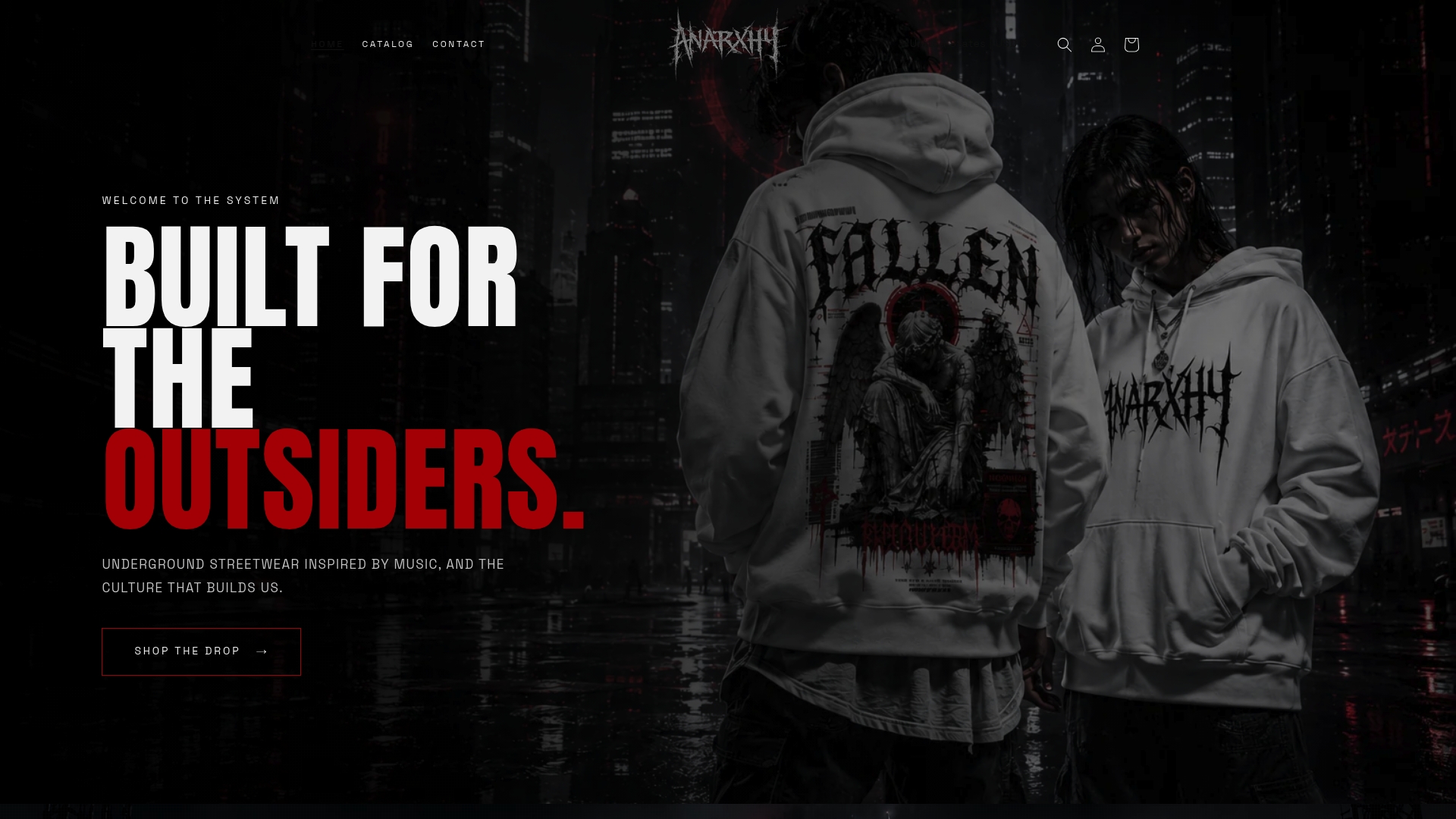
The “DIGITAL DECAY” hoodie and the “SYSTEM ERROR” hoodie from the DNR line carry the dystopian visual grammar of the Signal Lost series. Each piece is made from eco-friendly materials, which means the refusal extends beyond aesthetics into how the garment is produced. Limited drops keep the community tight and the signal clear. If you are looking for clothing that communicates something real, the new arrivals are worth your attention.
FAQ
What does it mean for fashion to communicate rebellion?
Fashion communicates rebellion when a garment deliberately opposes a dominant dress code in a way that a shared community can decode. The message requires material deviation, cultural context, and social recognition to function as genuine defiance rather than personal preference.
How did enslaved people use clothing as rebellion?
Enslaved people altered mandated coarse fabrics like osnaburg using dirt or bark to change color and texture, creating a coded visual vocabulary their community recognized as resistance. This is one of the earliest documented examples of fashion as a form of rebellion operating within severe constraints.
What role does semiotics play in rebellious fashion?
Semiotics explains how garments carry layered meanings: a primary function and a secondary cultural myth. Rebellious fashion works by stripping a garment’s default myth and replacing it with an oppositional one, a process Roland Barthes described as remythologizing.
Can fashion rebellion be subtle rather than obvious?
Needlecraft, material sourcing, and fabric alteration all function as covert rebellion, communicating dissent while appearing compliant. Suffragette embroidered banners and enslaved people’s textile modifications both prove that the most powerful fashion statements of dissent are sometimes invisible to those in power.
Why does institutional policing amplify fashion rebellion?
When authorities target a style, as South African police did with pantsula fashion during apartheid, they confirm that the clothing carries political meaning. The act of policing transforms a style choice into a recognized symbol of resistance, giving it weight beyond the wearer’s original intention.