

Festival fashion is defined as event-specific dress designed for physical endurance, subcultural expression, and music community identity, making it fundamentally different from streetwear’s brand-driven urban aesthetic. Understanding how festival fashion differs from streetwear matters now more than ever, because the two styles are converging in retail while remaining distinct in purpose and cultural logic. Culture Kings’ Festival Edit data shows graphic tees make up a third of festival purchases in 2026, with comfort footwear and practical hoodies dominating over spectacle dressing. Brands like Supreme and Stüssy built streetwear on scarcity and logo loyalty. Festivals like Lollapalooza and Coachella built their fashion culture on something else entirely: survival, belonging, and self-expression under the sun.
How festival fashion differs from streetwear in style elements
The most visible differences between festival and streetwear show up in silhouette, color, and material. Festival fashion favors breathable, loose-fitting garments built for layering across a full day of heat, dust, and crowd movement. Streetwear leans toward structured urban silhouettes, brand logos, and limited-edition pieces that signal status rather than stamina.
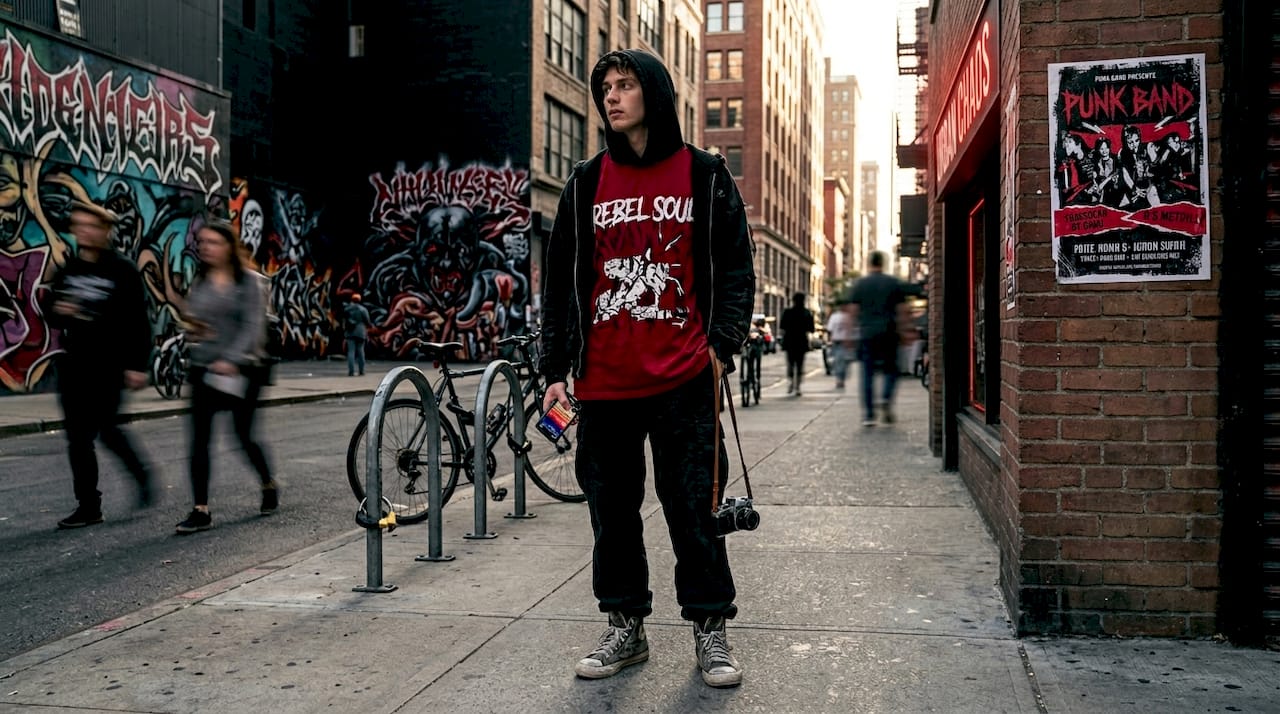
In 2026, neutral and black palettes dominate festival fashion, a shift away from the maximalist neon looks that defined earlier Coachella eras. Lollapalooza street style confirms this: relaxed denim, oversized tees, and cushioned-sole sneakers are the standard. Streetwear staples like cargo pants, structured hoodies, and logo-heavy tees still appear at festivals, but they get reconfigured for function rather than flex.
Here is how the two styles break down by key clothing categories:
- Graphic tees: Both styles use them, but festival versions prioritize soft, worn-in fabrics over stiff retail pieces. Streetwear tees lead with brand identity; festival tees lead with comfort and often carry band or event references.
- Hoodies: Streetwear hoodies are worn as statement pieces, often kept pristine. Festival hoodies get tied around the waist during peak heat and pulled on when temperatures drop at night.
- Footwear: Streetwear culture prizes fresh sneakers, often kept box-clean. Festival footwear means broken-in boots or cushioned sneakers that can handle 10 hours of standing and walking.
- Outerwear and layers: Festival dressing requires a layering strategy streetwear rarely demands. A light jacket or flannel shirt serves double duty as warmth and waist accessory.
Pro Tip: Pack footwear you have already worn in. New sneakers at a festival will wreck your feet by hour three, no matter how clean they look in the mirror.
How cultural identity shapes festival fashion versus streetwear
The cultural logic behind each style is where the real difference lives. Streetwear culture in 2026 is rooted in hip-hop, skateboarding, and a DIY ethos that evolved into brand loyalty and community built around scarcity. Owning a Supreme drop or a Stüssy collab signals membership in an urban subculture where authenticity is measured partly through what you own and when you got it.
Festival fashion operates on a different identity system. Authentic festival style emerges from the general admission crowd, not the backstage influencer zone. The most compelling looks at any major festival come from people who prioritized durability, subculture signals, and practicality over Instagram staging. That is a meaningful inversion of how streetwear identity works.
The cultural drivers behind each style can be mapped like this:
- Music scene belonging. Festival fashion signals which crowd you run with, which lineup you showed up for, and which subculture you claim. A country festival crowd dresses differently from a metal festival crowd, and both dress differently from an EDM crowd.
- Handmade and vintage customization. Festival customization signals personal history and community belonging through vintage finds and personalized pieces rather than brand logos. This is the opposite of streetwear’s retail-driven identity.
- Brand loyalty versus event loyalty. Streetwear asks: what brand do you rep? Festival fashion asks: what scene do you belong to? These are different questions with different answers in your wardrobe.
- Tour merch as crossover currency. Band merch influencing streetwear is one of the clearest examples of how music culture bleeds into urban style, creating pieces that work in both worlds.
The insight from Puma’s merchandising leadership, cited in WWD’s 2026 trend analysis, confirms that music culture drives the remixing of streetwear within festival contexts. Gen Z nostalgia for 90s and early 2000s music scenes is accelerating this crossover, pulling vintage streetwear references into festival dressing with a new functional spin.
In what ways does functionality separate festival fashion from streetwear?
Functionality is where festival fashion and streetwear diverge most sharply in practice. Streetwear is built to look good on a city block, in a photo, or at a drop queue. Festival fashion is built to survive conditions that would ruin most streetwear outfits within two hours.
Festival outfits require engineering for temperature swings, with hoodies tied at the waist during hot afternoon sets and unfurled when the temperature drops after sundown. This kind of adaptive layering is a festival-specific skill that streetwear culture does not demand. The physical realities of festivals including heat, walking, and long hours push breathable, loose clothing and worn-in shoes as non-negotiable standards.
Key functional priorities that define festival fashion in 2026:
- Breathable fabrics. Cotton, linen blends, and moisture-wicking materials outperform the heavier cotton fleece common in streetwear hoodies when temperatures climb past midday.
- Durability over pristine condition. Festival fashion accepts wear and dirt as part of the experience. Streetwear culture often treats visible wear as a negative, especially on limited-edition pieces.
- Pocket and carry capacity. Festival outfits need to carry phones, cards, and essentials without a bag. Cargo pants and utility vests serve a real function here, not just an aesthetic one.
- Transition capability. The best festival outfits move from afternoon heat to nighttime chill without a wardrobe change. Streetwear outfits rarely need to solve that problem.
Pro Tip: Build your festival outfit around one anchor layer you can tie or pack easily. A lightweight hoodie or oversized flannel does more work than any statement piece you will spend the day worrying about.
Treating festival fashion as a photoshoot costume is the most common mistake new festival-goers make. The looks that hold up across a full day are the ones built around comfort and resilience first, with style layered on top.
How festival fashion and streetwear influence each other in 2026
Festival fashion does not replace streetwear. It remixes streetwear based on music and creator culture intersections, borrowing core pieces and reengineering them for event performance. This crossover is accelerating in 2026, driven by TikTok wear-tests, “festival-core” aesthetic trends, and the growing overlap between everyday street style and event dressing.
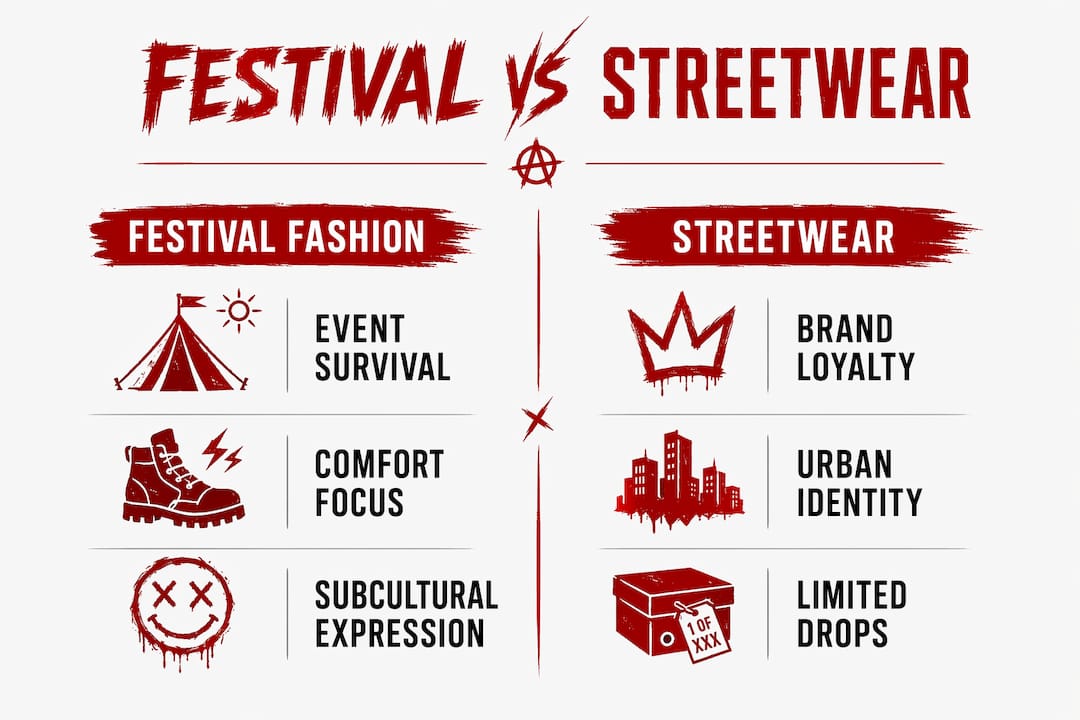
The table below maps the key crossover points between the two styles:
| Element | Streetwear approach | Festival fashion approach |
|---|---|---|
| Graphic tees | Brand statement, retail-fresh | Comfort-first, often vintage or band-referenced |
| Hoodies | Worn as a centerpiece, kept clean | Tied at waist, used as a functional layer |
| Sneakers | Fresh, logo-forward, status-driven | Broken-in, cushioned, built for long wear |
| Cargo pants | Aesthetic utility, urban silhouette | Functional pockets, durable fabric for all-day wear |
| Customization | Limited, brand-controlled | High, personal, vintage and handmade encouraged |
Festival pieces are moving into daily wardrobes as comfort-led apparel gains prominence beyond event use. The tour merch and subculture fashion pipeline is one of the clearest channels through which festival aesthetics enter everyday streetwear. A band tee bought at a show becomes a streetwear staple within a season. Genre-coded cues in festival dressing, like Western silhouettes at country festivals or all-black layering at metal events, are also feeding back into urban style as subculture signals gain mainstream traction.
Key takeaways
Festival fashion and streetwear share DNA but serve entirely different masters: one is built for brand identity and urban status, the other for music community belonging and physical endurance.
| Point | Details |
|---|---|
| Core purpose differs | Festival fashion is engineered for event survival; streetwear is built for urban identity and brand signaling. |
| Identity signals diverge | Festival style signals music scene belonging through customization; streetwear signals status through brand loyalty and scarcity. |
| Functionality gap is real | Festival outfits must handle 10-plus hours of heat, walking, and temperature swings that streetwear is never designed for. |
| Crossover is accelerating | Streetwear staples like hoodies and cargo pants are being remixed for festival function, blurring the line between the two styles. |
| Comfort is the 2026 consensus | Culture Kings data confirms comfort-driven, repeatable pieces have replaced spectacle dressing as the dominant festival fashion approach. |
Where the line actually blurs: a personal take
I have spent enough time at both festival grounds and streetwear drop lines to know that the people who dress best at festivals are rarely the ones who planned the hardest. The strongest looks I have seen at events like Lollapalooza and smaller underground festivals come from people who grabbed a worn-in hoodie, a broken-in pair of boots, and a vintage tee they actually love. No mood board. No costume logic.
The mistake I see constantly is treating street style versus festival attire as a binary choice. The real skill is knowing which streetwear pieces translate and which ones do not. A pristine logo hoodie does not survive a muddy field. A well-worn graphic tee from a brand like Anarxhy, built with durable materials and a real design ethos, does. The music rebellion and clothing connection is not just cultural theory. It shows up in what actually holds up when you are standing in a crowd for six hours.
My honest advice: stop comparing festival fashion and streetwear as competing categories. Think of festival dressing as a stress test for your streetwear. The pieces that pass are the ones worth building your wardrobe around. The ones that fail teach you what you actually need versus what just looks good in a photo.
— Johnathan
Dress for both worlds with Anarxhy
If you are looking for pieces that move between festival grounds and city streets without compromise, Anarxhy builds exactly that. The brand’s hoodies are made with eco-friendly materials and designed around the outsider ethos that connects music culture, rebellion, and real wearability.
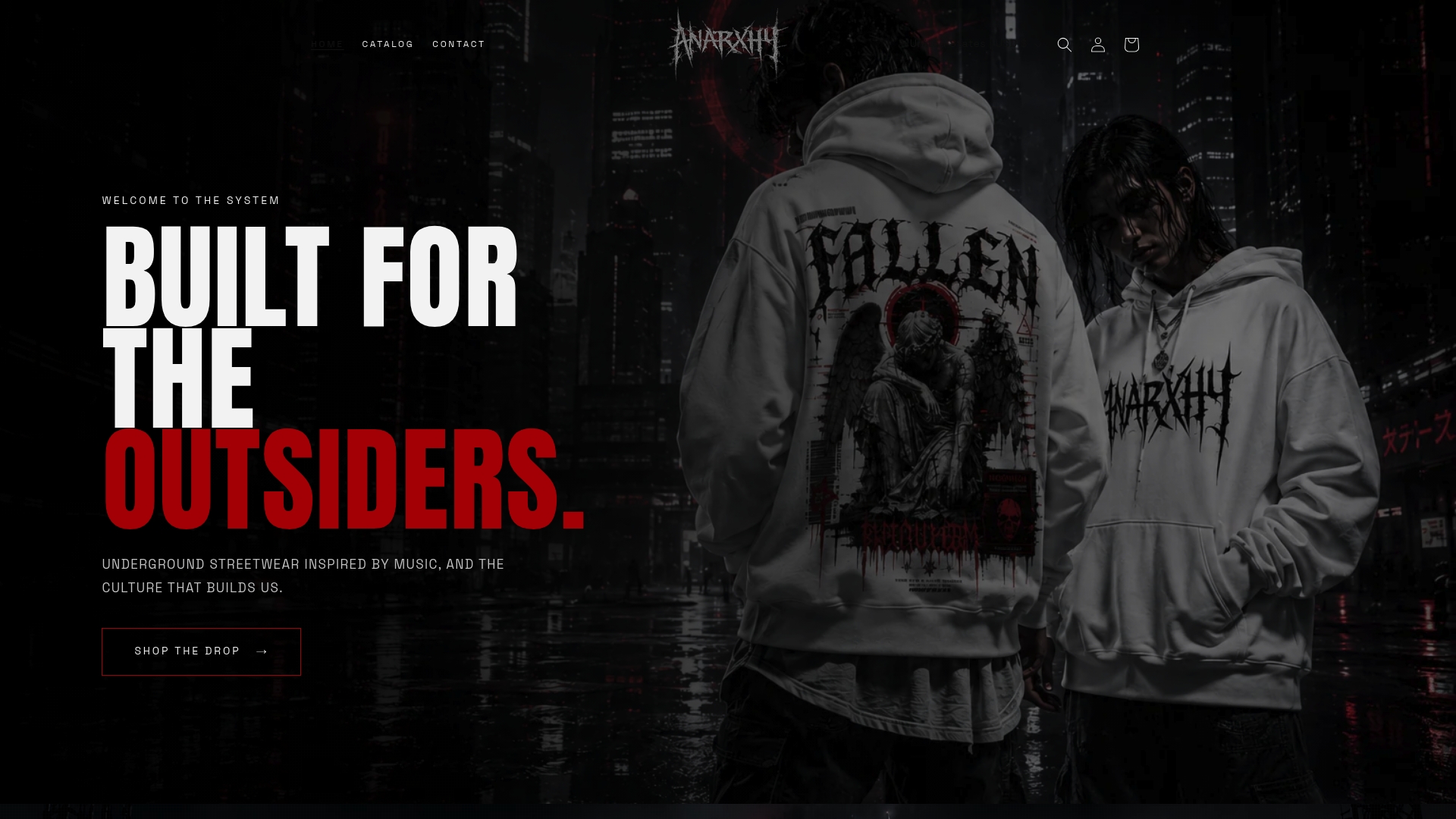
The DIGITAL DECAY hoodie and the SYSTEM ERROR hoodie are built for the kind of wear that festival and street life actually demands. Limited drops mean you are not wearing what everyone else has. Sustainable construction means the piece lasts beyond one season. If you want fashion that works as hard as you do, explore the full collection at Anarxhy.
FAQ
What is festival fashion exactly?
Festival fashion is event-specific dress designed for comfort, subcultural expression, and physical endurance at live music events. It prioritizes breathable fabrics, layering capability, and community identity signals over brand status.
How does streetwear differ from festival attire in purpose?
Streetwear is built around brand loyalty, urban identity, and exclusivity through limited drops. Festival attire is built around event survival, music scene belonging, and personal customization.
Can streetwear pieces work for festival fashion?
Yes, but only the right ones. Graphic tees, cargo pants, and hoodies translate well when they are worn-in and comfort-focused. Fresh, logo-heavy, or delicate streetwear pieces rarely survive full-day festival conditions.
What are the biggest festival fashion trends in 2026?
Culture Kings data shows graphic tees, practical hoodies, and comfort footwear dominating 2026 festival purchases. Neutral and black palettes have replaced maximalist color, and repeatable pieces have replaced one-wear costume dressing.
Does festival fashion influence everyday streetwear?
Directly. Festival pieces like band tees and broken-in boots regularly cross over into daily streetwear wardrobes, and the comfort-driven logic of festival dressing is reshaping what people expect from urban style year-round.