

The role of identity in fashion is the direct link between who you are and what you wear. Clothing is not decoration. It is a communication system, broadcasting personality, cultural roots, and values to every room you walk into. Research confirms this: 76% of people associate style with personality, and 75% connect it directly to self-confidence. That means your wardrobe is already doing the talking. The question is whether it is saying what you actually mean.
How the role of identity in fashion shapes your style
Fashion and personal identity are inseparable because clothing translates internal states into visible signals. Introverts often gravitate toward muted palettes and structured silhouettes that communicate calm and deliberateness. Extroverts reach for bold prints, layered textures, and statement pieces that demand attention. Neither is right or wrong. Both are honest.
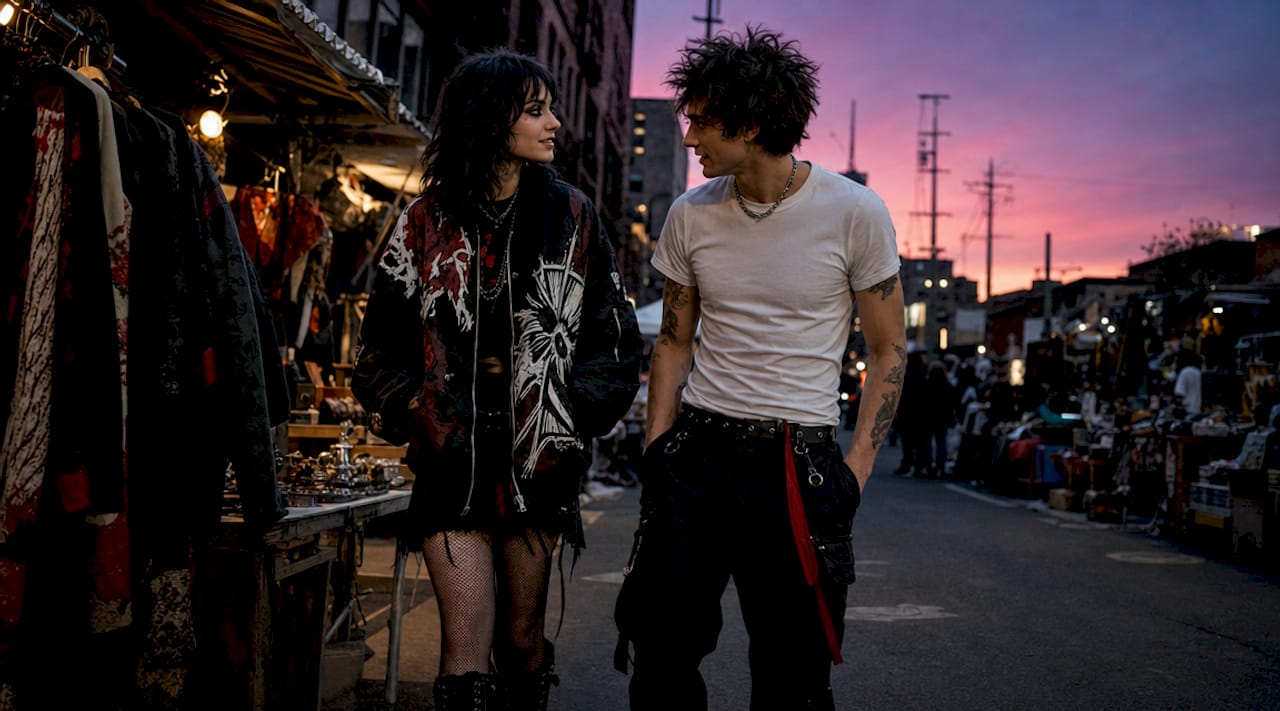
The connection runs deeper than personality type. Style reflects values, too. Someone who wears vintage or deadstock clothing is signaling environmental awareness as much as aesthetic preference. Someone in a band tee from a 1987 tour is broadcasting a cultural lineage. These are not accidental choices. They are identity expression in clothing made visible.
Social pressure complicates the picture. 46% of outfit decisions are influenced by social media, which means nearly half of what people wear is shaped by external validation loops rather than internal conviction. That statistic matters because it reveals how easily authentic expression gets diluted by the desire to fit in. The most powerful wardrobes are built by people who notice that pull and resist it anyway.
- Wear pieces that reflect your actual values, not your aspirational social feed
- Build a wardrobe around 3 to 5 recurring visual themes that feel genuinely yours
- Treat each outfit as a statement you would stand behind in a conversation
- Revisit your wardrobe when your identity shifts. Holding onto old aesthetics out of habit is a form of self-erasure
Pro Tip: If you feel more like yourself in a piece you bought for $12 at a thrift store than in something expensive you bought to impress someone, that $12 piece is the one doing real work. Dress from the inside out.
How does cultural identity show up in fashion?
Cultural identity in fashion operates through symbols, materials, silhouettes, and color systems that carry meaning within specific communities. West African kente cloth, South Asian embroidery patterns, Indigenous beadwork, and Japanese streetwear aesthetics all function as cultural storytelling. Wearing them communicates belonging, heritage, and pride to those who share the code.
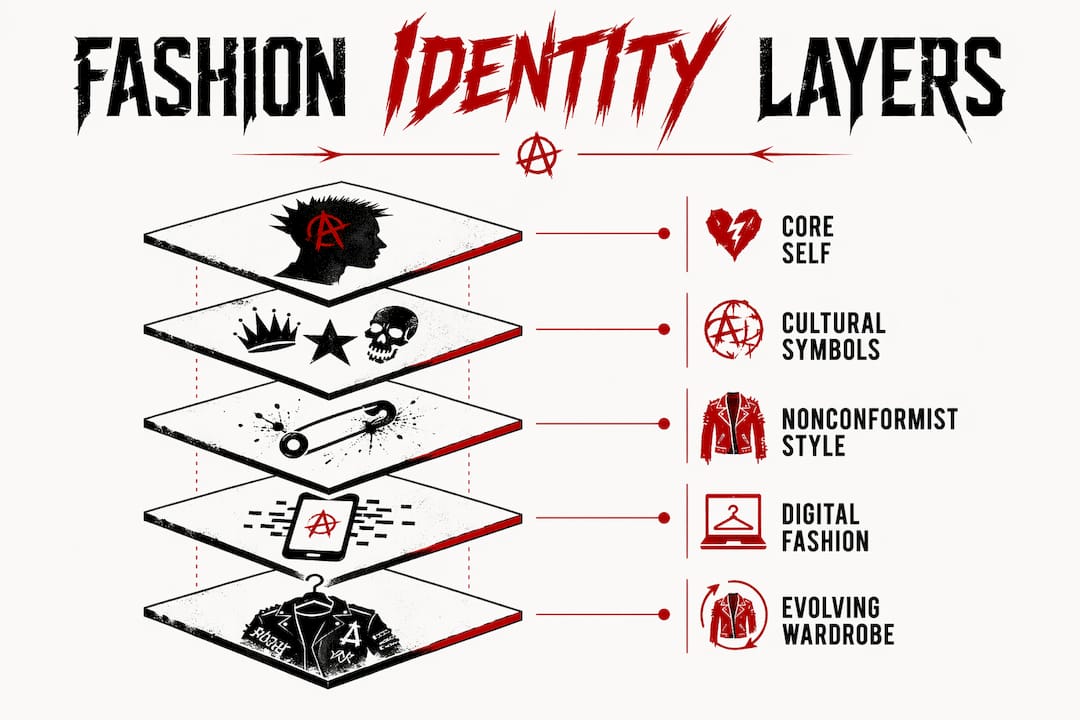
The risk enters when those symbols are extracted from their context. Digital platforms amplify the commodification of cultural fashion, stripping meaning from garments and repackaging them as trend content for audiences who have no relationship to the source culture. A headdress worn as a festival costume, a bindi treated as a beauty accessory, or sacred geometric patterns printed on fast-fashion basics all represent the same failure: treating identity markers as aesthetics rather than meaning.
Nonconformist styles have always carried political weight. Punk in 1970s Britain was a direct rejection of class hierarchy and institutional authority. Hip-hop fashion in 1980s New York was a declaration of presence and power from communities the mainstream ignored. The connection between music rebellion and clothing is not metaphorical. It is structural. Subcultures use dress codes to draw lines, signal allegiance, and make themselves legible to each other.
- Research the origin and significance of cultural symbols before incorporating them into your wardrobe
- Distinguish between cultural exchange (mutual, respectful, invited) and appropriation (extractive, decontextualized, profiting without credit)
- Support designers from the cultures whose aesthetics inspire you
- Recognize that subculture fashion carries community memory, not just visual style
What does nonconformist fashion signal about identity?
Nonconformist fashion functions as a visible identity marker, particularly in communities where mainstream codes erase or misrepresent who people are. In LGBT+ communities, new fashion codes enable identification in opposition to non-LGBT people, creating semiotic systems that signal belonging to insiders while remaining partially legible to outsiders. This is not accidental. It is a survival and solidarity strategy built into the fabric of the clothes themselves.
Gender-nonconforming visibility in fashion carries real stakes. Research on transgender and gender-diverse teachers shows that subverting institutional dress codes functions as both an act of resistance and a source of professional risk. Visibility affirms identity. It also invites scrutiny. That tension is not a reason to suppress expression. It is a reason to understand the environment you are operating in and make deliberate choices.
Here is how to manage identity expression strategically without compromising authenticity:
- Map your contexts. Identify which environments carry the highest interpretive risk and which offer the most freedom. Your wardrobe does not need to be identical across all of them.
- Build a core identity anchor. Choose 2 to 3 elements (a silhouette, a color, a material) that appear in every context. These are non-negotiable signals of who you are.
- Use layering as a tool. Pieces that can be added or removed let you modulate visibility without abandoning your aesthetic.
- Find your community. Streetwear culture and alternative fashion scenes create spaces where nonconformist identity is the norm, not the exception.
Pro Tip: The goal is not to dress for every audience. It is to dress in a way that you recognize yourself in every mirror. Strategic adaptation is not compromise. It is intelligence.
How does digital fashion change identity expression?
Virtual fashion and online style communities have fundamentally expanded how identity expression in clothing works. Physical garments carry geographic and economic constraints. Digital fashion does not. A Gen Z user on Rednote or Instagram can construct a fully realized aesthetic identity through digital pieces, avatar styling, and curated visual content without owning a single physical item from that world.
The mechanics of engagement reveal something important. Self-driven identity expression in digital fashion predicts consumer engagement more strongly than peer validation. This means the people who build the most resonant digital style identities are not chasing likes. They are building meaning for themselves first. The audience follows the authenticity, not the other way around.
Understanding how online fashion catalogs work in 2026 matters here because digital retail has become a primary space for identity-driven discovery. Algorithms surface aesthetics based on behavior, which means your digital fashion choices actively shape what you are shown next. That feedback loop can either deepen your authentic style or pull you toward trend conformity, depending on how consciously you engage with it.
| Digital fashion behavior | Impact on identity expression |
|---|---|
| Curating a consistent visual aesthetic across platforms | Reinforces personal identity signals and builds recognizable style authority |
| Chasing trending aesthetics for engagement | Dilutes authentic expression and creates identity inconsistency over time |
| Engaging with niche style communities | Deepens cultural and subcultural identity connections beyond mainstream fashion |
| Using digital fashion to experiment before buying | Reduces financial risk while expanding identity exploration |
The physical and digital wardrobe are now one system. What you wear in both spaces shapes how you understand yourself and how others read you.
Key takeaways
The role of identity in fashion is not passive. Every clothing choice either affirms who you are or defers to who others expect you to be.
| Point | Details |
|---|---|
| Style communicates identity | 76% of people link style to personality, making clothing a primary identity signal. |
| Cultural symbols carry meaning | Wearing cultural fashion without context risks commodification and erasure of identity. |
| Nonconformist dress codes build community | LGBT+ and alternative fashion communities use semiotic clothing systems to signal belonging. |
| Digital expression drives engagement | Self-driven digital fashion identity outperforms peer-validation-based styling in audience engagement. |
| Identity evolves, so should your wardrobe | Fashion taste changes directly follow identity shifts, making wardrobe evolution a healthy practice. |
Fashion is a living document, not a fixed aesthetic
I have spent years watching people treat their wardrobe as a finished product. They find a look that works, lock it in, and defend it against change. That is the single biggest mistake you can make with fashion as an identity tool.
Research from SAGE Open confirms what I have seen in practice: fashion taste evolves with identity shifts. The person you were at 22 had different values, different fears, and different community affiliations than the person you are now. Your wardrobe should reflect that movement, not resist it. Holding onto an old aesthetic because it once felt right is like keeping a journal from a decade ago and calling it your current worldview.
The readers I find most interesting are the ones who treat their wardrobe as a working document. They add, remove, and revise. They are not loyal to a look. They are loyal to honesty. That is a fundamentally different relationship with clothing, and it produces style that is genuinely hard to replicate because it is built from the inside.
The digital dimension adds a layer of complexity worth taking seriously. Online, the pressure to perform a consistent aesthetic for an audience can calcify your style in ways that feel like authenticity but are actually audience management. The test is simple: if you changed your style tomorrow and lost followers, would you change it back? If yes, you are dressing for them. If no, you are dressing for yourself. Only one of those produces real identity expression.
— Johnathan
Dress like you mean it with Anarxhy
If this article resonated with you, it is because you already know that fashion is not about trends. It is about truth. Anarxhy builds clothing for people who understand that distinction. Every piece in the collection is designed for those who reject the mainstream script and want their wardrobe to reflect something real.
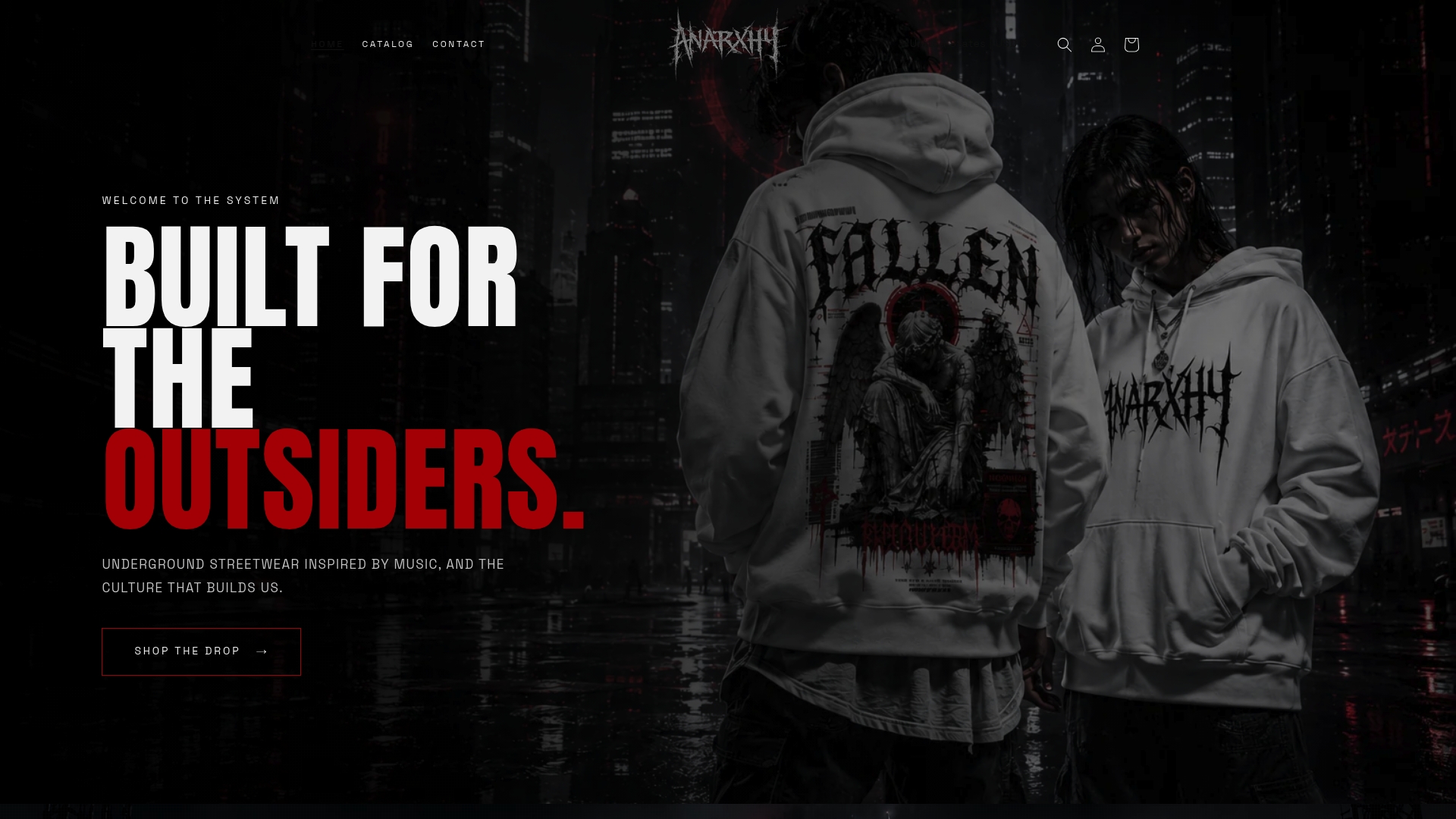
The FALLEN//001 unisex hoodie from the Signal Lost series is built from eco-friendly materials and carries the brand’s outsider ethos in every detail. It is not a logo piece. It is a position statement. If you are ready to expand your identity-driven wardrobe, the new arrivals collection brings fresh drops that speak directly to those who live on the fringes of culture. Limited runs. No restocks. Exactly the way it should be.
FAQ
What is the role of identity in fashion?
The role of identity in fashion is the way personal values, cultural background, and personality traits manifest through clothing choices. Style functions as a communication system that signals who you are to yourself and to others.
How does cultural identity influence what people wear?
Cultural identity in fashion shows up through symbols, materials, and silhouettes that carry meaning within specific communities. Wearing these elements signals heritage and belonging, but extracting them without context risks commodification and loss of meaning.
Why do nonconformist styles matter for identity expression?
Nonconformist fashion creates visible identity markers for communities whose identities are erased or misrepresented by mainstream dress codes. LGBT+ communities, for example, use distinct clothing codes to signal belonging and distinguish themselves from majority norms.
Does digital fashion affect how people express identity?
Self-driven identity expression in digital fashion predicts consumer engagement more strongly than peer validation, meaning authentic online style builds more resonant identity than trend-chasing does.
Can your wardrobe change as your identity changes?
Yes. Research confirms that changes in personal identity link directly to shifts in fashion taste, making wardrobe evolution a natural and healthy part of identity development rather than inconsistency.