

Rave culture is defined as the direct origin of streetwear’s most recognizable aesthetic codes: neon palettes, oversized silhouettes, reflective materials, and the DIY ethos of radical self-expression. How rave culture influenced streetwear is not a subtle story. It is a decades-long transfer of underground energy into mainstream fashion, now validated by Balenciaga, Gucci, and Prada integrating rave-inspired iridescent materials and oversized cuts into their core seasonal lineups. The rave scene gave streetwear its obsession with comfort, visibility, and identity. Every oversized hoodie, graphic tee, and reflective jacket you see on a city block carries a direct line back to a warehouse in Manchester or a Detroit club in 1989.
How rave culture influenced streetwear: the core mechanics
Rave culture’s contribution to streetwear is not just aesthetic. It is structural. The rave fashion ethos prioritized maximalism and functional materials that served both visual and practical needs in dense, dark environments. Clothing had to allow freedom of movement for hours of dancing, regulate body temperature through layering, and make the wearer visible in strobe-lit rooms. Those constraints produced a design philosophy that streetwear absorbed wholesale.
The transfer happened because both cultures share the same core motivation: clothing as identity signal. Streetwear, rooted in hip-hop and skate culture, already understood that what you wear communicates who you are and who you reject. Rave culture added a second layer. It said clothing should also communicate how you feel and what experience you are seeking. That shift from static identity to mood-based dressing is rave culture’s most lasting gift to streetwear.
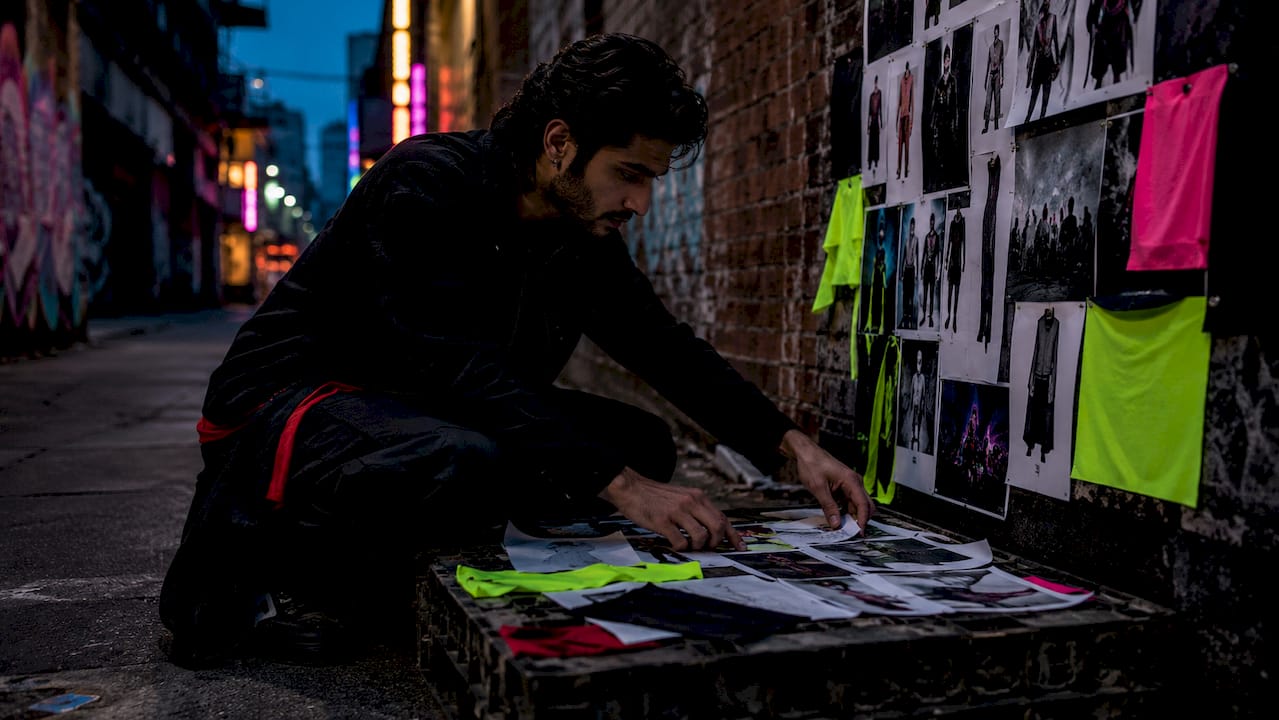
Luxury adoption confirmed the cultural weight. Rave elements moving past niche subculture into globally recognized runway trends represents both commercial success and cultural validation. When Gucci sends a model down the runway in iridescent mesh over a baggy utility pant, it is not trend-chasing. It is acknowledging that rave aesthetics have earned permanent status in fashion’s vocabulary.
What are the key rave culture fashion staples in streetwear?
Rave culture fashion staples explained through a streetwear lens reveals how specific garments and materials made the jump from club to catalog. These are not vague influences. They are direct translations.
- Neon and reflective materials. Reflective textiles and mesh layering originally served visibility and temperature control during long dance sessions. Streetwear adopted both for their visual aggression. Reflective 3M panels on jackets and neon colorblocking on hoodies are now standard drops from brands operating in the rave-streetwear space.
- Oversized silhouettes. Oversized t-shirts and baggy pants became standard early rave wear because they allowed unrestricted movement and created anonymity in crowds. Streetwear absorbed this silhouette and made it a power statement. The dominance of oversized fits in 2026 retail is a direct inheritance from 90s rave floors.
- Utility accessories. Kandi bracelets, glow sticks, and goggles started as rave-specific cultural symbols. Their DNA lives in streetwear’s current obsession with functional accessories: cargo pockets, bungee cord detailing, and face-framing eyewear.
- DIY graphics and layering. Rave culture’s do-it-yourself aesthetic, born from limited budgets and the desire to stand out, translated directly into streetwear’s graphic tee culture and the layering techniques that define contemporary fits.
Pro Tip: When building a rave-influenced streetwear look, anchor one maximalist piece (neon, reflective, or heavily graphic) against neutral oversized basics. This is exactly how rave dressers balanced visibility with wearability across a full night.
How has rave fashion evolved through the decades?
The historical arc of rave fashion’s influence on streetwear runs through four distinct phases, each leaving a different mark on the clothes people wear today.
-
1980s and 90s: function and anonymity. The original rave scene in the UK and US prioritized comfort and movement above everything. Baggy clothes, bucket hats, and trainers were not fashion statements. They were practical gear for all-night events in warehouses with no air conditioning. This phase gave streetwear its foundational silhouette: loose, layered, and built for endurance.
-
Y2K: futurism and metallics. As rave culture entered the mainstream through superclubs like Cream and Ministry of Sound, the aesthetic shifted toward cyber futurism. Metallic fabrics, PVC trousers, and platform shoes reflected a culture that believed technology and euphoria were the same thing. Streetwear absorbed the metallic palette and the futurist graphic language of this era.
-
2010s: EDM, trap, and logo culture. The rise of EDM festivals like Coachella and Ultra brought rave aesthetics to a mass American audience. This phase produced logo-heavy streetwear, festival-branded collections, and the normalization of neon as a year-round color rather than a subcultural signal. Brands like Supreme and Off-White began incorporating rave-adjacent graphics and color into drops that sold out in minutes.
-
2020s to present: the rave style renaissance. The rave-streetwear convergence is now described as a renaissance, blending 90s baggy utility, Y2K futurism, and techwear minimalism to redefine modern streetwear. Today’s most interesting looks mix Y2K accessories with 90s silhouettes in what designers call mood-based dressing. The garment’s purpose is defined by the experience, not the season.
“The dancefloor operates as both a mating dance and a runway. Fashion and music share the same core motivations: self-expression and attraction.” — Creative Boom, Ibiza Art Weekend
This quote captures why rave culture’s influence on streetwear is not accidental. The dancefloor has always been a laboratory for style evolution, where new combinations get tested in real time against the harshest possible audience.
How do rave-inspired streetwear and traditional streetwear differ?
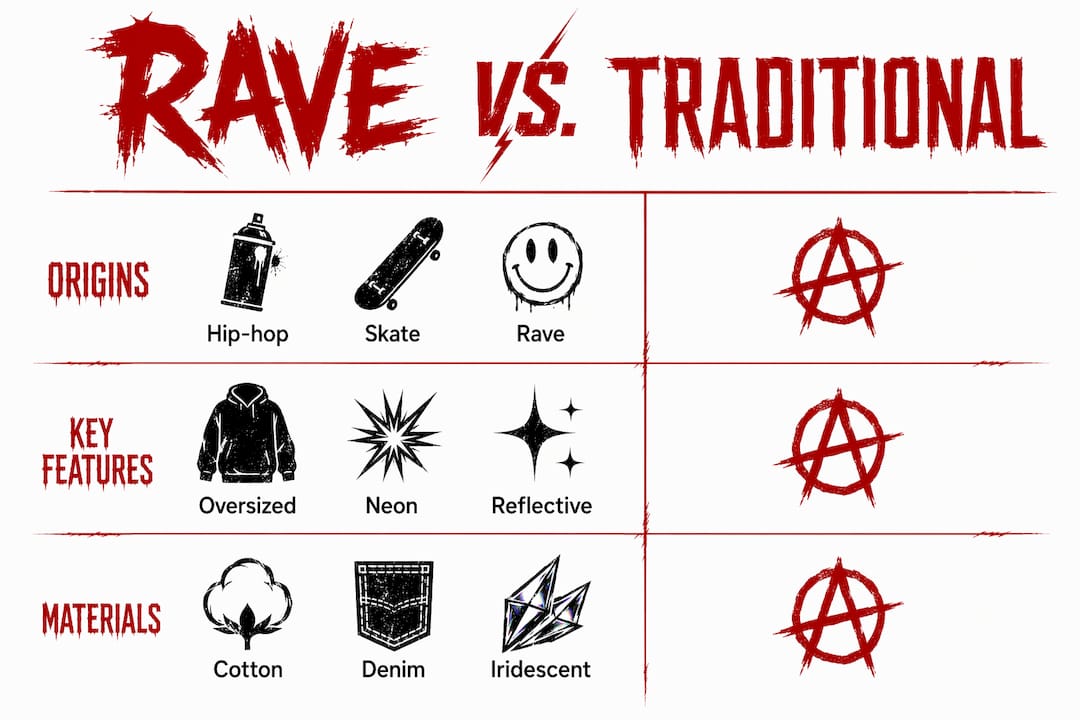
Understanding the rave culture impact on fashion requires separating what rave brought to streetwear from what was already there. The two traditions share DNA but come from different instincts.
| Element | Traditional streetwear | Rave-influenced streetwear |
|---|---|---|
| Origins | Hip-hop, skate, and surf subcultures | Underground club and festival scenes |
| Core aesthetic | Logo-driven, brand-conscious, minimal color | Maximalist, neon, reflective, layered |
| Silhouette logic | Oversized for cultural signaling | Oversized for movement and endurance |
| DIY ethos | Custom graphics, graffiti-inspired prints | Handmade accessories, kandi, altered garments |
| Luxury crossover | Supreme x Louis Vuitton, Nike x Off-White | Balenciaga rave collections, Prada iridescent lines |
The overlap is real and significant. Both traditions value streetwear culture’s authenticity, both resist mainstream fashion’s seasonal cycles, and both use clothing to signal membership in a community that operates outside conventional norms. The difference is that rave streetwear adds an experiential dimension. The clothes are designed to perform in a specific environment, not just to be seen on a street corner.
Pro Tip: If you want to identify whether a streetwear piece has genuine rave influence, check the fabric choices first. Mesh panels, reflective coatings, and stretch-incorporated materials signal rave DNA. Pure cotton graphics with no functional consideration are traditional streetwear.
What role do music and festivals play in rave fashion’s streetwear influence?
Music is not a background element in this story. It is the engine. DJ collaborations and music visuals drive streetwear brand design direction in ways that surface-level trend adoption never could. When a DJ wears a specific brand at a festival seen by 80,000 people, the cultural transfer is immediate and credible.
- Festival environments act as live testing grounds for rave-streetwear fusion. Designers now create collections tested in live music and dance environments for durability, movement, and cultural resonance before production. This contextual design approach means the event defines the garment’s purpose, not a seasonal calendar.
- Music video and album art aesthetics feed directly into streetwear graphics. The visual identity of artists like Aphex Twin, Bicep, and Peggy Gou has shaped the graphic language of entire streetwear collections, from color palettes to typography choices.
- Authentic rave-inspired streetwear emerges from deep synergy with music culture, not surface-level trend adoption. Brands that send designers to actual raves and festivals produce fundamentally different work than brands that pull references from mood boards.
- The mood-driven nature of rave culture shapes clothing functionality. A garment designed for a rave needs to handle sweat, movement, temperature shifts, and hours of wear. Those functional demands produce better streetwear than purely aesthetic design processes.
The intersection of festival fashion and streetwear is where the most interesting design decisions happen in 2026. Brands that understand this are producing work that feels alive. Brands that ignore it are producing costumes.
Key takeaways
Rave culture shaped streetwear by transferring its core values: functional maximalism, oversized silhouettes, reflective materials, and mood-based dressing from underground clubs to global runways and retail floors.
| Point | Details |
|---|---|
| Functional origins drive aesthetics | Rave fashion’s neon and reflective materials solved real problems in dark, crowded spaces before becoming style signals. |
| Oversized silhouettes carry rave DNA | Baggy fits originated in rave’s need for movement and anonymity, not in streetwear’s brand-signaling logic. |
| Music is the engine, not the backdrop | Authentic rave-streetwear collections come from genuine music culture immersion, not trend forecasting. |
| Luxury validates the transfer | Balenciaga and Gucci adopting rave aesthetics confirms the subculture’s permanent place in fashion’s vocabulary. |
| Mood-based dressing is the lasting shift | Rave culture moved streetwear from static identity signaling toward experience-driven, contextual clothing choices. |
The dancefloor never stopped designing
I have spent years watching fashion critics treat rave’s influence on streetwear as a trend story. It is not. It is a structural shift in how a generation understands the purpose of clothing. The rave scene did something that hip-hop and skate culture, for all their contributions, did not fully accomplish. It made clothing about feeling, not just belonging.
What strikes me most is the durability of this influence. Rave culture has been declared dead or commercialized roughly every five years since 1992, and every time, a new generation rediscovers the dancefloor and rebuilds the aesthetic from scratch. The rave-streetwear fusion we see in 2026 is not nostalgia. It is the fourth or fifth iteration of the same fundamental truth: when people gather to move together in the dark, they dress for transformation, not for approval.
The commercialization argument is worth taking seriously. When Prada puts iridescent mesh on a runway, something is lost from the original context. But something is also gained. Cultural validation matters. The shift from underground to luxury marks both the dilution and the permanence of rave aesthetics. I would rather see rave culture’s design logic embedded in mainstream fashion than watch it remain a sealed subculture that only insiders can access.
The brands doing this right are the ones that treat the dancefloor as a design brief, not a mood board. That distinction is everything.
— Johnathan
Wear the signal, not the costume
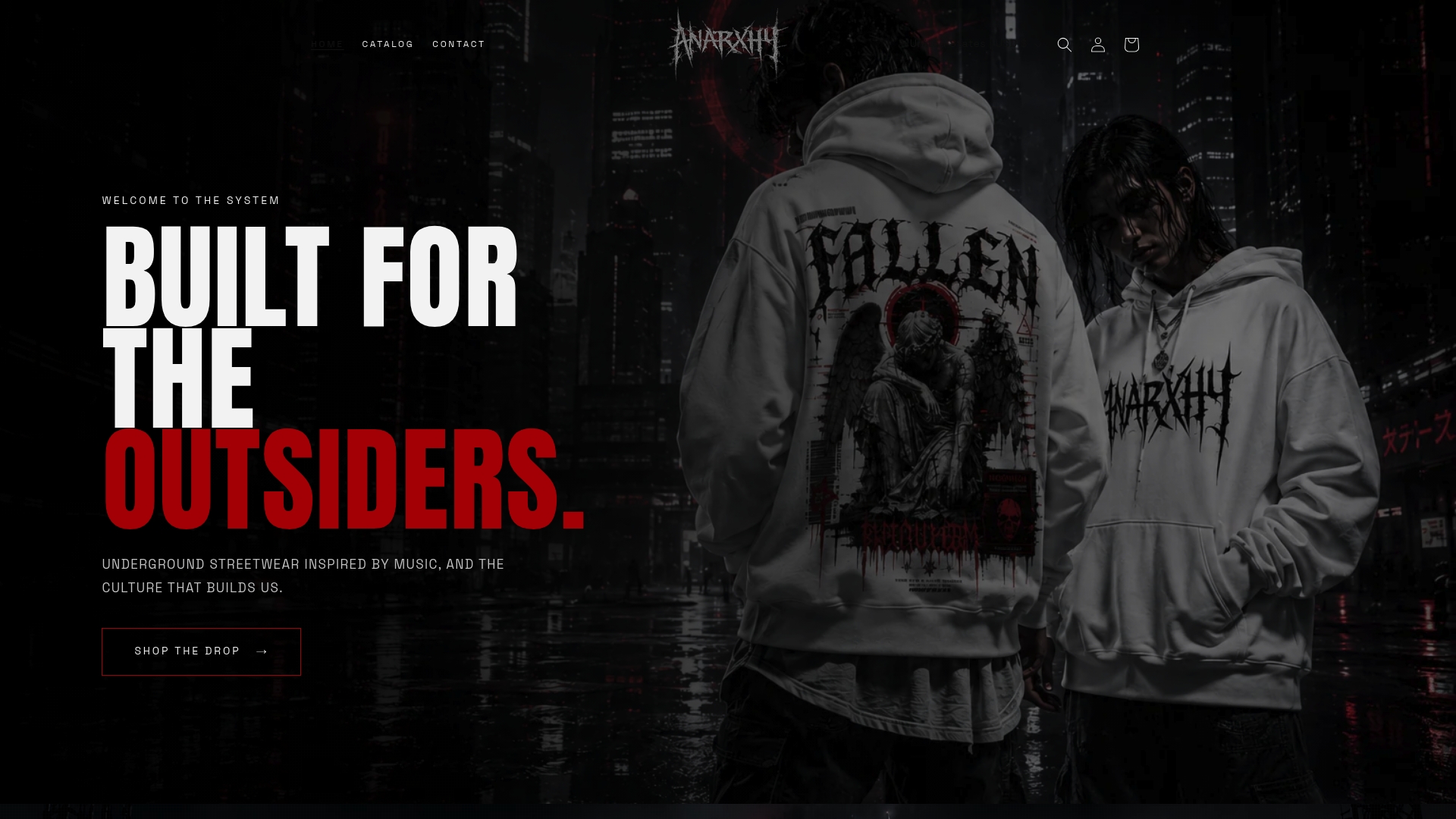
Anarxhy builds from exactly this tradition. The brand’s Signal Lost collection translates rave culture’s core design logic into streetwear built for people who understand the difference between wearing a reference and living one. The DIGITAL DECAY hoodie carries rave-inspired neon detailing and an oversized cut engineered for movement, not just silhouette. The FALLEN//001 hoodie embodies the utility-meets-avant-garde ethos that defines authentic rave-streetwear. Both are made with eco-friendly materials, because the outsider ethos includes rejecting disposable fashion. Explore new arrivals from Anarxhy and find the pieces that match your frequency.
FAQ
How did rave culture directly influence streetwear?
Rave culture transferred its core design values to streetwear: oversized silhouettes for movement, neon and reflective materials for visibility, and a DIY ethos that prioritized self-expression over brand conformity. These elements moved from underground clubs to mainstream fashion through festival culture, DJ collaborations, and luxury brand adoption.
What are the main rave culture fashion staples in streetwear today?
The primary rave-derived staples in current streetwear include reflective and iridescent fabrics, baggy utility silhouettes, mesh layering, neon colorblocking, and functional accessories with cargo or bungee detailing. These originated as practical solutions for all-night dancing in dark, crowded environments.
Which luxury brands have adopted rave-inspired streetwear aesthetics?
Balenciaga, Gucci, and Prada now integrate rave aesthetics, including iridescent materials, neon palettes, and oversized silhouettes, into their core seasonal collections as of 2026. This adoption confirms rave culture’s permanent status in mainstream fashion vocabulary.
How does rave-influenced streetwear differ from traditional streetwear?
Traditional streetwear is rooted in hip-hop and skate culture, prioritizing logo-driven, brand-conscious design. Rave-influenced streetwear adds maximalist color, reflective materials, and experience-driven functionality, producing clothing designed to perform in specific environments rather than simply signal cultural membership.
Why is music so central to rave culture’s impact on fashion?
Music creates the context that gives rave fashion its meaning. DJ collaborations and festival environments act as live testing grounds where clothing is evaluated for durability, movement, and cultural resonance before it reaches retail. Brands that engage directly with music culture produce more authentic rave-inspired streetwear than those working from trend reports alone.