

Video game art influences apparel design by translating digital visual systems, cultural narratives, and character aesthetics into physical clothing. This is the defining creative exchange of the current decade in fashion. Nearly 50% of the U.S. gaming market is women, which means designers can no longer treat gaming culture as a niche reference. The result is a generation of apparel collections built on escapism, fantasy silhouettes, and digital texture work that would have been unimaginable in a pre-gaming era. Anarxhy sits at the center of this shift, building streetwear that treats gamer aesthetics as a primary design language rather than a borrowed trend.
How video game art influences apparel design: the core visual language
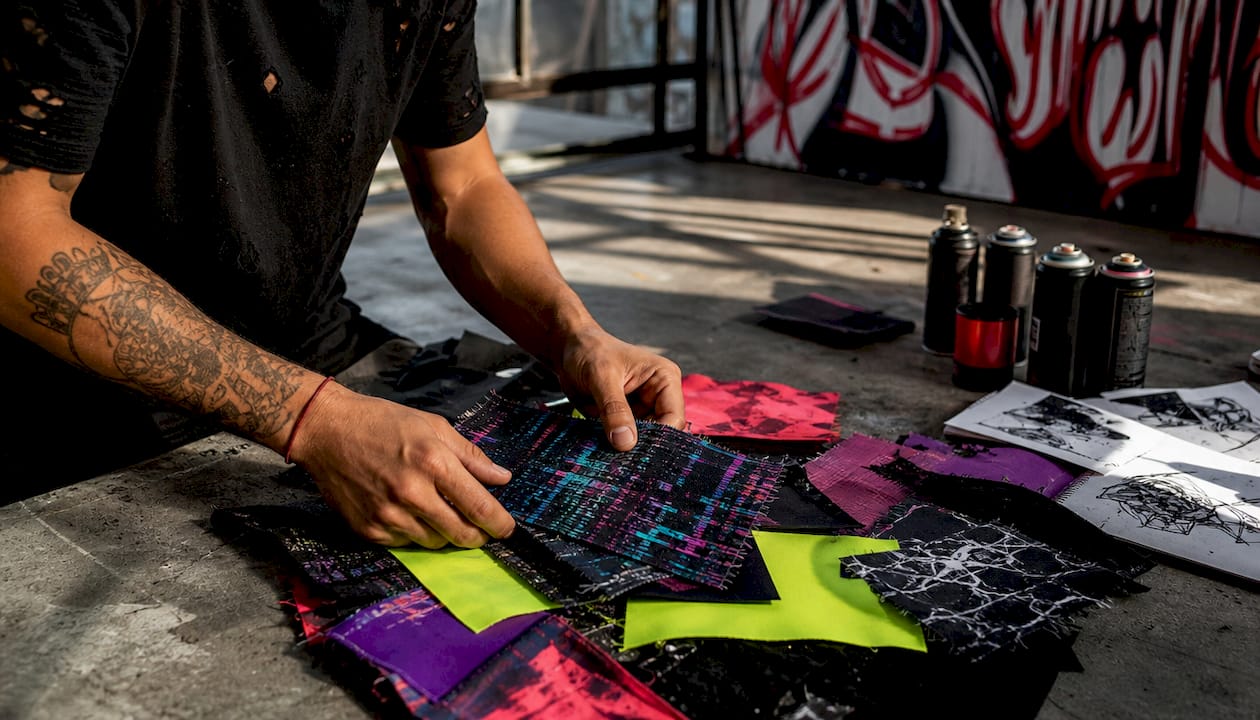
The most direct path from screen to fabric runs through visual motifs. Video game inspired streetwear translates gameplay tension, digital glitches, and high-contrast palettes into garment aesthetics rather than copying character costumes. That distinction matters. A hoodie that channels the mood of a corrupted loading screen communicates something real about the wearer’s identity. A hoodie with a game logo printed on it is just merchandise.
Specific visual elements that cross over consistently include:
- Digital glitch effects: Distorted type, fragmented imagery, and color bleed simulate the visual noise of corrupted game data. These translate directly onto screen-printed and sublimated fabrics.
- Neon and high-contrast palettes: Games use extreme color contrast to direct player attention. Apparel designers borrow this logic to create pieces that read clearly across social media and in low-light environments.
- Pixelation and lo-fi textures: Retro game aesthetics, particularly 8-bit and 16-bit visual styles, produce graphic patterns that work well on structured garments like jackets and tees.
- Futuristic typography: Game UI fonts and HUD-style lettering appear on streetwear as graphic elements that signal digital fluency without requiring any game-specific context.
- Oversized, nonhuman silhouettes: Spring 2026 runway collections feature exaggerated proportions directly inspired by game character design and fantasy creature aesthetics.
Fashion historian Valerie Steele describes this as “reclaimed escapism,” arguing that real-world uncertainty pushes designers toward fantastical, unconventional silhouettes. That framing explains why the influence runs deeper than surface decoration. Designers are borrowing the emotional logic of games, not just their graphics.
Pro Tip: When designing clothes with game art, start with mood and atmosphere rather than specific game assets. Ask what the gameplay feels like, then build a color story and texture palette from that feeling.
Check out the futuristic apparel trends shaping gaming subculture in 2026 for a deeper look at how these visual systems are landing in retail.
How does cultural diversity in games shape fashion collections?
Cultural representation in gaming directly shapes what designers put on the rack. Over 70% of gamers consider diverse character representation highly important, and that demand creates pressure on fashion brands to reflect the same cultural specificity in their collections. Designers are responding with what cultural analysts call “cultural couture,” apparel that draws on historically accurate garments and regional aesthetics rather than generalized fantasy.
The table below maps how specific gaming representation trends translate into apparel design decisions.
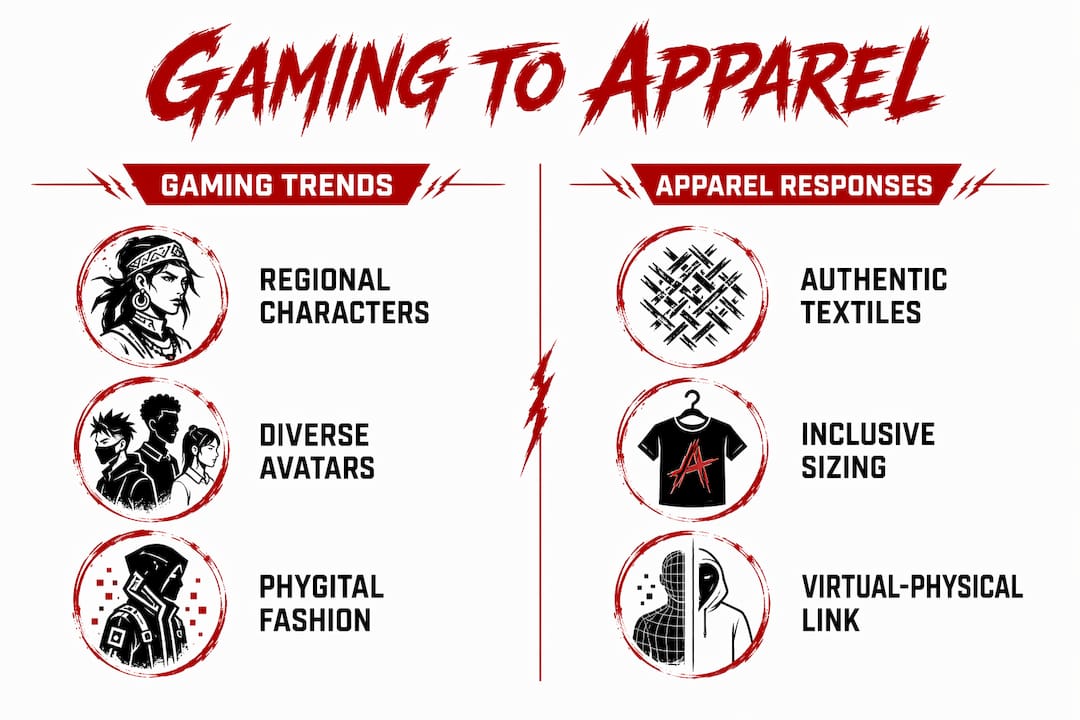
| Gaming representation trend | Apparel design response |
|---|---|
| Characters in historically accurate regional dress | Collections referencing traditional textiles and silhouettes |
| Diverse skin tones and body types in character creation | Size-inclusive drops and broader colorway ranges |
| Fantasy cultures with distinct visual codes | Garments built around singular color systems and symbolic motifs |
| Phygital avatar customization | Physical pieces with QR codes or smart patches linking to digital twins |
The phygital dimension deserves particular attention. Virtual and physical fashion now form a connected ecosystem where garments can carry smart patches, QR codes, or virtual twins that link a wearer’s physical and digital identity. That is not a future concept. It is already showing up in limited drops and gaming event merchandise. The role of identity in fashion has always been central to streetwear, and gaming culture has sharpened that conversation considerably.
Digital garment purchases carry symbolic social value within gaming communities, including exclusivity and identity signaling. Physical streetwear brands that understand this logic can build collections that feel equally weighted in both worlds.
What digital technologies from gaming are changing how apparel is made?
The design process itself has changed because of gaming technology. Apparel designers now borrow workflows directly from game development studios, and the results are faster, cheaper, and less wasteful.
-
3D rendering and digital prototyping: Designers use 3D rendering and motion capture early in the design process to test how digital art applies to apparel before any physical sample is cut. Texture behavior on fabric folds, graphic distortion across seams, and color accuracy under different lighting conditions are all testable in a digital environment first.
-
Digital simulation tools: Advanced digital simulation tools test how gaming-inspired textures and visual distortions behave dynamically on different garment structures. A glitch graphic that looks strong on a flat screen may collapse on a curved shoulder. Simulation catches that before production.
-
Virtual patterning and collaboration: Digital fashion design reduces waste by minimizing physical sampling and allows faster collaboration across design teams. Designer Holly New notes that working in gaming environments accelerates creative workflows and significantly cuts environmental impact.
-
Phygital product development: Garments designed with a digital twin from the start can be released simultaneously as in-game skins and physical pieces, creating a unified product launch across both markets.
Pro Tip: If you are integrating game art in fashion for the first time, use free 3D garment simulation software like CLO3D to test graphic placement before committing to physical samples. It saves material and reveals proportion problems early.
The graphics and streetwear identity connection runs through this technology. When designers can test visual ideas digitally before cutting fabric, they take more creative risks, and the resulting garments carry more visual authority.
How are luxury brand collaborations with games reshaping apparel culture?
Brand collaborations between luxury houses and major game titles have moved from novelty to standard practice. Coach launched a Sims 4 collaboration in 2026, while Balenciaga and Skims entered Fortnite as early as 2025, integrating physical collections with exclusive in-game skins. These partnerships do more than generate press. They redefine what a fashion collection is and who it is for.
Key shifts these collaborations are driving:
- In-game skins as collection extensions: A physical jacket and its digital skin are now designed together, not separately. The skin is not promotional content. It is part of the product.
- Community-first marketing: Gaming audiences respond to drops, limited access, and community events rather than traditional advertising. Luxury brands are adopting these mechanics wholesale.
- Cross-audience expansion: A Fortnite collaboration reaches players who have never bought a luxury item. A physical collection drop reaches fashion buyers who have never played the game. Both audiences gain a new entry point.
- Redefined consumer expectations: Buyers now expect physical apparel to carry some form of digital extension, whether that is a virtual twin, an unlockable skin, or a QR-linked experience.
“Gaming culture overlaps with streetwear, anime, and internet aesthetics in ways that make it the most fertile ground for fashion collaboration right now. Brands that treat it as a side project will lose to brands that treat it as a core identity.” The 100 Thieves model proves this point. The brand positions apparel as part of a cultural narrative ecosystem, blending design, community, and digital identity rather than selling standalone products.
The impact of games on apparel design is most visible in how these collaborations have normalized the idea that clothing carries a story, a community, and a digital life beyond the physical garment.
Key Takeaways
Video game art shapes apparel design through visual language, cultural identity, digital technology, and brand collaboration, making gaming culture one of the most productive forces in contemporary fashion.
| Point | Details |
|---|---|
| Visual motifs drive design | Glitch effects, neon palettes, and oversized silhouettes translate directly from game art to garments. |
| Cultural diversity fuels collections | Over 70% of gamers value diverse representation, pushing designers toward culturally specific apparel. |
| Digital tools reduce waste | 3D rendering and simulation let designers test game-inspired graphics on fabric before physical sampling. |
| Phygital products are standard | Physical garments now launch alongside digital twins and in-game skins as unified products. |
| Collaborations reshape marketing | Luxury brand partnerships with games like Fortnite and Sims 4 redefine how fashion reaches new audiences. |
The apparel-as-narrative shift no one is talking about enough
The conversation around gaming and fashion usually stops at aesthetics. Glitch graphics, pixel art, neon. That is the surface. What I find more significant is the structural shift happening underneath it. Apparel is becoming a narrative ecosystem, not a product category.
When 100 Thieves builds a drop, they are not selling a hoodie. They are selling membership in a story that lives across a Discord server, a Twitch stream, a game lobby, and a physical garment. The clothing is one node in a larger network of identity. That is a fundamentally different design brief than “make something that looks cool.”
The pitfall I see most often is what I call the phygital disconnect. A brand creates a beautiful physical piece inspired by game aesthetics, but the digital experience attached to it is an afterthought. A QR code that leads to a generic landing page. A “virtual twin” that looks nothing like the physical garment. Successful collections merge physical and digital experiences with genuine continuity, including virtual twins and smart garment technology that actually works.
For creatives entering this space, my honest advice is to play the games you are drawing from. Not to copy assets, but to understand the emotional logic. What does it feel like to move through that world? What does the color palette communicate about danger, safety, or power? That understanding is what separates a garment that resonates from one that just references.
— Johnathan
Anarxhy’s take on gaming aesthetics in streetwear
Anarxhy builds apparel for people who already live at the intersection of gaming culture and street style. The DIGITAL DECAY hoodie translates corrupted-data aesthetics into a wearable piece that carries the same visual weight as the best game art. The SYSTEM ERROR hoodie takes glitch art further, using motifs that feel pulled directly from a corrupted game state.
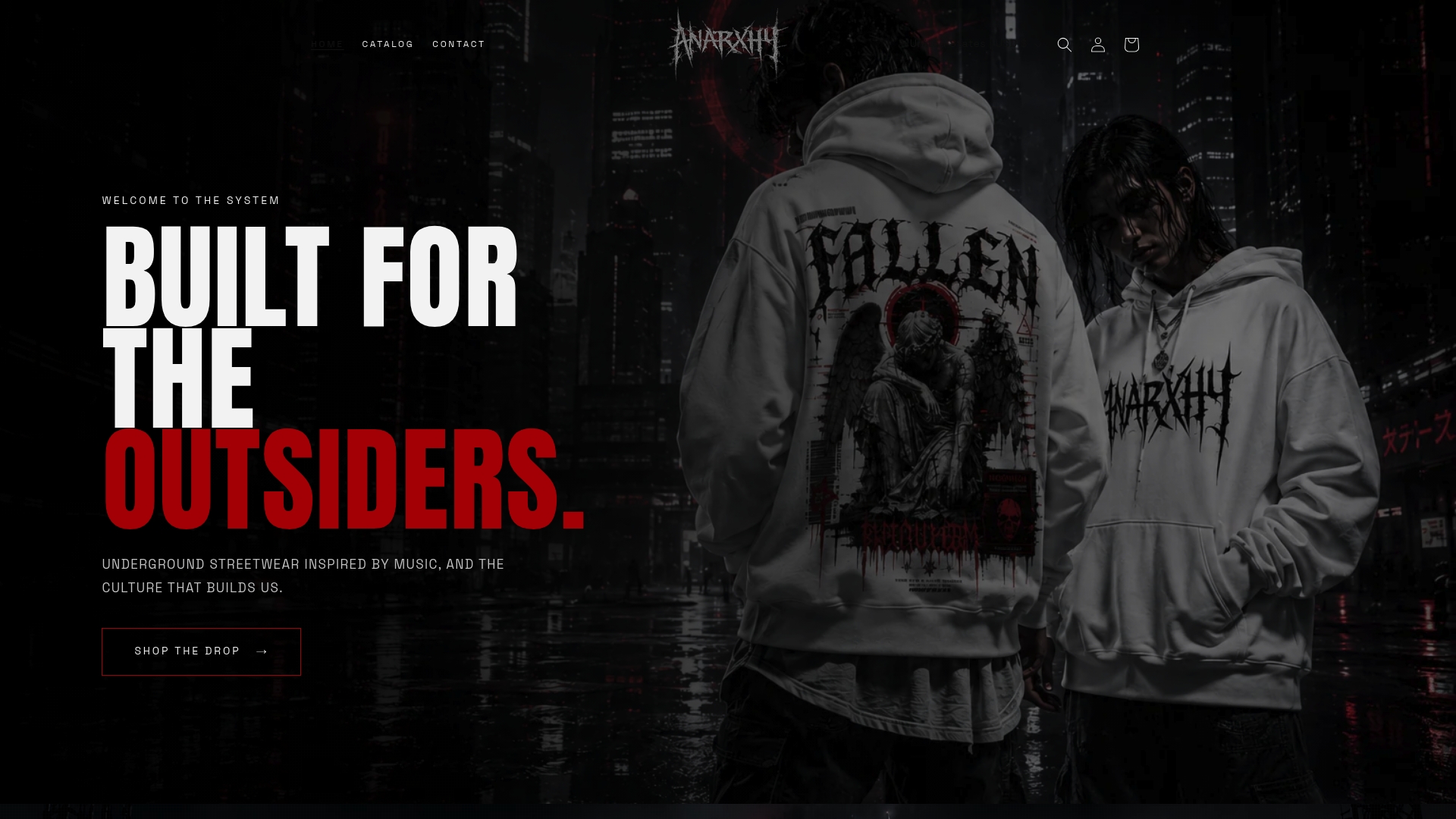
Both pieces are made with eco-friendly materials, which means the design integrity extends to the production process. Anarxhy drops are limited, which keeps the community tight and the pieces meaningful. If you are looking for apparel that treats gaming aesthetics as a serious design language rather than a costume, the full collection is the place to start.
FAQ
How does video game art directly affect clothing design?
Video game art provides visual systems, including glitch effects, neon palettes, and character silhouettes, that designers translate into garment graphics, color stories, and proportions. The influence operates at the level of mood and aesthetic logic, not just surface imagery.
What visual elements from games appear most in streetwear?
Digital glitch effects, high-contrast neon palettes, pixelated textures, and oversized silhouettes inspired by game characters are the most consistent elements crossing from screen to fabric in current collections.
Are luxury brands really collaborating with video games?
Coach, Balenciaga, and Skims have all launched game collaborations, with Coach entering Sims 4 in 2026 and Balenciaga and Skims appearing in Fortnite since 2025, integrating physical collections with exclusive in-game skins.
How does 3D technology from gaming reduce waste in fashion?
Designers use 3D rendering and digital simulation to test graphic placement and texture behavior on virtual garments before cutting physical samples, which cuts material waste and speeds up the production cycle.
What is phygital fashion and why does it matter for apparel design?
Phygital fashion connects physical garments to digital experiences through QR codes, smart patches, or virtual twins, creating a continuous identity across both the physical and digital worlds a wearer inhabits.