

Esports fashion is defined as apparel designed primarily for broadcast visibility, community identity, and functional performance during competitive gaming. This makes it fundamentally different from mainstream fashion, which follows seasonal runway cycles and prioritizes physical presence over screen readability. Understanding why esports fashion differs from mainstream helps you see gaming culture as a full creative force, not just a hobby. Brands like Anarxhy have recognized this shift, building collections that speak directly to the values esports culture has established: rebellion, identity, and purpose-built design.
Why esports fashion differs from mainstream: broadcast design
Esports apparel is engineered for cameras, not crowds. A traditional sports jersey is built to read from 50 rows back in a stadium. An esports jersey needs to read clearly on a 1080p stream viewed on a phone screen. That single difference changes everything about how the garment is designed.
Logo placement follows strict broadcast logic. Jersey designs allocate the center chest for main sponsors and optimize sleeve areas for webcam angles, with logo sizes typically requiring 8–10 cm for on-screen clarity. That is a tighter, more technical specification than anything you find in mainstream sportswear.
Color choices follow the same broadcast-first thinking. Esports palettes use dark bases with one or two high-contrast accent colors, plus white or near-white text. The goal is what designers call “cam-signal” clarity: the jersey must pop on a compressed video feed without bleeding or blurring. Mainstream fashion has no equivalent constraint.
- Gradients and angular patterns create motion and energy on screen, replacing the flat block colors common in traditional sports kits.
- Player handles appear on jerseys instead of surnames, reflecting community identity over conventional athlete branding.
- Dedicated webcam zones on jerseys are planned from the first design sketch, not added as an afterthought.
- Full dye sublimation printing fuses ink directly into polyester fibers, keeping colors vibrant through repeated washing while meeting broadcast standards.
Pro Tip: If you are designing or buying esports-inspired apparel, check how the graphic reads on your phone camera first. If it blurs or loses contrast, it fails the core design test.
How esports apparel merges performance wear with streetwear
Esports apparel sits at the intersection of athletic gear and everyday clothing. Players spend hours seated under tournament lighting, which means comfort is not optional. Professional esports jerseys use lightweight, breathable polyester with sublimated designs to maintain comfort across long gaming sessions. That functional foundation is what separates esports clothing trends from the purely aesthetic logic of mainstream fashion.
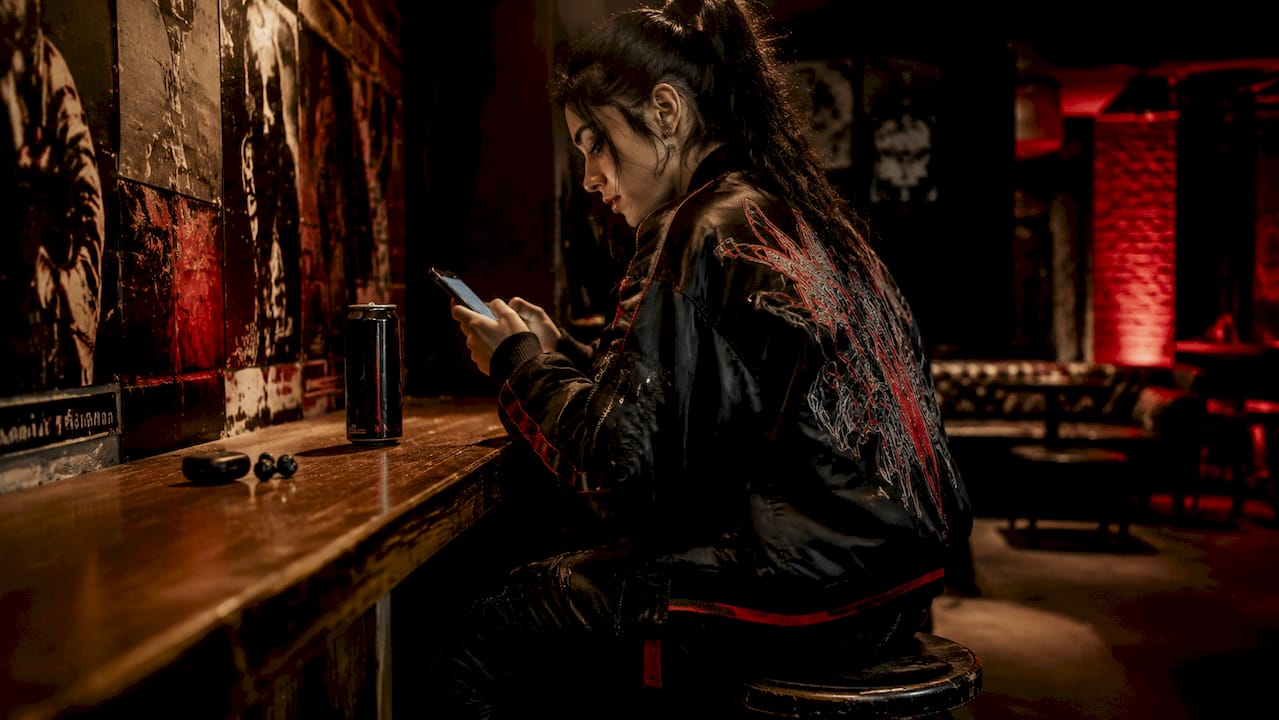
The shift away from “costume” toward refined streetwear is one of the most significant changes in competitive gaming fashion over the past five years. Early esports jerseys looked like cheap gaming merchandise. Current releases from organizations like Team Liquid, 100 Thieves, and Cloud9 look like pieces you would wear to a concert or a skate park. The garment works on stage, on stream, and off the venue entirely.
Stealth branding is now a defining feature of this evolution. Subtle logos, tonal prints, and minimalist graphics replace the loud sponsor stacking of earlier esports kits. This mirrors streetwear identity principles where the graphic carries cultural meaning without screaming for attention.
- Moisture-wicking fabrics keep players comfortable during high-pressure tournament sets that can run four or more hours.
- Ergonomic cuts allow full arm movement without restriction, a detail irrelevant in mainstream fashion but critical for competitive play.
- Versatile silhouettes make the same piece wearable at a gaming event, on a stream, or on a city street.
- Tonal and stealth branding lets wearers signal community membership without looking like a walking advertisement.
Pro Tip: When shopping for esports-inspired pieces, prioritize polyester blends with sublimated graphics over screen-printed cotton. The color holds longer and the fit stays consistent after washing.
How community and creator culture drives esports clothing trends
Esports clothing trends do not start on runways. They start in Twitch chat, on TikTok, and in Discord servers. Trend formation is driven by gaming streams, community chats, and short-form videos within gamer communities, reshaping how young people engage with style. A colorway or graphic style can go from niche to widely copied within weeks, entirely bypassing traditional fashion gatekeepers like Vogue or Paris Fashion Week.
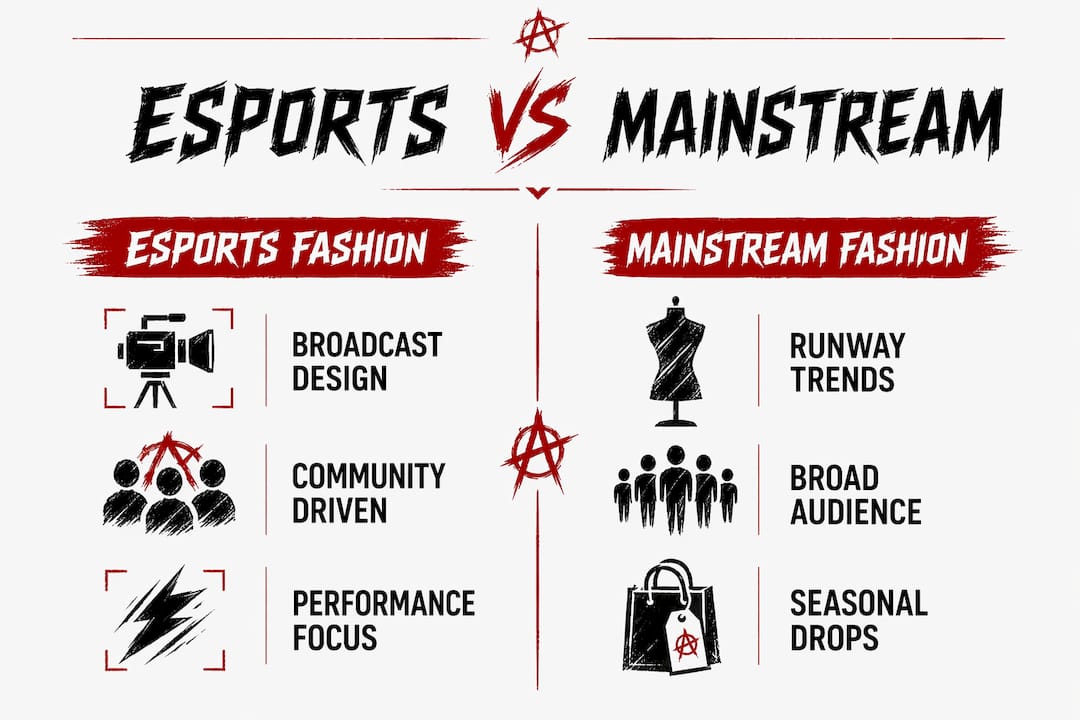
This decentralized model is the core reason why mainstream vs esports style diverges so sharply. Mainstream fashion still operates on a top-down cycle: designers show collections, editors validate them, retailers stock them, and consumers buy six months later. Esports fashion moves in the opposite direction. The community signals what resonates, creators amplify it, and brands respond in real time.
Apparel releases in esports function as cultural events tied to tournament moments and creator storylines, not just merchandise launches. When a team wins a major tournament, a limited drop tied to that moment sells out in minutes. That emotional connection between apparel and narrative is something mainstream fashion rarely achieves outside of luxury collaborations.
- Streaming platforms like Twitch and YouTube Gaming serve as live fashion runways where player outfits get immediate community feedback.
- Limited drops tied to tournament wins or content milestones create urgency and cultural weight that seasonal collections cannot replicate.
- Fan rituals around apparel, such as wearing a team’s jersey during a match broadcast, give clothing a participatory function beyond aesthetics.
- Creator collaborations between esports organizations and individual streamers produce pieces that carry personal narrative, not just team branding.
The influence of subcultures on fashion follows a similar pattern in music and gaming alike. Both communities build identity through apparel before mainstream culture catches up.
What makes esports apparel partnerships different from mainstream sponsorships?
Esports apparel partnerships are strategic retail and cultural outreach to young, engaged audiences, not just logo placement deals. That distinction matters because it changes what brands actually buy when they partner with an esports organization. They are not buying billboard space. They are buying access to a community that actively builds identity around the apparel it wears.
The target demographic for esports partnerships is the 18–30 age group, a segment that is notoriously resistant to traditional advertising. Apparel becomes the medium because it is something the audience chooses to wear, not something served to them as an ad. That voluntary adoption gives the brand a credibility that a TV spot cannot deliver.
| Factor | Mainstream sports sponsorship | Esports apparel partnership |
|---|---|---|
| Primary goal | Logo visibility at scale | Cultural access and audience identity |
| Target demographic | Broad age range | Culturally engaged 18–30 audience |
| Apparel function | Team kit and fan merchandise | Identity artifact, broadcast graphic, sponsor inventory |
| Release model | Seasonal collections | Narrative-driven limited drops |
| Trend direction | Top-down from brand | Community-led, creator-amplified |
Merchandise drops tied to fan community and event narratives outperform standard seasonal releases in engagement. The jersey is not just a product. It is a record of a moment the community shared. That is why esports apparel trends in 2026 continue to pull further from conventional sportswear models and closer to the limited-drop logic of streetwear culture.
Key Takeaways
Esports fashion differs from mainstream because it is built for broadcast visibility, community identity, and functional performance, not seasonal aesthetics or stadium crowds.
| Point | Details |
|---|---|
| Broadcast-first design | Logos, colors, and patterns are optimized for webcam and streaming clarity, not stadium distance. |
| Performance meets streetwear | Moisture-wicking, breathable fabrics make esports apparel functional on stage and wearable off it. |
| Community drives trends | Esports clothing trends form in streaming spaces and fan communities before mainstream channels pick them up. |
| Narrative-driven drops | Apparel releases are tied to tournament moments and creator storylines, giving them cultural weight beyond merchandise. |
| Partnerships target identity | Esports sponsorships sell cultural access to an engaged 18–30 demographic, not just logo exposure. |
Esports fashion is the most honest mirror of youth culture right now
I have watched fashion cycles come and go for over a decade. What strikes me about esports apparel is how little it pretends. Mainstream fashion often performs rebellion while staying safely within commercial structures. Esports fashion actually operates outside those structures because it had no choice. It built its own rules from scratch, driven by what a community of millions decided mattered.
The most interesting shift I have seen recently is how esports aesthetics are moving upstream into broader streetwear. Brands that have nothing to do with gaming are borrowing the visual language: dark bases, high-contrast graphics, angular geometry, limited drops with narrative context. They are borrowing it because it works. It connects with young people in a way that seasonal collections simply do not.
What I find genuinely exciting is that this influence is not finished. The underground streetwear brands that gamers follow are already blending esports design logic with avant-garde aesthetics in ways that will show up on mainstream mood boards within two years. The community is always ahead. The industry is always catching up.
— Johnathan
Anarxhy’s take on esports-inspired streetwear
Anarxhy builds for exactly the audience this article describes: people who reject top-down fashion cycles and build identity on their own terms. The brand’s design logic pulls from the same broadcast-clarity and community-first principles that define esports apparel, filtered through a dystopian streetwear aesthetic that feels genuinely distinct.
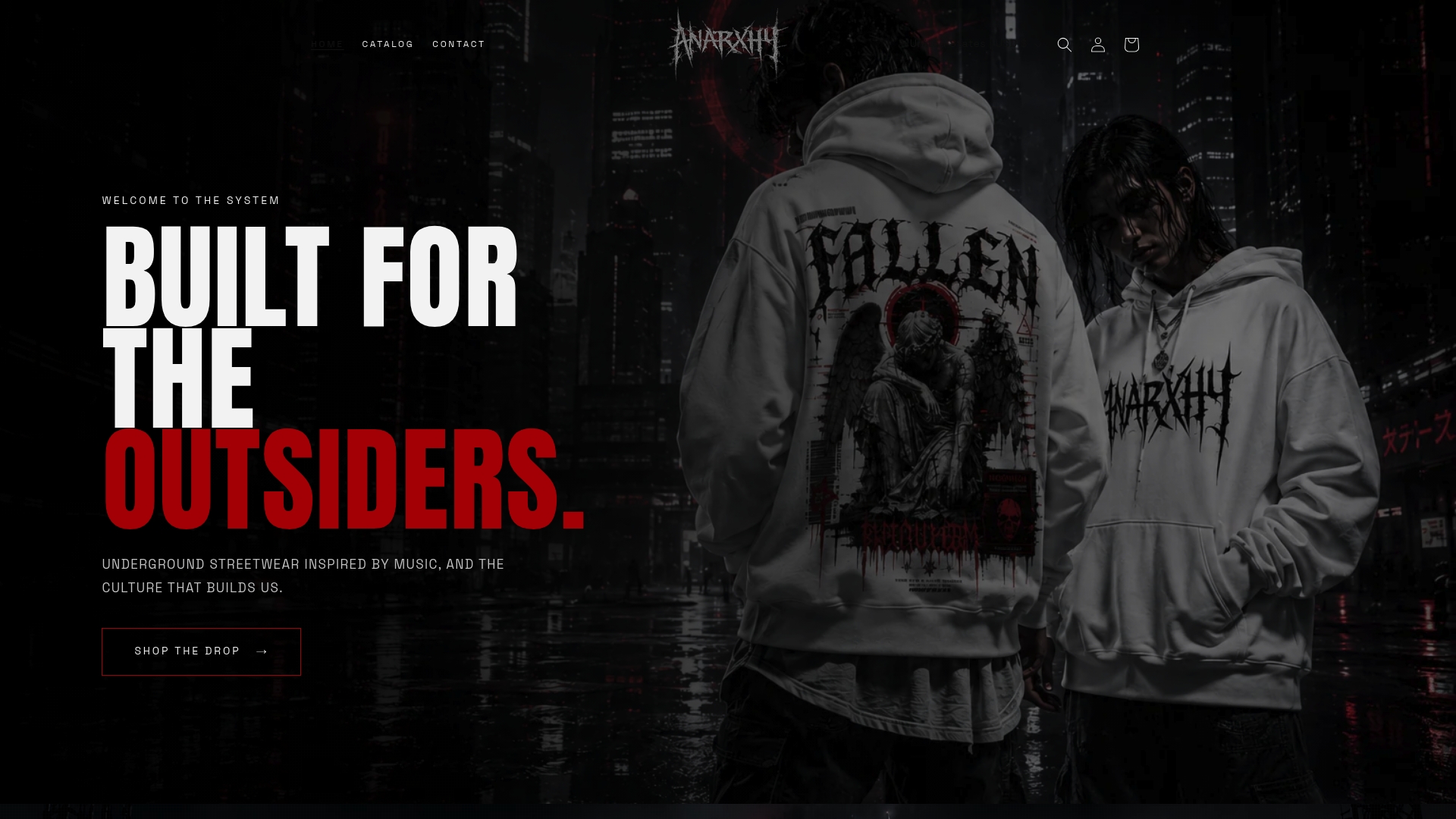
The DIGITAL DECAY hoodie and the FALLEN//001 drop both carry the high-contrast graphics and tonal branding that define where esports fashion is heading. Anarxhy uses eco-friendly materials, so the pieces hold up the same way a sublimated esports jersey does: wash after wash, the design stays sharp. Check the Signal Lost collection for the full range of drops that put this aesthetic into practice.
FAQ
What is esports fashion exactly?
Esports fashion is apparel designed for competitive gaming contexts, combining broadcast-optimized graphics, performance fabrics, and streetwear aesthetics. It functions as fan identity, sponsor inventory, and broadcast graphic simultaneously.
Why does esports wear use such bold colors and patterns?
Esports palettes use dark bases with high-contrast accent colors and white text to maintain clarity on compressed video streams. The goal is legibility on webcams and streaming platforms, not visual impact at stadium distance.
How do esports clothing trends start?
Esports clothing trends form in gaming streams, Twitch chats, and short-form video communities before reaching mainstream fashion channels. This community-led model bypasses traditional gatekeepers like fashion editors and runway shows.
What makes esports apparel partnerships different from regular sports deals?
Esports partnerships prioritize cultural access to an engaged 18–30 demographic over broad logo visibility. Apparel acts as a distribution channel for brand identity, not just a sponsorship placement.
Can esports fashion be worn as everyday streetwear?
Yes. Modern esports apparel uses versatile silhouettes, stealth branding, and breathable fabrics that work equally well on stage, on stream, and in everyday settings.