

Subcultural capital in fashion is defined as the specialized knowledge, tastes, and style codes that grant social status within a subculture, separating authentic insiders from mainstream outsiders. Sociologist Sarah Thornton built this concept directly on Pierre Bourdieu’s theory of cultural capital, applying it to youth culture and club scenes. In fashion, it answers the question of what does subcultural capital mean: it is the currency of belonging, earned through deep fluency in a group’s aesthetic codes, history, and unspoken rules. Knowing which underground labels carry weight, how to layer a look with historical accuracy, or which patches signal real affiliation all count as subcultural capital. This currency is contested, fluid, and increasingly under pressure from mainstream appropriation in 2026.
What does subcultural capital mean in fashion?
Subcultural capital functions as social currency within groups, awarding status to those who demonstrate deep mastery of a group’s codes, history, and hierarchies. It is not about owning expensive items. It is about knowing which items matter, why they matter, and how to wear them correctly within a specific community.
The concept separates two types of participants. Insiders hold genuine subcultural capital through lived experience, community participation, and historical knowledge. Outsiders, sometimes called “wannabes,” may adopt the visual surface of a subculture without understanding its meaning. That gap is exactly what subcultural capital measures.
Fashion is the most visible arena where this plays out. A person wearing a band tee from a 1983 tour carries different weight than someone wearing a mass-produced version of the same graphic. The object looks similar. The knowledge behind the choice does not.
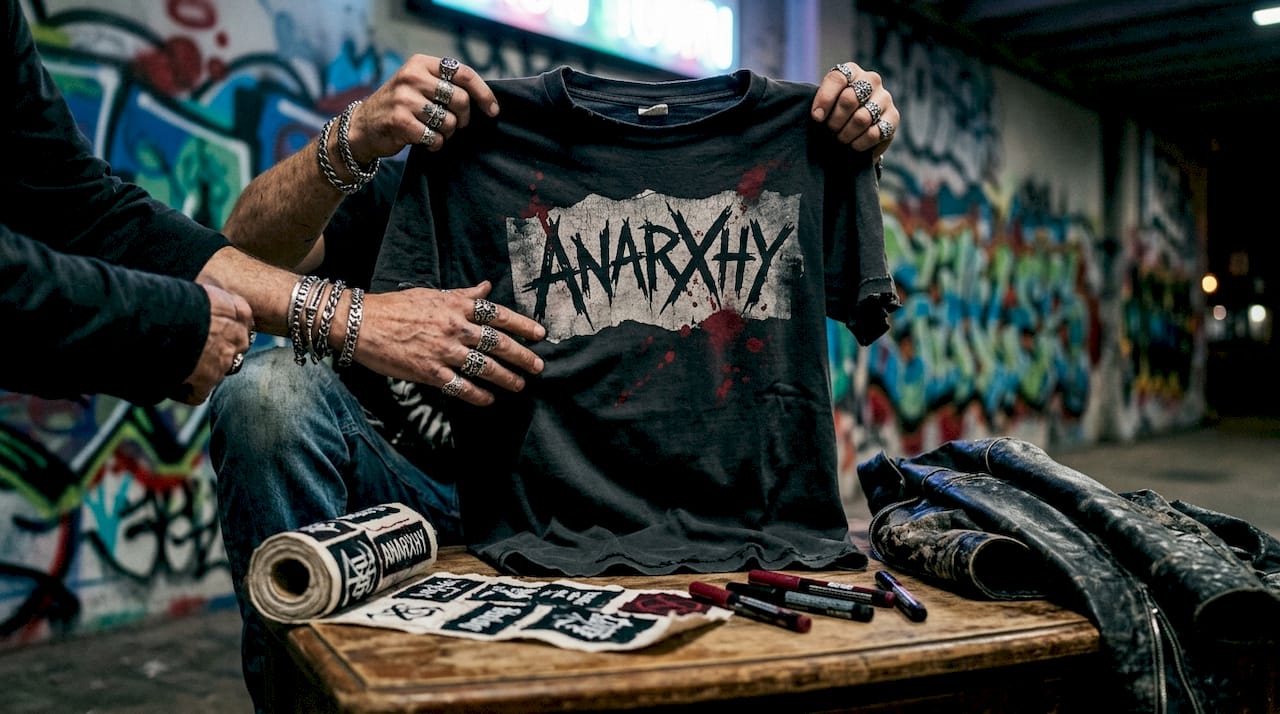
Subcultural capital also shifts over time. What signals insider status in one decade can become a mainstream trend in the next, forcing subcultures to evolve their codes or lose their distinctiveness entirely.
How subcultural symbols communicate identity through style
Fashion items function as mobile signs, communicating subcultural identity without a single word being spoken. Clothing, grooming, and accessories form a semiotic language. Each choice signals group membership, values, and resistance.
The codes embedded in subcultural fashion go far beyond aesthetics. Style is a lived practice that expresses ethnic identity, gender, defiance, and community belonging simultaneously. A specific cut of trouser, a hand-stitched patch, or a particular brand of boot carries meaning that only insiders fully decode.
The 1960s British Mod scene illustrates how these codes travel. Mod aesthetics, built around sharp tailoring and scooter culture, were reworked into 1980s California youth fashion, demonstrating that subcultural codes shift meaning as they move across time and geography. The visual elements survived the crossing. The original social context did not always follow.
This instability is not a flaw. It is the nature of subcultural fashion. Meanings are negotiated constantly between communities, eras, and individuals.
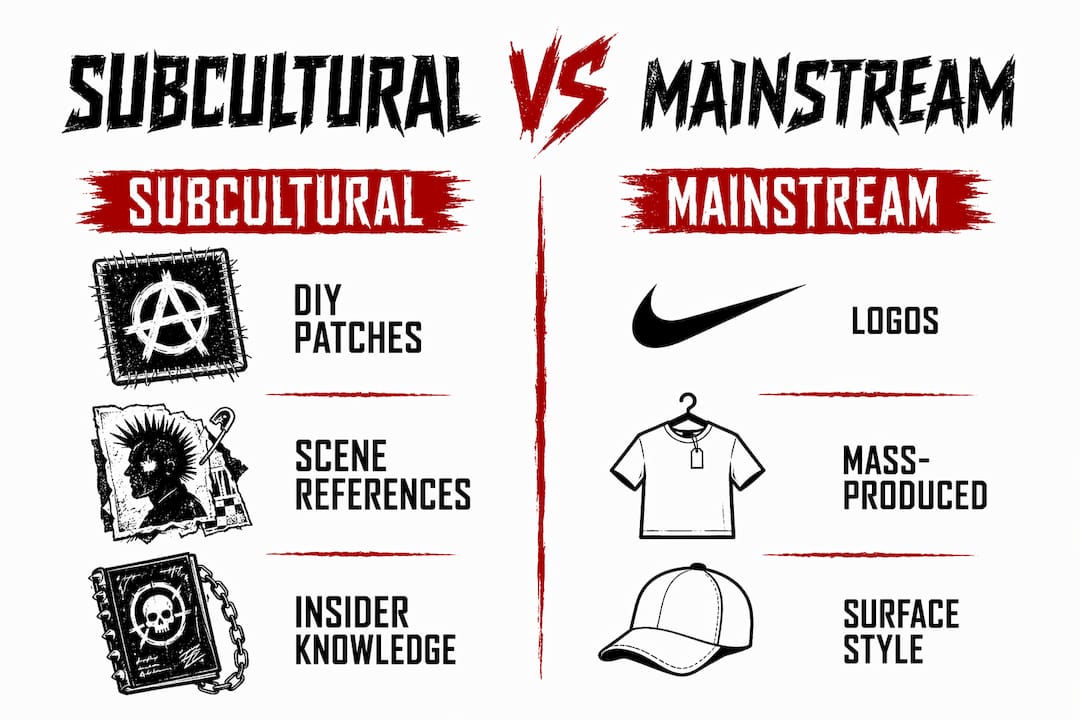
Pro Tip: When assessing whether a fashion item carries genuine subcultural capital, look past the logo or graphic. Ask whether the person wearing it can explain the item’s origin, the community it came from, and why it mattered. Authentic subcultural knowledge always has a story attached.
| Subcultural capital signs | Mainstream fashion symbols |
|---|---|
| DIY patches with specific scene references | Mass-produced graphic tees with generic imagery |
| Vintage or deadstock pieces with provenance | Current-season items following trend forecasts |
| Grooming tied to community codes | Grooming following celebrity or influencer trends |
| Brands known only within the scene | Widely advertised labels with broad market reach |
| Items sourced from underground makers | Items from fast fashion or department store chains |
How does subcultural fashion differ from mainstream fashion?
Alt fashion, rooted in subculture, prioritizes DIY authenticity over corporate trend cycles. Mainstream fashion runs on profit, seasonal forecasting, and mass appeal. Subcultural fashion runs on meaning, community, and resistance. The two systems operate by entirely different logic.
The social stakes differ sharply as well. Wearing subcultural fashion carries real social risk. You signal a clear identity, invite judgment from outsiders, and accept the possibility of being misread or rejected by mainstream spaces. Mainstream fashion is designed to minimize that risk. It is built for broad acceptance, not bold declaration.
The cycle of appropriation follows a predictable pattern:
- A subculture develops a distinct visual code tied to its values and community.
- The style gains visibility through music, art, or street culture.
- Mainstream media and brands notice the aesthetic.
- Corporate fashion extracts the visual elements and mass-produces them.
- The original community loses control of the meaning.
- Insiders abandon the co-opted style and develop new codes.
This cycle creates what critics call the “Runway Tax,” where underground creators lose cultural equity even as their styles fuel luxury brands’ commercial success. The originators receive no financial benefit. The corporations collect the profit.
Pro Tip: Support underground creators directly. Buying from independent makers, small-run labels, and community-based designers keeps subcultural capital where it belongs, inside the communities that built it.
The differences between alt and mainstream fashion break down clearly across three dimensions. Production in alt fashion is small-scale, often handmade or sourced from niche suppliers. Influence flows from community experience and music scenes. The goal is identity expression and group belonging. Mainstream fashion operates at industrial scale, draws influence from trend agencies and celebrity culture, and targets the widest possible consumer base.
What social hierarchies does subcultural capital create?
Subcultural capital acts as a gatekeeping tool within communities, controlling who gains entry to the inner circle and who remains on the outside. Status is not assigned. It is earned through demonstrated knowledge, consistent participation, and mastery of the group’s unspoken rules.
Hierarchies inside subcultural communities are real and often strict. The person who has attended underground shows for years, who knows the history of the scene, and who can identify obscure references holds more capital than someone who recently discovered the aesthetic online. That gap shapes how people are treated, who gets invited to events, and whose opinion carries weight.
Subcultural capital also serves broader social functions, particularly for marginalized urban youth. It operates as an alternative path to status when traditional institutional routes are closed. Movements built around visible displays of audacity and community pride challenge conventional hierarchies by creating entirely new ones.
The tension between maintaining subcultural credibility and gaining mainstream visibility is constant. When a subculture’s style reaches mass audiences, insiders face a difficult choice. Staying visible risks being labeled a sellout. Retreating underground preserves authenticity but limits reach.
| Insider traits | Outsider traits |
|---|---|
| Deep knowledge of scene history | Surface-level familiarity with the aesthetic |
| Relationships with community members | No meaningful community connections |
| Items sourced from within the scene | Items purchased from mainstream retailers |
| Participation in underground events | Passive consumption of content online |
| Ability to explain the meaning of choices | Inability to contextualize style decisions |
How does subcultural capital evolve under commercial pressure?
Subcultural capital is volatile by nature. Mainstream absorption can shift an insider into a “sellout” almost overnight, simply by making their style widely visible and commercially available. The currency devalues when it becomes common.
The process of incorporation works in stages. A subculture’s oppositional style gets noticed, extracted, and repackaged for mass consumption. The visual elements survive. The political and social meaning often does not. This is what the “Runway Tax” concept captures: the stripping of cultural equity from underground styles when high fashion commodifies them.
Digital culture has made this cycle faster and harder to control. A style that once took years to travel from underground scenes to mainstream awareness now spreads in weeks through social media. Authenticity becomes harder to verify. Insider status becomes easier to fake, at least on the surface.
Youth subcultures have always adapted. They adopt vintage codes, reclaim appropriated symbols, or move into entirely new aesthetic territory. Music subcultures have historically driven this adaptation, using sound and style together to rebuild distinctiveness after mainstream absorption.
Pro Tip: Authenticity in a commercially saturated environment comes from depth, not rarity. Knowing the history of a style, engaging with the community that built it, and understanding its original meaning protects your subcultural capital better than simply owning hard-to-find items.
The subcultural response to commercialization is not always retreat. Sometimes communities reclaim appropriated symbols by reloading them with new meaning, making them oppositional again through context and community use. The role of identity in fashion is never static. It is always being renegotiated.
Key Takeaways
Subcultural capital in fashion is a dynamic, knowledge-based currency that grants insider status, shapes social hierarchies, and resists mainstream absorption through constant reinvention.
| Point | Details |
|---|---|
| Definition of subcultural capital | Specialized knowledge and style codes that confer status within a subculture, not just ownership of items. |
| Fashion as semiotic language | Clothing and grooming communicate identity, resistance, and community belonging beyond surface appearance. |
| Mainstream appropriation risk | Corporate fashion extracts subcultural styles for profit, stripping original meaning and creating the “Runway Tax.” |
| Gatekeeping and hierarchy | Insider status is earned through scene knowledge, participation, and community relationships, not aesthetics alone. |
| Evolution under pressure | Subcultural capital shifts rapidly under commercial and digital pressure, forcing communities to constantly reinvent their codes. |
Why subcultural capital still matters more than most people admit
The academic framing of subcultural capital can make it sound abstract. It is not. Every time you walk into a room wearing something that signals a specific community, you are either spending that capital or exposing that you do not have it. That is a lived experience, not a theory.
What I find most underappreciated is how subcultural fashion functions as a genuine alternative economy of status. For communities that have been shut out of traditional markers of success, building credibility through scene knowledge, DIY creation, and community participation is not a consolation prize. It is a parallel system with its own logic and its own rewards.
The part that frustrates me is how casually that system gets raided. A luxury brand lifts a visual code from an underground scene, runs it on a runway, and collects the cultural credit without ever acknowledging the source. The original creators get nothing. The “Runway Tax” is real, and it is paid by the people who built the culture in the first place.
My honest position is this: subcultural fashion is not a costume. It is a commitment. Wearing it without understanding it is not just aesthetically wrong. It is a form of extraction. The most respectful thing any fashion enthusiast or student of culture can do is learn the history before adopting the look, and support the underground creators who are still doing the actual work.
— Johnathan
Anarxhy: where subcultural fashion stays authentic
Subcultural capital only holds value when the fashion behind it is real. Anarxhy was built for exactly that reason, to give people who live outside mainstream culture a place to find clothing that actually means something.
Anarxhy’s collections are rooted in the outsider ethos, drawing from music, rebellion, and the kind of aesthetic codes that carry genuine subcultural weight. The “Signal Lost” series reflects dystopian visual language that resonates with communities who reject conformity. Every drop is limited, eco-conscious, and designed with identity in mind, not trend cycles. If you are looking for fashion that holds subcultural capital rather than diluting it, the Anarxhy store is the right place to start. The new arrivals section is updated regularly with pieces that speak to the fringes, not the mainstream.
FAQ
What is subcultural capital in simple terms?
Subcultural capital is the insider knowledge, style fluency, and cultural credibility that earns you status within a specific subculture. It works like social currency: the more you know and the more authentically you participate, the more capital you hold.
How does subcultural capital show up in fashion?
It appears through specific clothing choices, grooming, accessories, and brands that carry meaning within a community. Items like hand-stitched patches, deadstock pieces, or scene-specific labels signal genuine belonging in ways that mass-market fashion cannot replicate.
Why does mainstream fashion appropriate subcultural styles?
Mainstream fashion extracts subcultural aesthetics because they carry cultural energy and visual distinctiveness that sells. The problem is that this process strips the original meaning and financial benefit from the communities that created the style, a dynamic critics call the “Runway Tax.”
Can subcultural capital be lost?
Yes. When a subculture’s style becomes widely adopted by mainstream fashion, insiders often lose their distinctive status. Subcultural capital devalues rapidly under commercial pressure, which is why communities constantly evolve their codes to maintain authenticity.
How do you build genuine subcultural capital in fashion?
Build it through community participation, learning scene history, sourcing from underground fashion brands, and understanding the meaning behind the styles you wear. Owning the right items without the knowledge behind them does not translate into real subcultural credibility.