

Underground fashion brands are independent labels that operate outside mainstream retail, built on small-batch production, founder-led storytelling, and direct community ties. If you want to find underground fashion brands that genuinely reflect subculture values, you need to go beyond algorithm-fed shopping feeds. The real ones live in basement boutiques in Tokyo’s Koenji district, in handmade web drops from London labels like Wenpius, and in the DIY ethos that has driven streetwear culture since its origins. This guide gives you the exact tactics, locations, and filters to discover niche fashion labels that most people never find.
How to find underground fashion brands in local scenes
The most reliable way to discover authentic underground clothing brands is to go where the subculture actually lives. That means physical neighborhoods, not Pinterest boards. Geography shapes underground discovery in ways that no algorithm can replicate, because the best finds are hidden behind unmarked doors and sticker-covered stairwells that mainstream e-commerce never indexes.
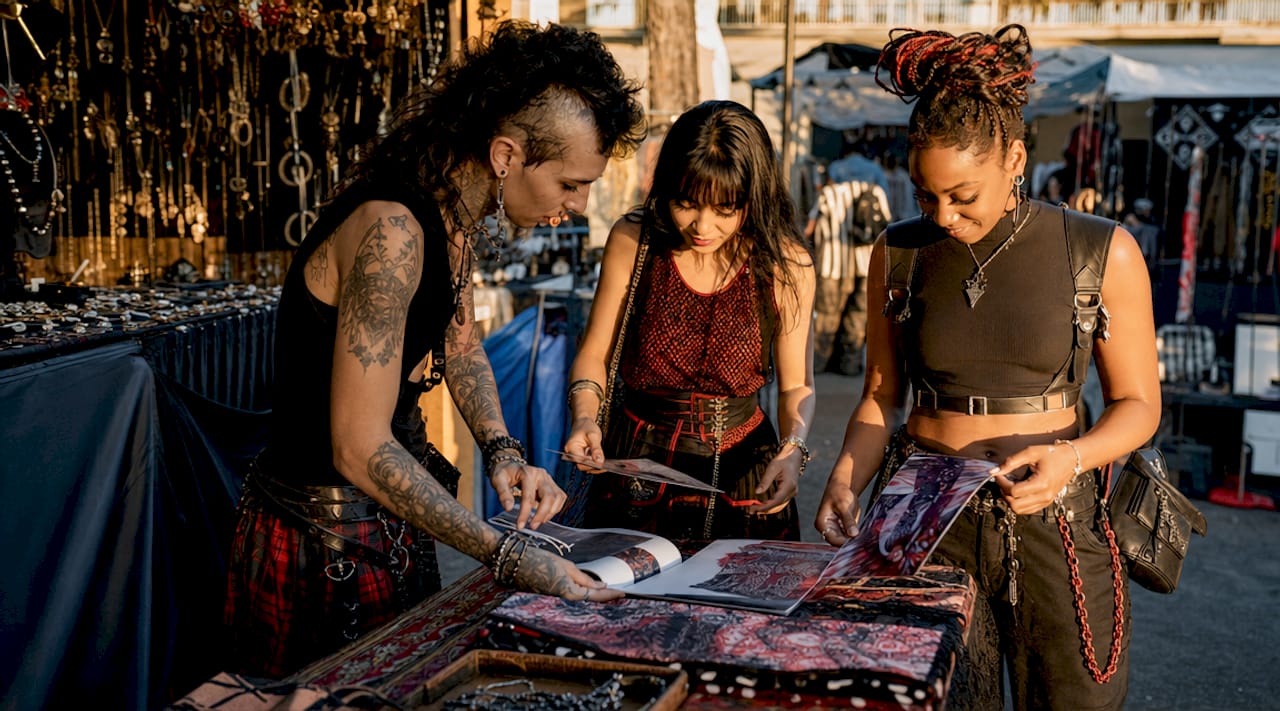
Tokyo’s Koenji district is the clearest proof of this principle. The neighborhood runs on basement shops, archival boutiques with no signage, and stores like Dog Harajuku that specialize in hand-painted, studded custom pieces you will not find duplicated anywhere else. These are not concept stores with Instagram-ready interiors. They are chaotic, dense, and deeply intentional spaces where every garment has a provenance.
The same pattern repeats in other cities. Berlin’s Neukölln has independent boutiques tied to the techno scene. London’s Dalston carries labels that feed directly into the grime and post-punk communities. New York’s Lower East Side still hosts a handful of independent fashion boutiques that predate the neighborhood’s gentrification and stock designers who refuse wholesale.
Here is what to look for when scouting a local underground scene:
- Subcultural anchors. The best boutiques cluster near record stores, DIY venues, and zine shops. If a neighborhood has a thriving music scene, it almost certainly has underground fashion nearby.
- No mainstream retail presence. A genuine underground label does not stock at department stores. If you can buy it at a chain, it is not underground.
- Community-facing spaces. Look for shops that host events, post flyers, or double as gathering points. Fashion, music, and nightlife intersect in these spaces in ways that create real brand loyalty.
- Founder presence. In many underground boutiques, the person behind the counter made the clothes. That direct relationship is the clearest signal of authenticity.
Pro Tip: Before traveling to a new city, search Reddit’s local fashion and streetwear subreddits for the neighborhood name plus “boutique” or “vintage.” Locals will name shops that never appear on travel blogs.
Where do underground brands sell online?
Many emerging underground brands opt out of traditional collection systems entirely, which means you will not find them on ASOS or in any wholesale catalog. The direct-to-consumer drop model is now the dominant release strategy for labels that want to stay independent. Understanding how it works is the fastest way to access unique fashion labels before they sell out.
Wenpius, the London label founded by Noa Maras and inspired by creepypasta and cryptid folklore, is the clearest current example. Maras rejects the traditional B2B wholesale system in favor of handmade drops sold directly through the brand’s website. The result is clothing that carries genuine craft and a price point that reflects actual production costs rather than retail markup. This model also means the brand survives without investor pressure or trend-chasing.
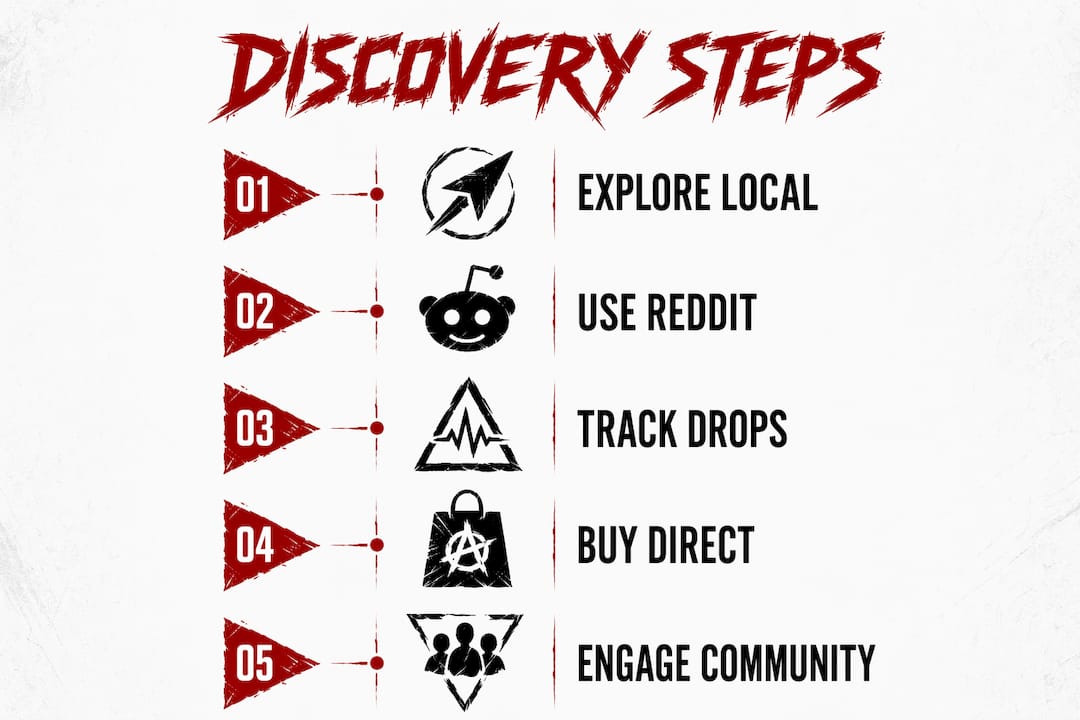
Follow these steps to stay ahead of underground drops online:
- Go directly to brand websites. Most underground labels announce drops via their own site first. Bookmark the pages and check them weekly.
- Subscribe to email lists. Drop notifications almost always go to email subscribers before social media followers. This is the single most reliable access point.
- Follow on Instagram and TikTok, but treat it as a secondary signal. Social posts often go live after a drop has already started selling. Email is faster.
- Use Depop and Grailed as discovery tools. Search for specific aesthetic keywords like “dystopian streetwear” or “avant-garde hoodie” and trace sold listings back to the original brand.
- Join Discord servers tied to subcultures. Techno, punk, and streetwear communities on Discord frequently share drop alerts for labels that have no mainstream presence.
Pro Tip: Set a Google Alert for the brand name plus “drop” or “release.” It catches press mentions and community posts you would otherwise miss entirely.
The direct-to-consumer model also benefits you financially. Avoiding traditional retail markups means you pay closer to the actual production cost, and the brand keeps enough margin to keep making things the right way. For context on how small startups structure these releases, fast turnaround clothing brands often use similar direct models to test demand without overproducing.
How to spot a real underground brand vs. a mainstream imposter
The word “underground” has been co-opted by marketing teams at labels that have nothing underground about them. Credibility checks exist, and they are not complicated once you know what to look for. Genuine underground brands are defined by founder storytelling, transparent small-batch production, and a rejection of mass marketing tactics, not by a limited-edition label sewn into a fast-fashion shell.
Here is a practical checklist for evaluating any brand claiming underground status:
- Founder visibility. Can you find the actual person behind the brand? Do they talk about their process, their influences, their community? Anonymous corporate brands do not qualify.
- Production transparency. Does the brand explain how and where things are made? Small-batch production is a feature, not a footnote.
- Scarcity that is real, not manufactured. Limited drops and genuine scarcity drive underground brand loyalty. If a brand runs “limited edition” drops every two weeks with paid influencer campaigns, the scarcity is theater.
- Community over hype. Authentic underground labels build loyalty through shared values, not resale value. If the conversation around a brand centers on flipping pieces for profit, it has crossed into hype-beast territory.
- DIY aesthetic signals. Hand-stitching, irregular sizing, photocopied lookbooks, and lo-fi photography are not flaws. They are evidence of a real production process.
A brand that claims underground credibility while running Google Shopping ads, stocking at Urban Outfitters, and paying macro-influencers for posts is not underground. It is a mainstream brand using underground aesthetics as a marketing costume.
How subculture history shapes underground fashion today
Streetwear culture is built on authenticity, exclusivity, and DIY ethics rooted in urban subcultures, and those foundations directly shape which underground brands are worth your attention in 2026. Punk, goth, hip-hop, and techno each produced distinct visual languages that underground designers still draw from, not as nostalgia, but as living reference points.
Tokyo’s underground designers create clothing specifically for techno, hardcore punk, and hip-hop scenes, meaning the garments are designed for a context, not a trend cycle. That context-specificity is what separates a genuine underground label from a brand that simply uses dark color palettes and distressed fabric.
The table below shows how traditional fashion business models compare to underground community-driven ones:
| Factor | Traditional fashion model | Underground community model |
|---|---|---|
| Distribution | Wholesale to retailers | Direct-to-consumer drops |
| Production volume | Mass or large-batch | Small-batch or made-to-order |
| Brand identity | Marketing-led | Founder and community-led |
| Trend alignment | Seasonal collections | Scene and subculture-driven |
| Consumer relationship | Transactional | Community membership |
| Scarcity | Manufactured for hype | Genuine production limits |
The community model creates something the traditional model cannot buy: trust. When a brand is embedded in a specific scene, its customers are not just buyers. They are participants. That is why labels tied to music subcultures, like those in Koenji or in London’s post-punk circles, maintain loyalty that no amount of paid advertising can replicate. For a deeper look at how these values developed, the origins of streetwear culture trace directly back to this community-first model.
Practical steps to discover new underground brands right now
Combining location scouting, digital drop tracking, and community engagement gives you the widest net for finding hidden fashion gems. Here is a structured approach that works both online and offline.
| Method | Best for | Watch out for |
|---|---|---|
| Local boutique scouting | Finding one-of-a-kind archival pieces | Tourist-facing shops in subcultural neighborhoods |
| Brand email subscriptions | Drop access before sellout | Brands that email constantly with no real drops |
| Discord and Reddit communities | Peer-sourced brand discovery | Hype-focused communities that prioritize resale |
| Depop and Grailed searches | Tracing aesthetics back to source brands | Resellers inflating prices on genuine pieces |
| Scene-based travel | Immersive discovery in authentic contexts | Gentrified versions of formerly underground areas |
The most common mistake is treating online search as the primary discovery tool. Search engines surface what is already popular. Underground brands, by definition, have not been optimized for discoverability. Scene-based travel and community immersion consistently outperform keyword searches for finding labels that are genuinely off the radar.
A practical starting sequence looks like this:
- Identify a subculture you connect with, whether that is punk, techno, goth, or avant-garde streetwear.
- Find the physical neighborhoods in major cities where that subculture is active.
- Research those neighborhoods using local Reddit threads, zine archives, and music venue listings.
- Visit in person, or follow accounts run by people who live in those scenes.
- Once you find a label you trust, follow its community outward. Underground brands tend to know and reference each other.
The upcycled streetwear movement is also worth tracking as a discovery channel. Many underground labels that use sustainable or reclaimed materials operate in overlapping communities and cross-promote each other, which means finding one often leads you to several more.
Key takeaways
Finding real underground fashion brands requires combining physical scene exploration, direct-to-consumer drop tracking, and credibility filters that separate genuine subculture labels from mainstream brands using underground aesthetics as a marketing strategy.
| Point | Details |
|---|---|
| Local scenes beat search engines | Hidden boutiques in neighborhoods like Tokyo’s Koenji offer pieces no algorithm surfaces. |
| Direct-to-consumer drops are the access point | Subscribe to brand email lists before following on social media for earliest drop access. |
| Credibility has clear signals | Founder visibility, small-batch production, and real community ties separate genuine labels from imposters. |
| Subculture context matters | Brands designed for specific scenes, like techno or punk, carry authenticity that trend-driven labels cannot replicate. |
| Community immersion accelerates discovery | One trusted underground brand leads to others through shared networks and mutual references. |
Why the hunt itself is the point
I have spent years tracking down labels that most people have never heard of, and the honest truth is that the discovery process teaches you more about your own aesthetic than any shopping algorithm ever will. Walking into a basement boutique in Koenji and holding a hand-painted jacket that took someone three days to finish is a completely different experience from adding something to a cart at 2 a.m.
The tension between authenticity and commercialization is real, and it accelerates fast. I have watched labels I loved in their early stages get picked up by larger distributors and lose the thing that made them worth finding. That is not a reason to stop looking. It is a reason to stay close to the source, to follow founders directly, and to treat your wardrobe as a record of where you have been and what you actually believe.
The brands worth finding are the ones that make you feel like you found something, not bought something. Anarxhy operates exactly in this space, with limited drops, a clear manifesto, and no interest in mainstream validation. That combination is rarer than it sounds.
— Johnathan
Anarxhy: underground fashion built for the fringes
Anarxhy exists for exactly the reader this guide was written for. Every piece in the collection is released in limited quantities, designed with a dystopian aesthetic that draws from music, rebellion, and the outsider ethos that defines real underground fashion. There are no seasonal collections, no wholesale accounts, and no compromises on materials.
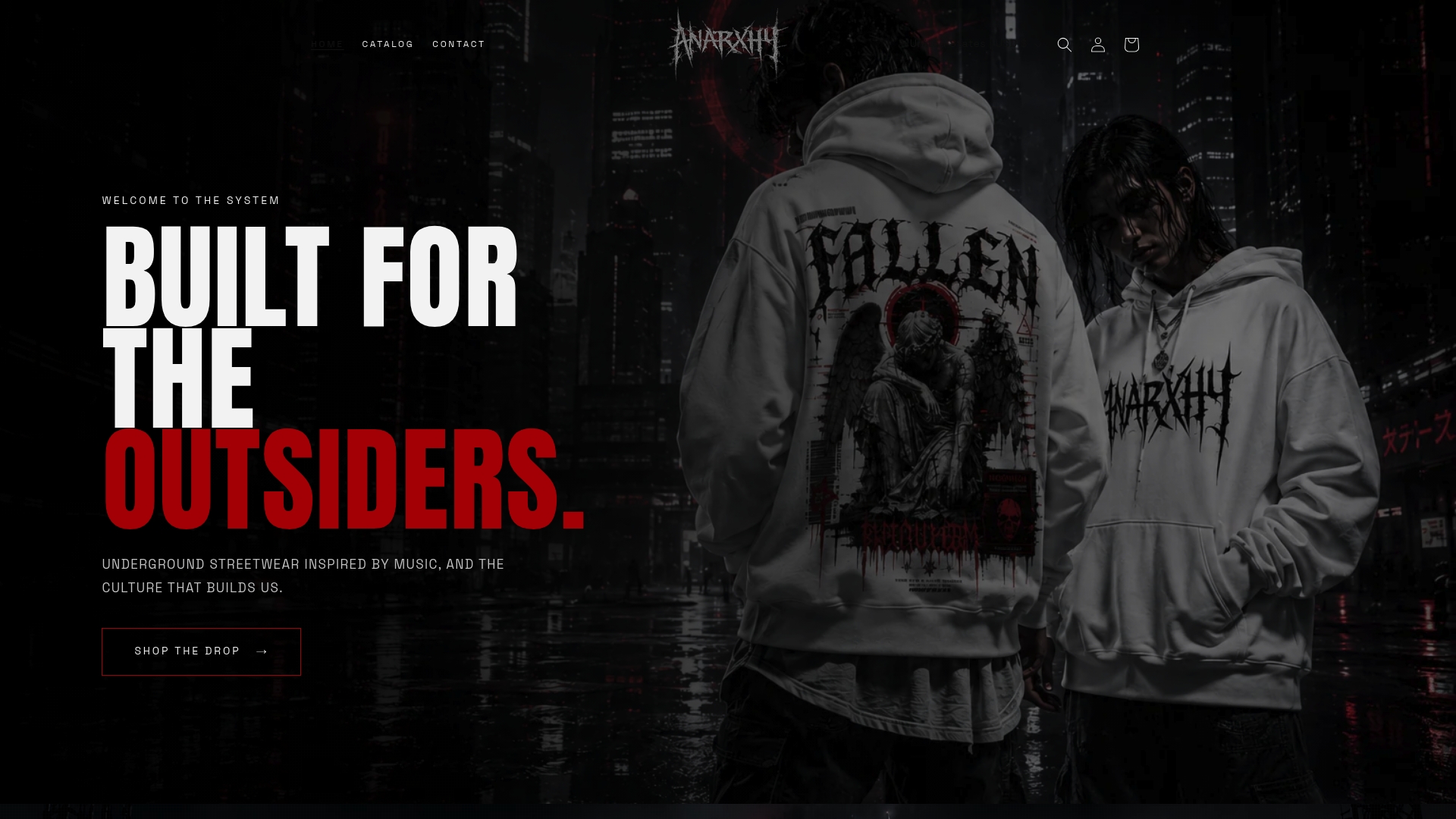
The DIGITAL DECAY hoodie and the FALLEN//001 are direct expressions of what underground fashion looks like when it is made with intention. Both are unisex, eco-friendly, and available only through direct drops on the Anarxhy site. If you have read this far, you already know what to do: get on the list, watch for the drop, and wear something that actually means something.
FAQ
What makes a fashion brand truly underground?
A truly underground brand is founder-led, produces in small batches, sells directly to consumers, and is embedded in a specific subculture or community rather than a trend cycle. Brands that use mass marketing while claiming scarcity do not meet this standard.
Where can I buy alternative fashion from independent labels?
The most reliable sources are brand websites with direct drop models, local boutiques in subcultural neighborhoods, and peer-to-peer platforms like Depop and Grailed where you can trace aesthetics back to original labels.
How do I know when an underground brand is dropping new pieces?
Subscribe to the brand’s email list directly from its website. Email subscribers consistently receive drop notifications before social media followers, making it the fastest access point for limited releases.
Are underground fashion brands more expensive than mainstream ones?
Not necessarily. Direct-to-consumer labels cut out retail markup, so prices often reflect actual production costs. Handmade or small-batch pieces may cost more than fast fashion, but the price reflects genuine craft rather than brand premium.
How does streetwear culture connect to underground fashion?
Streetwear culture is built on authenticity, exclusivity, and DIY ethics rooted in urban subcultures, which are the same foundations that define underground fashion. The two overlap significantly, especially in labels tied to music and neighborhood scenes.