

Clothing is a nonverbal communication system that transmits identity, social status, and group belonging without a single spoken word. Every garment you choose signals something to the world around you. Anthropologists and cultural semioticians, including Ferdinand de Saussure, have long argued that clothing functions as a sign system, where each element carries meaning beyond its physical form. Understanding why clothing becomes a cultural statement means recognizing that what you wear is never just fabric. It is a declaration.
Why clothing becomes a cultural statement: the semiotic foundation
Clothing operates as a symbolic system the same way language does. Each garment, color, and accessory functions as a sign that carries shared cultural meaning. Semiotics, the study of signs and symbols, gives us the framework to decode what clothing actually communicates.
The evidence from anthropological research is direct. Tribal garments and ornaments act as measurable markers of marital status, age, and community affiliation. The Lambani community of India, for example, uses mirror work and coins sewn into garments as complex visual signs that communicate a wearer’s life stage and social role. These are not decorative choices. They are a readable text.
Cultural preservation sits at the heart of this symbolic function. As modernization spreads, traditional garments become one of the last visible anchors of cultural identity. When a community maintains its dress codes, it actively resists erasure. The clothing becomes a living archive.
Pro Tip: When you encounter traditional dress from an unfamiliar culture, treat it as a document. Ask what each element communicates rather than simply evaluating its aesthetics.
The table below shows how symbolic clothing elements function across different cultural contexts.
| Culture | Garment or element | Symbolic meaning |
|---|---|---|
| Lambani (India) | Mirror work and coins | Marital status and community rank |
| Scottish Highlands | Tartan pattern | Clan identity and regional origin |
| Japanese | Kimono sleeve length | Age and social occasion |
| West African | Kente cloth colors | Royalty, spirituality, and occasion |
| Iranian | Hijab styling post-1979 | Political negotiation and personal identity |
In what ways does fashion communicate identity and social belonging?
Fashion is a dynamic language that lets individuals negotiate between personal desire and collective cultural expectation. You rarely dress in a vacuum. Every choice you make is shaped by the social world you inhabit, the community you belong to, and the identity you want to project or protect.
The fashion industry plays a direct role in this process. Individuals often select from an industry-curated palette, sometimes without realizing how their identity is being packaged and sold back to them. Heritage is repackaged continuously to sustain cultural relevance and fuel individual identity formation. That cycle is not neutral. It shapes what feels authentic and what feels foreign.
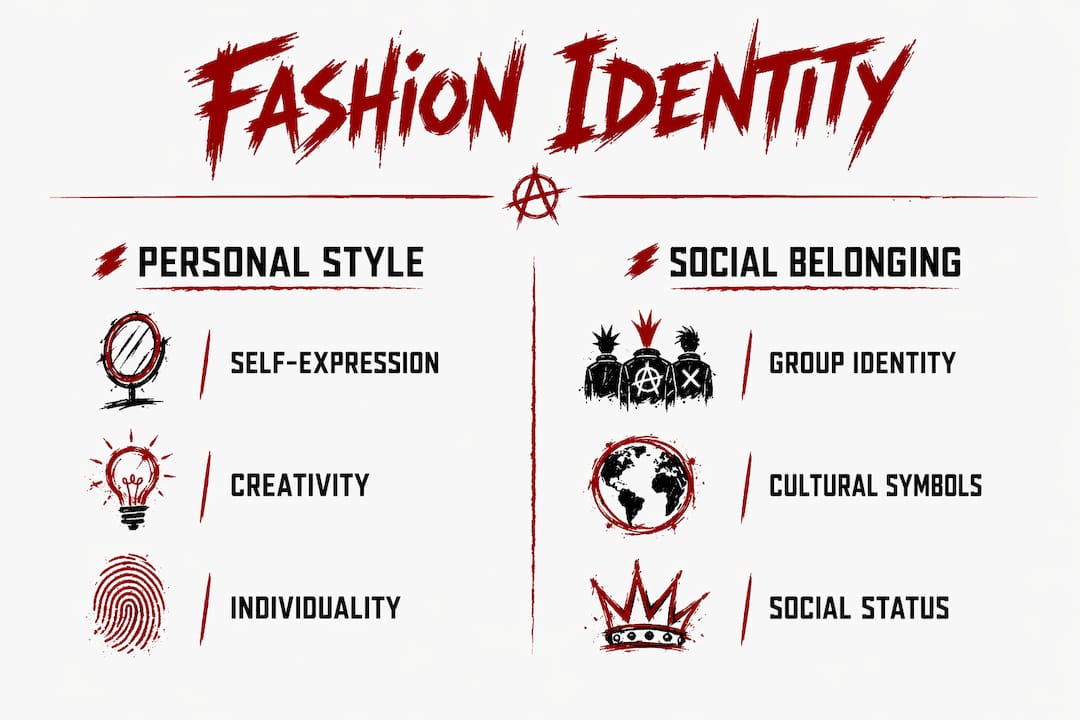
One of the most studied mechanisms for navigating this tension is bricolage. Research on young consumers shows that individuals in socially restrictive environments use hybrid styling and customization to balance conformity with self-expression. They mix mainstream pieces with subcultural signals, creating outfits that communicate belonging to multiple groups simultaneously. This is clothing as cultural expression at its most adaptive.
Common strategies people use to express identity through clothing include:
- Mixing garments from different cultural traditions to signal hybrid identity
- Wearing subcultural markers such as band patches, specific sneaker models, or color codes tied to a movement
- Choosing sustainable or ethically produced clothing to signal values rather than just aesthetics
- Deliberately subverting dress codes through subtle alterations or unexpected combinations
- Using subcultural capital in fashion, where rare or insider pieces signal status within a specific community
Each of these strategies turns clothing into a form of social communication. The outfit becomes a sentence. The wardrobe becomes a biography.
How do historical and political contexts shape clothing as cultural statements?
Clothing has always been a political tool. The most effective uses of fashion as protest were not accidental. They were deliberate, coordinated, and deeply understood by the people who wore them.
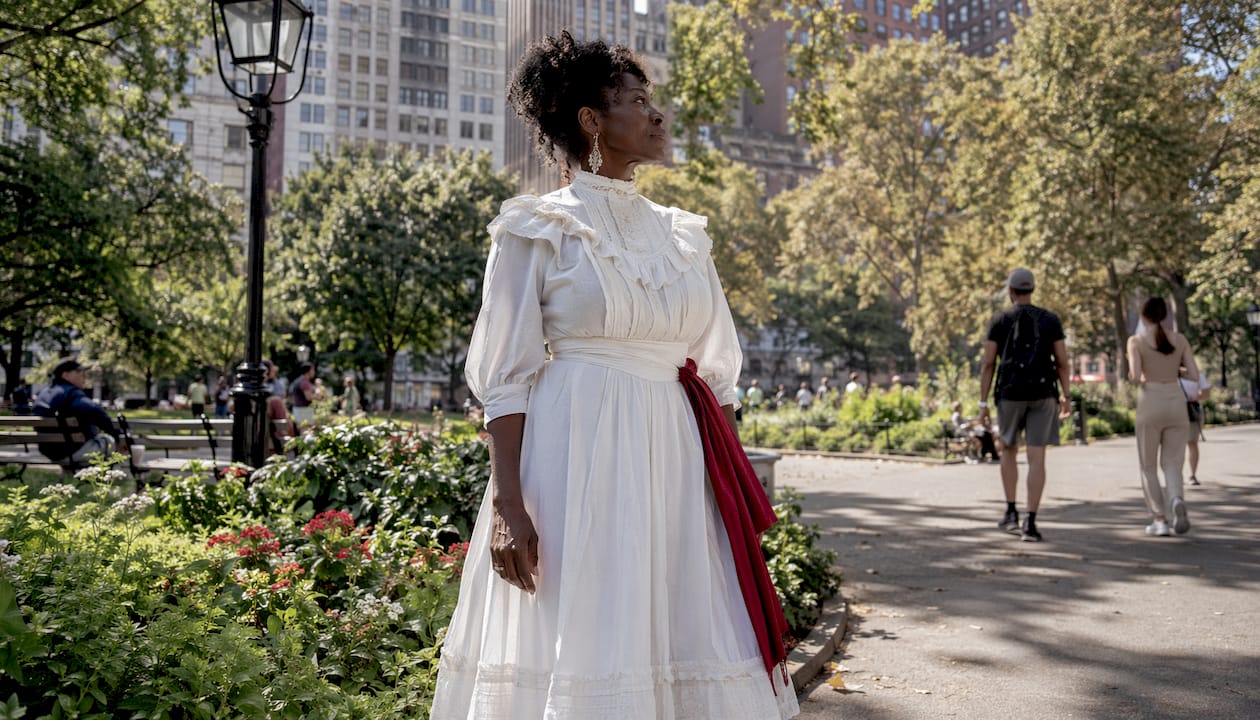
Suffragettes wore white dresses strategically to communicate purity and respectability during political protest. The choice was calculated visual rhetoric. White signaled moral authority at a time when opponents tried to paint the movement as radical and disruptive. The garment did political work that words alone could not.
Clothing is never neutral for public figures. A white dupatta can symbolize sacrifice. A black saree can signal rebellion. Every element carries assigned social meaning, and public figures who understand this use clothing as a key medium of political messaging. The scrutiny applied to what a leader wears is not superficial. It reflects the genuine communicative power of dress.
The Iranian case is one of the most studied examples of clothing as a visible battleground between individuals and state authority. After the 1979 revolution, women’s clothing became a daily site of identity negotiation. How a woman styled her hijab, which colors she chose, and how much hair she allowed to show each carried political weight. The garment became a form of speech under conditions where direct speech was restricted.
Key historical examples of clothing used as a deliberate cultural and political statement:
- Suffragette white dresses (early 20th century): Coordinated use of white to signal moral authority and counter negative portrayals of the women’s rights movement.
- Civil rights movement attire (1950s–1960s): Protesters wore formal Sunday dress to demonstrations, directly challenging the stereotype that Black Americans were not respectable or orderly.
- Iranian women’s dress post-1979: Daily styling choices became acts of political negotiation, with subtle variations in hijab style signaling degrees of compliance or resistance.
- Punk movement (1970s): Torn clothing, safety pins, and DIY customization rejected mainstream consumer culture and signaled rebellion through fashion as a direct cultural challenge.
- Kente cloth in American political spaces: African American politicians and activists wearing Kente cloth in formal settings assert cultural pride and historical continuity in institutions that historically excluded them.
Pro Tip: Before dismissing a public figure’s outfit as a styling choice, ask what message it sends to its intended audience. The answer is almost always deliberate.
What tensions arise when global economics intersect with local cultural clothing?
The relationship between local cultural identity and global manufacturing is far more complicated than it appears. A garment can feel deeply local while being entirely foreign in its production.
Congolese Liputa fabrics are a direct example. These wax prints are central to Congolese cultural identity, worn at celebrations, funerals, and daily life. Yet they are produced in Europe, carrying colonial economic legacies embedded in the very fabric that communities use to express who they are. The garment holds two contradictory narratives at once: local pride and economic dependency.
Clothing reveals broader societal structures including power, colonial legacies, and cultural shifts. This is not an abstract observation. It means that when you buy a garment marketed as “authentic” or “traditional,” the supply chain behind it may tell a very different story. The cultural meaning and the economic reality often point in opposite directions.
| Dimension | Locally produced garments | Imported or globally manufactured garments |
|---|---|---|
| Cultural authenticity | High. Craft knowledge stays within the community | Mixed. Design may be local but production is external |
| Economic impact | Supports local artisans and regional economies | Profits often leave the community |
| Environmental cost | Generally lower due to shorter supply chains | Higher due to shipping, synthetic materials, and scale |
| Symbolic meaning | Tied directly to place and maker | Can carry colonial or commercial baggage |
| Consumer awareness | Often higher. Buyers know the source | Often lower. Origin is obscured by branding |
The tension here is not a reason to reject culturally significant garments. It is a reason to look more carefully at what you are actually buying and what story the full supply chain tells.
Key Takeaways
Clothing functions as a living cultural language, transmitting identity, political resistance, and social belonging through symbols, history, and the economics of production.
| Point | Details |
|---|---|
| Clothing as a sign system | Every garment communicates social meaning through color, cut, and cultural context. |
| Bricolage and identity | Hybrid styling lets individuals navigate between conformity and self-expression in restrictive environments. |
| Political symbolism | Suffragettes, civil rights activists, and Iranian women all used clothing as deliberate political speech. |
| Global production tensions | Culturally significant garments like Congolese Liputa fabric can carry colonial economic legacies. |
| Industry influence | The fashion industry packages identity through curated palettes, shaping what feels authentic to consumers. |
Clothing as a living language: what I’ve learned from reading it closely
Most people treat clothing as a personal choice. After years of studying how fashion reflects culture, I think that framing misses the point almost entirely.
Clothing is not personal in isolation. Every outfit you wear is a response to a social context, a negotiation with the culture around you, and a signal to everyone who sees you. The personal and the political are woven together in the same seam. What strikes me most is how rarely people recognize the power they already hold. You are already making a cultural statement every time you get dressed. The only question is whether you are doing it consciously.
The cases that stay with me are the ones where clothing does work that words cannot. Iranian women adjusting a hijab by a centimeter. Civil rights protesters in their best Sunday clothes walking into violence with dignity intact. Punk kids in 1977 London stitching their own uniforms out of refusal. These are not fashion moments. They are acts of identity in fashion that changed how culture understood itself.
My honest view is that the most interesting clothing choices are the ones that hold tension. The Congolese Liputa fabric that is both a colonial artifact and a symbol of community pride. The subcultural garment that gets absorbed by mainstream retail and loses its edge. These contradictions are not problems to solve. They are the proof that clothing is alive as a cultural form.
— Johnathan
Anarxhy and the art of wearing your position
Clothing that carries genuine cultural weight does not come from following trends. It comes from knowing what you stand for and finding garments that hold that meaning.

Anarxhy builds streetwear for people who already understand this. The brand’s collections are rooted in the outsider ethos, drawing on music, rebellion, and dystopian aesthetics to create pieces that function as cultural statements rather than seasonal filler. The “Signal Lost” series is a direct example: garments designed to resonate with people who feel disconnected from mainstream culture and want clothing that reflects that position honestly. Anarxhy uses eco-friendly materials, so the statement your clothes make extends to how they were made. The FALLEN//001 unisex hoodie and the DIGITAL DECAY hoodie are both built for people who want their wardrobe to say something real. Limited drops keep the community tight and the signal clear.
FAQ
What makes clothing a cultural statement rather than just a style choice?
Clothing becomes a cultural statement when it carries shared symbolic meaning beyond personal preference. Semioticians define garments as sign systems that communicate identity, status, and group belonging to everyone who sees them.
How does fashion reflect culture in everyday life?
Fashion reflects culture through the colors, cuts, and symbols that communities assign meaning to over time. Even casual choices like which sneakers you wear or how you layer garments signal subcultural affiliation and social values.
What is bricolage in the context of fashion and identity?
Bricolage is the practice of mixing garments from different traditions or subcultures to create a hybrid personal style. Research on young consumers shows it is a primary strategy for expressing identity in socially restrictive environments.
Why is clothing symbolism important for cultural preservation?
Traditional garments act as living archives of cultural knowledge, recording social roles, life stages, and community history. As modernization spreads, maintaining dress traditions is one of the most visible ways communities resist cultural erasure.
Can clothing carry contradictory cultural meanings at the same time?
Yes. The Congolese Liputa fabric is both a symbol of local cultural pride and a product of European colonial manufacturing. Clothing regularly holds competing narratives, which is what makes it such a rich form of cultural expression.