

Graphic tees are defined as wearable cultural artifacts that communicate musical allegiance, subcultural values, and personal identity without a single spoken word. The role of graphic tees in music identity goes far beyond decoration. A Black Flag tee, a Nirvana Nevermind shirt, or a limited Kendrick Lamar tour print each signals something specific about who you are and where you belong. These shirts function as social currency in music communities, recognized instantly by other fans, collectors, and fashion devotees who understand the visual language. The importance of band merchandise in this context is not sentimental. It is structural.
How do graphic tees shape music identity and cultural belonging?
Graphic tees are the most direct form of nonverbal communication in music culture. 80–90% of band tee wearers use these shirts as nonverbal signals of musical allegiance and social recognition within genre communities. That figure means the shirt on your back is doing active social work every time you wear it in public.
The mechanism is what sociologists call a “visual handshake.” You spot a Slowdive tee across a crowded room and you already know something real about that person before they speak. This kind of instant recognition builds community faster than any algorithm-driven playlist recommendation. It is cultural literacy made visible.
- Graphic tees signal membership in a specific genre or scene, from hardcore punk to hyperpop.
- They communicate shared values, whether that is anti-establishment rebellion, spiritual devotion to a sound, or nostalgia for a specific era.
- They function as conversation starters at shows, record stores, and anywhere music fans gather.
- They mark the wearer as someone with taste, history, and genuine investment in a scene.
“Graphic tees transcend trend fashion to become cultural artifacts that reveal one’s alignment with music and counterculture movements.” — Fashion museum experts cited by The Globe and Mail
The impact of apparel on identity in music scenes is cumulative. Each shirt you wear adds a layer to how your community reads you. Over time, your wardrobe becomes a visual autobiography.
What is the history of band tees as music fashion statements?
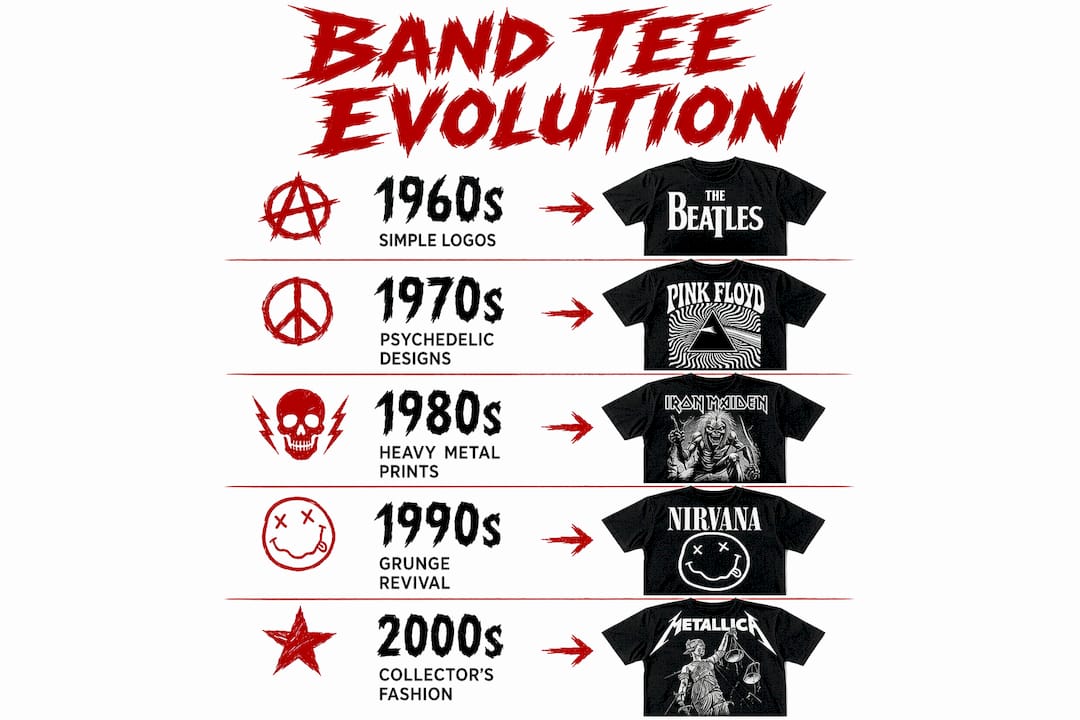
Band merchandise as a commercial practice began in the 1960s, when artists like The Beatles and The Rolling Stones first attached their names to physical goods sold at shows. The real explosion came in the 1970s and 1980s, when stadium rock tours turned graphic shirts into mass-market objects. By the 1990s, grunge and punk had transformed the tee from a souvenir into a statement of anti-establishment identity.
The grunge era is the clearest example of how music rebellion translates to clothing. Bands like Nirvana, Soundgarden, and Pearl Jam used deliberately raw, distressed graphics that rejected the polished aesthetics of mainstream pop merchandise. Wearing those shirts was a political act as much as a fashion choice.
| Era | Dominant Style | Cultural Significance |
|---|---|---|
| 1960s | Simple logo prints | Souvenir and fan identification |
| 1970s–80s | Bold tour graphics, back prints | Stadium rock status and scene membership |
| 1990s | Distressed, raw, oversized | Anti-establishment identity, grunge and punk rebellion |
| 2000s | Ironic reissues and bootlegs | Nostalgia culture and subcultural gatekeeping |
| 2010s–present | Limited drops, artist collabs | Collectible status, scarcity as social signal |
The shift from functional merchandise to collectible fashion artifact is now complete. Rare original era-specific prints are increasing in value as supply dwindles due to collector interest, particularly among 18–35-year-old music culture enthusiasts. A genuine 1994 Metallica tour tee now commands prices that rival limited sneaker drops. That is not nostalgia. That is a market.
Why does official band merchandise matter more than ever?
Authenticity is the core value in music apparel, and official band merchandise is the clearest expression of that value. Modern consumers prioritize buying official merch as a way to financially support artists and access verified quality apparel. The shirt becomes a direct economic link between fan and artist.
Limited tour or album-specific drops create scarcity and emotional connection that digital media cannot replicate. When you buy a shirt at a show or from a limited online drop, you are buying a piece of a specific moment. That shirt carries the memory of the night, the crowd, and the sound. A mass-produced replica carries none of that.
Collectors understand this distinction viscerally. Authentic vintage band tees exhibit specific physical aging signs such as collar wear and print cracking, which counterfeit “vintage wash” treatments fail to replicate. Specific wear patterns verify originality and genuine lived experience with the garment. Fast fashion can copy the graphic. It cannot copy the story.
- Official merchandise comes directly from the artist or their authorized partners, guaranteeing design accuracy and financial support.
- Tour-specific prints are produced in limited quantities, making them inherently scarce and more culturally significant.
- Vintage originals carry physical evidence of age and use that no reproduction can fake.
- Limited drops from contemporary artists like Travis Scott, Billie Eilish, or Tyler, the Creator follow the same scarcity logic as vintage pieces.
Pro Tip: To verify an authentic vintage band tee, check the tag manufacturer (Hanes, Fruit of the Loom, and Screen Stars were common in the 1980s and 1990s), look for single-stitch seams on the sleeves, and examine the print for natural cracking rather than the uniform distressing of modern reproductions.
How do graphic shirts navigate inclusion and exclusion in music scenes?
Graphic shirts in music scenes carry a social tension that rarely gets discussed openly. The phenomenon of “merch gatekeeping” describes what happens when band tees become tests of musical knowledge rather than expressions of genuine love. Fans experience merch gatekeeping where band tees become tests of musical knowledge, creating real social tension in communities that claim to value authenticity.
The problem is that gatekeeping confuses knowledge with belonging. You do not need to name every track on Loveless to wear a My Bloody Valentine shirt. The shirt communicates aesthetic alignment and cultural curiosity. That is enough.
Fans can counteract merch gatekeeping by embracing graphic tees as open-ended symbols, focusing on cultural and aesthetic dialogue rather than requiring exhaustive band knowledge. Here is how that looks in practice:
- Treat every tee as an invitation to a conversation, not a credential to be verified.
- Ask questions when you see a shirt you do not recognize. Discovery is the point.
- Share the story behind your own shirts when someone asks. Context builds community.
- Resist the urge to quiz strangers about their merch. Curiosity beats interrogation every time.
- Recognize that new fans wearing a shirt are often the most passionate people in the room.
The surge in band tee interest responds to desires for tangible, honest artifacts as anchors amid digital-first music consumption. People want something real to hold. A shirt that sparks a conversation is doing exactly what it was designed to do.
Pro Tip: Tour merchandise design frequently includes back graphics to communicate with others in crowds. This design strategy functions like a mobile poster at concerts. When you wear one, you are signaling to everyone behind you, not just the people you face.
Key Takeaways
Graphic tees are the most direct and durable form of identity expression in music culture, combining social signaling, historical weight, and authentic community building into a single garment.
| Point | Details |
|---|---|
| Visual communication | 80–90% of band tee wearers use shirts as nonverbal signals of musical allegiance and community recognition. |
| Historical depth | Band tees evolved from 1960s souvenirs to collectible cultural artifacts, with 1990s grunge prints now commanding serious collector value. |
| Authenticity matters | Official and vintage tees carry physical and emotional authenticity that mass-produced replicas cannot replicate. |
| Inclusivity over gatekeeping | Treating tees as conversation starters rather than knowledge tests builds stronger, more open music communities. |
| Design as social function | Back graphics on tour merch are deliberate tools for social signaling in crowds, not just aesthetic choices. |
Why graphic tees still hit different than any other fashion statement
I have worn band tees since I was fourteen, starting with a faded Pixies shirt I found at a thrift store in Chicago. At the time, I did not own a single Pixies album. I bought it because the graphic was striking and something about it felt like a door I wanted to walk through. That shirt led me to Doolittle, which led me to the Breeders, which led me to a decade of obsessive record collecting. The shirt was the beginning of a real identity, not a costume.
What I have observed over the years is that the people most threatened by “fake fans” in band tees are usually the ones most insecure about their own standing in a scene. The tee is not a membership card. It is a signal flare. The right person sees it and comes over to talk.
The shift I find genuinely interesting in 2026 is how music subcultures influence fashion at a mainstream level now, while simultaneously becoming more specific and tribal at the edges. You have Tyler, the Creator’s Golf Le Fleur collaborations sitting next to handmade zine-culture patches on the same jacket. The graphic tee sits at the center of that tension, accessible enough for anyone to wear and specific enough to mean something to those who know.
My honest position is this: the value of a band tee is not in what it proves about you. It is in what it opens up. Wear the shirt. Start the conversation. Let the music do the rest.
— Johnathan
Wear your sound with Anarxhy
Music identity deserves apparel built with the same conviction that drives the music itself. Anarxhy designs for people who live at the edges of culture, where the most interesting sounds and ideas actually come from.
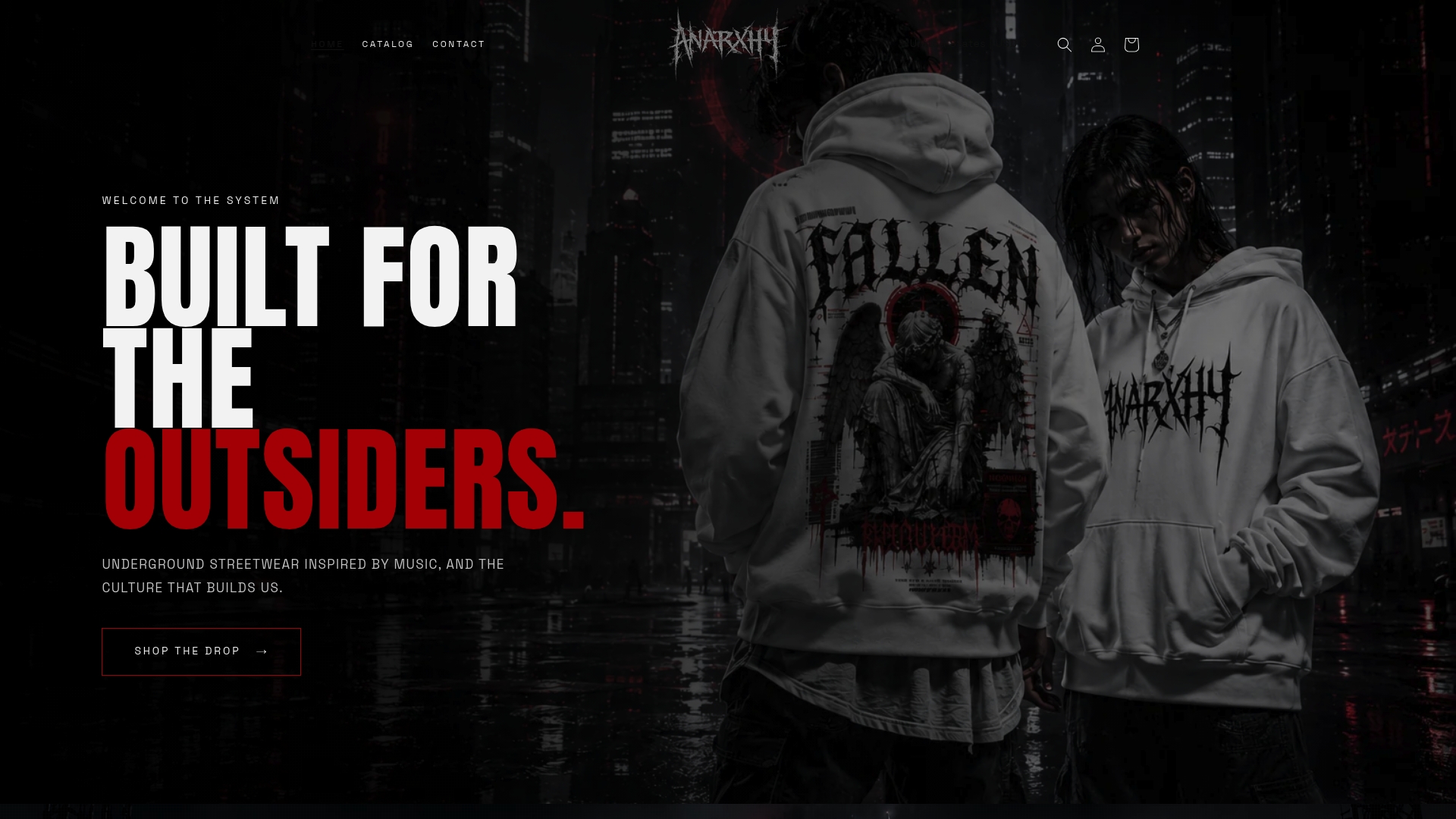
The FALLEN//001 unisex hoodie and the DIGITAL DECAY piece both carry the same visual weight as the best graphic tees in your collection. These are limited drops built from eco-friendly materials, with graphics that communicate something real about rebellion, dystopia, and the outsider experience. Anarxhy does not reprint. When a drop is gone, it is gone. If you are serious about wearing your identity rather than just describing it, this is where you start.
FAQ
What is the role of graphic tees in music identity?
Graphic tees serve as nonverbal communication tools that signal musical allegiance, subcultural values, and community belonging. They function as visual identifiers that connect fans instantly across genre communities.
Why are 1990s band tees so valuable to collectors?
Rare original 1990s prints are increasing in value as supply dwindles and collector demand from 18–35-year-old music enthusiasts grows. Authentic physical aging signs like collar wear and print cracking confirm originality in ways reproductions cannot match.
How can you tell a real vintage band tee from a fake?
Check the sleeve seams for single-stitch construction, examine the tag for period-accurate manufacturers like Hanes or Screen Stars, and look for natural print cracking rather than uniform artificial distressing.
What is merch gatekeeping and why does it matter?
Merch gatekeeping happens when fans use band tees as tests of musical knowledge, creating exclusion in communities that claim to value authenticity. Treating tees as conversation starters rather than credentials builds more open and welcoming music scenes.
Does buying official band merchandise actually support artists?
Official merchandise purchases directly fund artists and provide access to verified quality apparel. Limited tour and album-specific drops also create emotional connections tied to specific moments that mass-produced alternatives cannot replicate.