

What is transgressive fashion design?
Transgressive fashion design is the deliberate creation of garments that violate accepted standards of taste, gender, and social convention by crossing traditional boundaries such as natural/artificial and male/female. The word itself comes from the Latin transgredi, meaning “to go beyond,” and that etymology is the whole point. These clothes do not just look unusual. They function as arguments.
The core characteristics of transgressive fashion include:
- Boundary-crossing aesthetics that reject conventional beauty standards in favor of the grotesque, the unfinished, or the deliberately uncomfortable
- Gender disruption, using garments to blur or erase the line between masculine and feminine dress codes
- Anti-utility, treating the garment as a philosophical object rather than a functional one
- Political intent, using clothing to challenge power structures, body politics, and social hierarchies
- Material provocation, deploying latex, distressed textiles, upcycled fabrics, and signs of decay as deliberate aesthetic choices
- Criticality, meaning the work must provoke genuine reflection, not just shock
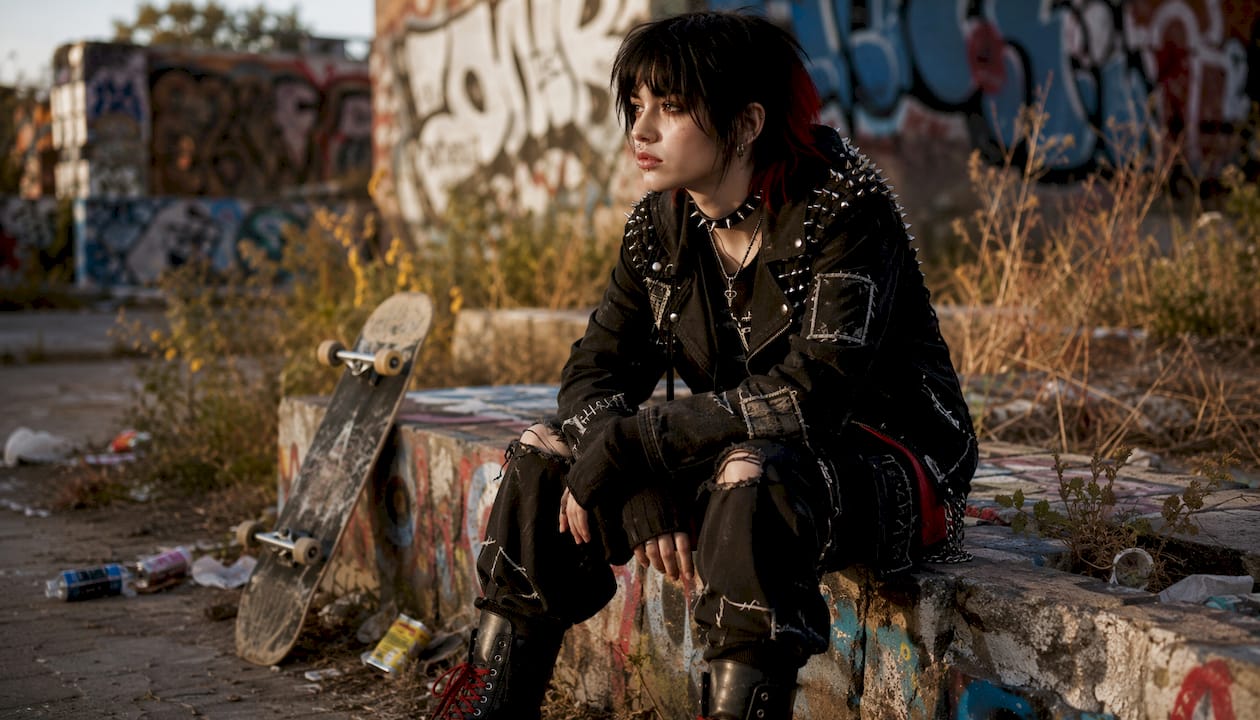
A brand like Anarxhy embodies this ethos directly. Its outsider identity, punk attitude, and limited drops built around themes of musical rebellion and dystopian aesthetics place it squarely within the transgressive tradition, while its use of eco-friendly materials adds a layer of ethical critique that purely shock-driven fashion rarely bothers with.
The philosophy behind transgressive fashion
Transgressive fashion sits within a broader intellectual framework called Critical Fashion Practice, or CFP. The Critical Fashion Project defines CFP as any work of fashion that “announces a level of conceptual functionality that exceeds the capacity of simple clothing.” In other words, the garment exists as both a physical object and an idea.
“CFP exists as both something in the world and in the mind. We would contend, furthermore, that since at least the 1990s, examples of CFP are on par if not exceed contemporary art for aesthetic and critical effect, in the way that it helps us to reflect authentically upon our being in the world.” — Critical Fashion Project
This connects directly to postmodernism and deconstruction. Where mainstream fashion resolves itself into a finished, beautiful object, transgressive design destabilizes dominant ideologies by refusing resolution. It values speculation over completion, rupture over harmony.
Philosophers like Georges Bataille and Julia Kristeva, alongside cultural theorists Joanne Entwistle and Elizabeth Wilson, provide the theoretical backbone here. Kristeva’s concept of abjection, the visceral discomfort produced by things that blur the boundary between self and other, maps directly onto what negative aesthetics in fashion tries to produce. Disgust, in this framework, is not a failure. It is the mechanism.
Pro Tip: When evaluating whether a garment is genuinely transgressive or just edgy, ask whether it forces a specific question about identity, power, or the body. Shock without that question is costume, not critique.
Transgressive fashion also creates what scholars describe as a “spectacular lexicon,” a visual language built from repressed or non-traditional knowledge that disrupts mainstream norms and opens new modes of identity. This is why fashion communicates rebellion in ways that language alone cannot.
Iconic designers and the materials that define the practice
The designers who built transgressive fashion into a recognized critical practice share one quality: they treated the garment as a site of conflict, not comfort.
-
Vivienne Westwood pioneered the form in the 1970s alongside Malcolm McLaren, drawing on Situationist strategies of détournement to design clothing that exposed the hypocrisies of postwar British society. Selling repurposed clothing with added marks, prints, and cut sleeves, Westwood produced the first major instance of DIY fashion as political statement.
-
Rei Kawakubo (Comme des Garçons) launched her career-defining “Destroy” collection in 1983, introducing holes, stressed fabrics, irregular weave, and asymmetry into high fashion. Critics coined the term la mode destroy for her work, and commentators drew parallels between her deconstructivist aesthetic and the ruins of Hiroshima, a connection Kawakubo has always denied but never fully escaped.
-
Martin Margiela took Kawakubo’s logic further by reversing linings, sewing garments inside out, and building collections from upcycled materials. His first ready-to-wear collection in 1989 featured deconstructed flat-folding garments where “foundation becomes outerwear, the body becomes the dress.” He refused to use professional models, staging shows as art happenings instead.
-
Bernhard Willhelm challenges gendered dress systems by presenting traditionally feminine garments in menswear collections and vice versa, actively refusing to perpetuate homogeneity in fashion’s representation of gender, race, and sexuality.
-
Atsuko Kudo works almost exclusively in latex, a material that sits at the intersection of fetish culture, body politics, and high fashion. Latex does not drape or breathe. It clings, reflects, and transforms the body into something simultaneously exposed and armored, which is precisely the point.
-
Studio FCLX pushes material experimentation into territory that questions what a garment even is, using construction methods that foreground process, decay, and incompleteness as aesthetic values rather than flaws.
-
Anarxhy channels the transgressive tradition through streetwear, a genre that rarely gets credit for its critical potential. The brand’s Signal Lost collection deploys dystopian imagery, punk typography, and deep crimson accents against near-black backgrounds to build a visual identity that reads as refusal. The use of eco-friendly materials is not incidental. It positions the brand’s rebellion as ethical as well as aesthetic.
| Designer / Brand | Signature Material | Core Transgression |
|---|---|---|
| Vivienne Westwood | Repurposed fabric, DIY | Class and propriety |
| Rei Kawakubo | Stressed, holed textiles | Beauty and completeness |
| Martin Margiela | Upcycled, inside-out garments | Luxury and anonymity |
| Bernhard Willhelm | Mixed gendered garments | Gender and heteronormativity |
| Atsuko Kudo | Latex | Body, fetish, and exposure |
| Anarxhy | Eco-friendly distressed fabrics | Mainstream conformity and sustainability |
How transgressive fashion functions as resistance today
Transgressive fashion in 2026 operates in a cultural moment defined by instability, and that instability is exactly what gives it traction. The contemporary fashion theory on abjection argues that the modern era makes boundary-pushing aesthetics a vital medium for exploring the line between self and other, normal and abject. That is not abstract. It shows up in how people dress when they feel the existing categories no longer fit.
Current critical perspectives on transgressive fashion include:
- Political resistance through dress, as seen in activist communities using clothing to challenge racial, gender, and sexual stereotypes with humor and absurdity as tools
- The grotesque as activism, exemplified by pieces like the Divine Impersonation Bra, which combines grotesque aesthetics with layered political commentary on gender, race, and sexuality
- Sustainability as transgression, where brands that reject fast fashion’s logic of disposability make an ethical argument through material choice
- Community building through exclusivity, where limited drops and strong manifestos create belonging among people who feel disconnected from mainstream culture
The ongoing controversy around transgressive fashion centers on one question: when does provocation become empty? Critical fashion theorists are clear that transgressive design must exceed mere shock. It requires criticality, a purposeful aesthetic rupture that forces reflection on social, gender, and bodily politics. Without that, it is just costuming.
Anarxhy’s approach threads this needle by grounding its rebellious aesthetic in a genuine outsider ethos rather than borrowed edge. The anti-fashion movement that Anarxhy aligns with is not about looking different. It is about meaning something different.
Pro Tip: Transgressive fashion loses its power the moment it becomes a trend. The most effective examples maintain their critical edge precisely because they resist easy absorption into mainstream aesthetics.
How transgressive fashion evolved historically
The roots of transgressive fashion as a critical practice reach back to the early 20th century, but the practice crystallized in distinct waves.
The 1970s marked the first major rupture, when Vivienne Westwood and Malcolm McLaren applied Situationist ideas to clothing design in London. Their shop on King’s Road became a laboratory for garments that deliberately offended, borrowed from subcultural style, and refused the conventions of both high fashion and everyday dress.
The early 1980s brought deconstruction into fashion’s vocabulary. Kawakubo’s 1983 “Destroy” collection and the subsequent emergence of la mode destroy introduced a post-Hiroshima aesthetic of ruins and incompleteness that the French fashion establishment found genuinely threatening. The Antwerp Six, a collective of Belgian designers who graduated together in 1981, extended this language into their own practices, each developing a distinct approach to dismantling fashion’s inherited rules.
By the late 1980s and 1990s, Martin Margiela had taken deconstruction into its most rigorous form, while Jean Paul Gaultier was using the uniform, a garment defined by conformity, as a vehicle for exploring authority, discipline, and transgression. Gaultier’s sailor suit, reinterpreted across decades of collections, became one of fashion’s most sustained meditations on gender and power.
The 2000s and 2010s saw transgressive aesthetics absorbed into luxury fashion through designers like Alexander McQueen, who used symbolic violence and bodily excess to engage in sociopolitical critique at the highest commercial level. Demna Gvasalia at Vetements and later Balenciaga continued Margiela’s project, expanding what clothing means in an age of biological engineering and prosthetics.
The current decade has pushed transgressive fashion into streetwear and subcultural communities, where brands like Anarxhy carry the tradition forward with eco-conscious materials and a manifesto-driven identity built for those who live outside the mainstream.
Key Takeaways
Transgressive fashion design is a critical practice that uses garments to challenge social norms, destabilize ideologies, and force reflection on identity, gender, and power.
| Point | Details |
|---|---|
| Rooted in Latin transgredi | The term means “to go beyond,” and every design choice in transgressive fashion enacts that literally. |
| Criticality over shock | A garment must provoke genuine reflection on body or gender politics, not just visual discomfort. |
| Deconstruction as foundation | Kawakubo and Margiela built the practice by exposing garment decay, asymmetry, and incompleteness as aesthetic values. |
| Materials carry meaning | Latex, distressed textiles, and upcycled fabrics are not just choices; they are arguments about the body and the environment. |
| Anarxhy extends the tradition | The brand channels transgressive aesthetics through streetwear, eco-friendly materials, and a community built around outsider identity. |
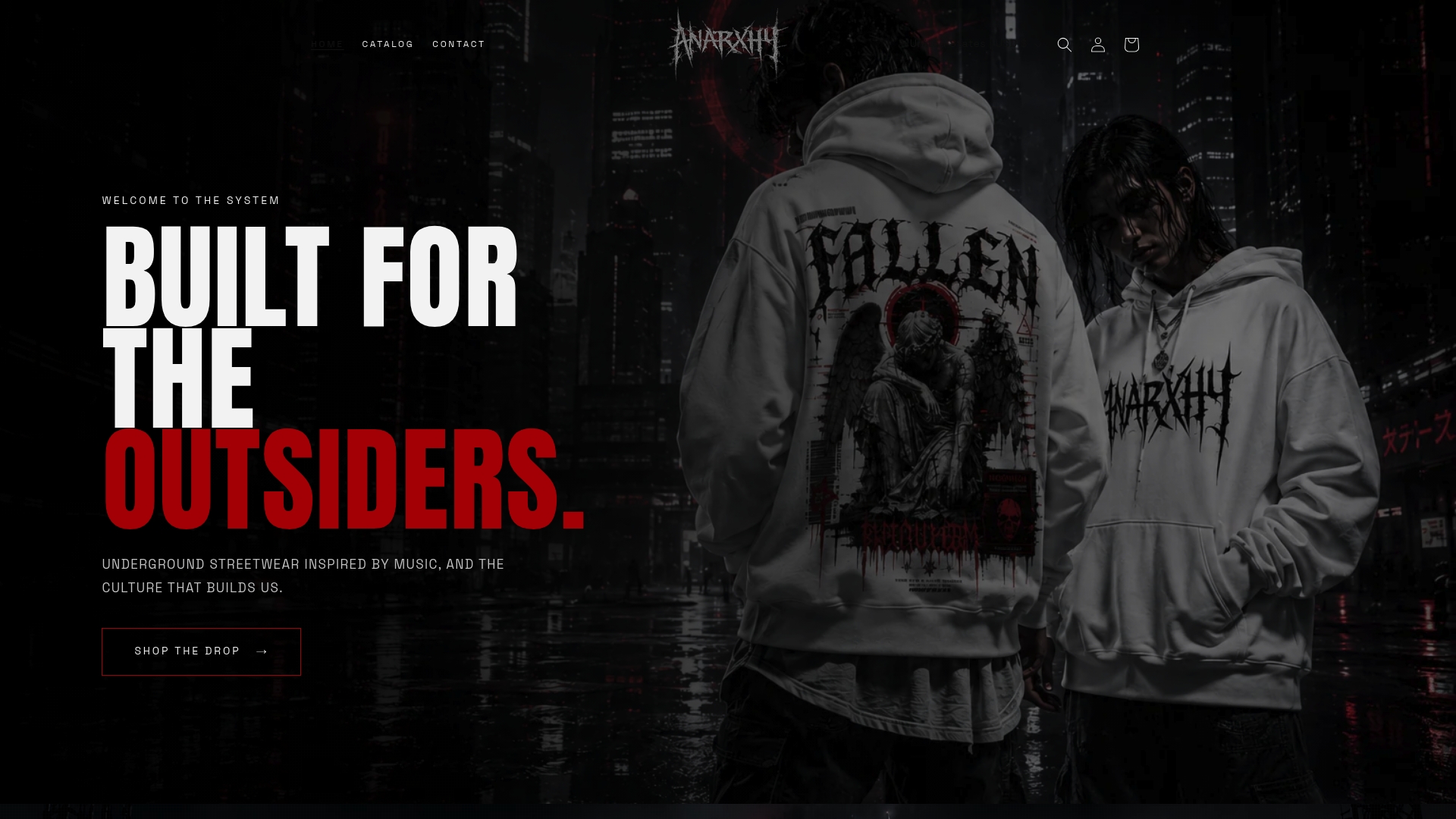
Anarxhy’s Signal Lost collection translates the transgressive tradition into wearable form, built for people who understand that clothing is never just clothing. If you want to wear something that means something, start there.