

DIY music-inspired clothing is defined as personalized, handcrafted apparel that captures the visual language of specific music genres through materials, techniques, and aesthetic choices. The types of diy music-inspired clothing range from punk distressed denim to holographic synth-pop looks, and each style draws from a distinct subculture with its own rules, textures, and symbols. Music subcultures drive fashion in ways that no mainstream trend cycle can replicate. The most authentic DIY pieces translate a genre’s emotional core into something you can actually wear to a show, a festival, or just a Tuesday.
1. Types of DIY music-inspired clothing by genre
The most direct way to organize music-themed fashion is by genre. Each genre carries a visual vocabulary that translates naturally into specific fabrics, colors, and construction methods.
Genre-specific materials and aesthetics map cleanly to DIY approaches: punk and grunge favor distressed leather and denim with studs and safety pins; synth-pop and electronic styles lean into reflective, holographic fabrics; folk and acoustic-inspired clothing uses natural fibers like linen and suede with earthy tones and handcrafted embroidery. That mapping gives you a clear starting point before you buy a single yard of fabric.
Here is a breakdown of the core genre categories:
- Punk and grunge: Distressed black denim, leather jackets with painted slogans, safety pins, band patches, and metal studs. The color palette stays dark: black, red, and washed gray.
- Electronic and synth-pop: Reflective vinyl panels, holographic fabric inserts, mesh overlays, and neon accents. Silver, chrome, and electric blue dominate.
- Folk and acoustic: Raw linen shirts, suede vests, fringe details, floral embroidery, and natural dye techniques. Earthy browns, sage greens, and cream tones define the look.
- Hip-hop and R&B: Oversized silhouettes, screen-printed graphics, bold typography, and color-blocked panels. Gold hardware and chain details add weight.
- Metal and hard rock: Sleeveless denim vests loaded with patches, band logos hand-painted in white on black, and spiked accessories.
Pro Tip: Start with one genre and commit to its color palette before adding embellishments. Mixing three genres at once usually reads as costume, not curation.
Vintage band tees and retro analog graphics are the highest-volume category across all genres. Vintage and vinyl themes lead in music-themed apparel sales, while minimalist instrument silhouettes attract higher-spending collectors. That data tells you the market rewards both volume and specificity.
2. Punk and grunge DIY techniques
Punk and grunge are the most forgiving genres for DIY beginners because imperfection is the point. A jacket that looks too clean reads as inauthentic in this subculture.
Authentic distressing requires a seam ripper to pull threads naturally and sandpaper or a metal grater to create worn-in textures. Scissors produce clean cuts that look artificial. Pull threads along the grain, then rub the exposed area with coarse sandpaper in circular motions until the fabric softens and frays organically.
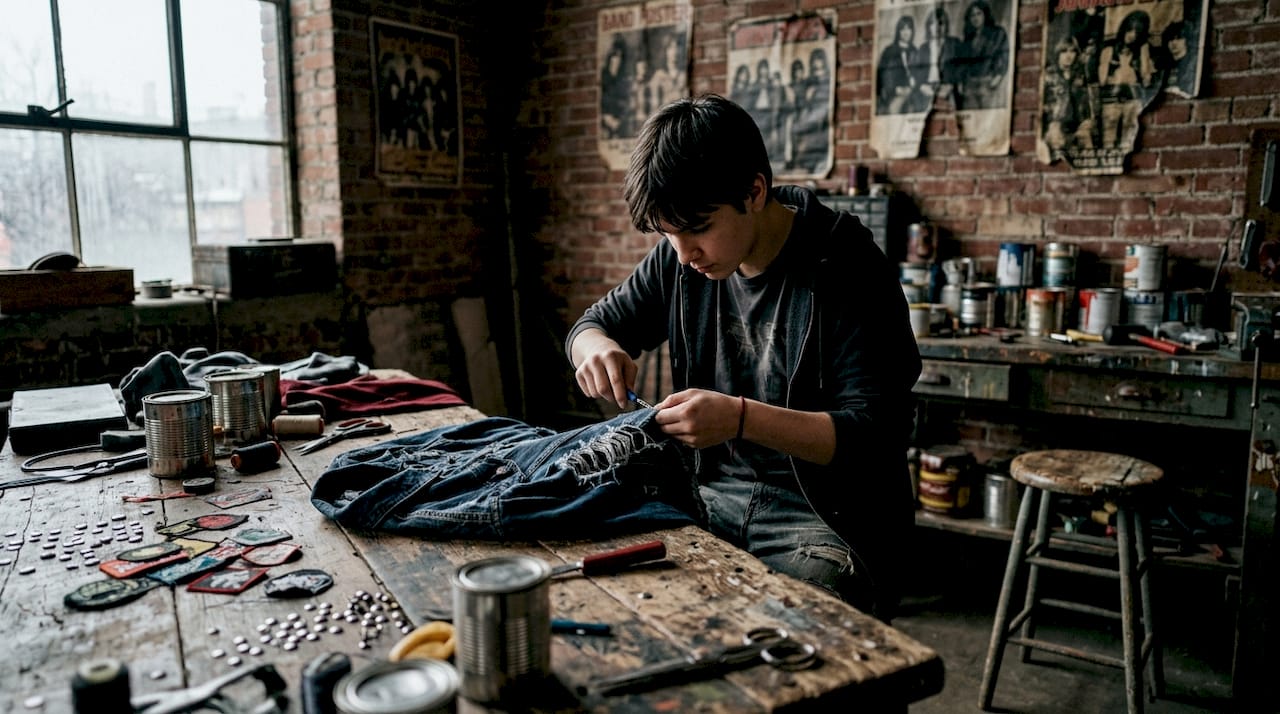
For hardware attachment on jackets and vests, combine adhesive with stitching for durability. Apply industrial-strength fabric adhesive first, let it cure fully, then hand-stitch or press rivets through the attachment point. Glue alone fails under the friction and heat of an active concert environment.
Pro Tip: Thrift stores are the best source for punk base garments. A $4 denim jacket from a secondhand shop takes studs and paint better than a stiff new one because the fabric has already softened through wear.
Patches are the fastest way to signal subculture knowledge. Hand-stitch them rather than iron them on. Iron-on patches peel at the edges within a few washes, while hand-stitched patches last years and develop their own character over time.
3. Electronic and synth-pop DIY approaches
Electronic music fashion is built on contrast: hard-edged geometry against soft body lines, matte black against mirror-finish silver. The DIY version of this aesthetic is more accessible than it looks.
Reflective iron-on vinyl is the core material for synth-pop DIY projects. Cut geometric shapes with a craft knife and a cutting mat, then press them onto base garments using a heat press or a household iron set to the vinyl manufacturer’s recommended temperature. The result reads as professional even on a first attempt.
Holographic fabric can be sewn as panels into existing jackets or tops. Use a sharp needle and a slow stitch speed to prevent the material from slipping. A strip of holographic fabric along a jacket sleeve or collar transforms a plain black piece into something that catches stage lighting.
Mesh layering adds depth without weight. A mesh top over a reflective bodysuit, or mesh sleeves attached to a plain long-sleeve shirt, creates the layered electronic aesthetic without requiring advanced sewing skills.
4. Folk and acoustic DIY clothing ideas
Folk-inspired DIY clothing rewards patience and hand skills over speed. The aesthetic values visible craft: you should be able to see the work.
Natural fiber garments like linen shirts and cotton canvas jackets take hand embroidery well. Use a basic running stitch or chain stitch to add botanical motifs, moon phases, or lyric fragments along collar edges and cuffs. Embroidery thread in rust, sage, and cream keeps the palette grounded.
Natural dyeing with materials like turmeric, avocado pits, and black walnut shells produces the muted, organic tones that define folk fashion. The process takes an afternoon and produces colors that no synthetic dye replicates exactly. Each piece comes out slightly different, which is the entire point.
Fringe is the fastest folk detail. Cut strips along the hem of a suede or faux-suede vest, then hand-knot the ends to prevent further fraying. Add wooden or clay beads to individual fringe strips for texture and weight.
5. Vintage band tee customization
The vintage band tee is the most universally recognized form of handmade band apparel and the easiest entry point for DIY music-themed fashion. A thrifted tee plus one technique produces a genuinely unique piece.
Cropping is the most common modification. Cut the hem straight across, or cut at an angle for asymmetry. Tie the excess fabric at the side for a gathered look. Each variation changes the silhouette without touching the graphic.
Bleach tie-dye on a dark band tee creates a retro, sun-faded effect that reads as authentically aged. Apply bleach in a spray bottle to a twisted or bunched tee, let it sit for 10–15 minutes, then rinse and wash immediately. The result varies every time based on the original fabric dye.
Overdyeing a faded tee in a contrasting color refreshes the base while preserving the original graphic. Dye the entire shirt in a deep burgundy or forest green, and the original print shows through as a ghost image. This technique works best on lighter original graphics.
6. Rhinestone and embellishment projects
Rhinestone-heavy DIY concert outfits are feasible on a tight budget. A full rhinestone look costs under $50 using thrifted base garments and bulk embellishments, completable within three days. That timeline makes rhinestone projects realistic for an upcoming show rather than a long-term commitment.
Fabric mechanics determine whether rhinestones stay put. Apply rhinestones over stretched fabric using a dress form or cardboard insert to prevent puckering and improve adhesion. Rhinestones applied to relaxed, unstretched fabric pucker when the garment is worn and eventually pop off under movement.
After application, run a 10-minute wearability test that includes sitting, walking, and dancing before you consider the piece finished. Any embellishment that shifts or detaches during the test needs reinforcement before you wear it out.
7. Aligning your DIY outfit with the event
The right DIY concert outfit depends on the venue, the music style, and how much you plan to move. A seated theater show and a standing-room festival require completely different design decisions.
For high-movement events like festivals and club nights, prioritize comfort and durability over visual complexity. Avoid trailing fabric, loose hardware that can catch on other people, and embellishments placed where a bag strap or seat belt will rub. Movement-testing for at least 10 minutes before finalizing any DIY concert outfit prevents failures mid-show.
Layering solves the climate problem at outdoor events. A customized denim jacket over a rhinestone top gives you warmth when the sun goes down and a statement piece when you tie it around your waist. Design each layer to work independently so you have options throughout the day.
Subtle genre nods read better than full costumes in most settings. Successful music fashion shifts from costume to curation by incorporating genre-aligned color palettes, silhouettes, and custom details that signal subculture knowledge without copying a specific artist’s look. That distinction separates a memorable outfit from a Halloween costume.
8. Trends shaping DIY music fashion in 2026
The dominant trend in music-themed fashion right now is the move toward curation over costume. Creatives are building outfits that reference a genre’s entire visual history rather than a single artist or era.
Minimalist instrument silhouettes and genre typography are gaining ground among collectors and higher-spending buyers. A single guitar neck embroidered on a jacket collar or a bass clef printed in a clean sans-serif font on a tote bag signals music identity without shouting it. This approach works across multiple settings, from a show to a workday.
Music video and album art aesthetics drive DIY inspiration cycles faster than any runway. When a major artist releases a visually distinct album, the DIY community produces genre-aligned interpretations within weeks. Following album release cycles gives you a reliable source of fresh visual references for your own projects.
The cost advantage of DIY remains significant. Thrift sourcing, fabric remnant use, and mixing vintage pieces with new embellishments keep project costs low while producing results that mass-market apparel cannot replicate. The DIY ethos in music fashion celebrates that gap between handmade and manufactured as a feature, not a limitation.
| Trend | DIY Application | Skill Level |
|---|---|---|
| Vintage band tee graphics | Thrift, crop, bleach-dye, or overdye | Beginner |
| Minimalist instrument silhouettes | Embroidery or screen print on plain garments | Intermediate |
| Holographic and reflective panels | Iron-on vinyl or sewn fabric inserts | Intermediate |
| Distressed punk hardware | Seam ripping, sanding, rivet pressing | Beginner |
| Natural dye folk aesthetics | Turmeric, avocado, or walnut dye baths | Beginner |
Key Takeaways
The most effective types of DIY music-inspired clothing combine genre-specific materials, authentic crafting techniques, and wearability testing to produce pieces that hold up at real events.
| Point | Details |
|---|---|
| Genre defines your materials | Match fabrics and colors to your genre before buying anything. |
| Distressing requires the right tools | Use seam rippers and sandpaper, not scissors, for authentic worn textures. |
| Rhinestones need stretched fabric | Apply embellishments over a form or insert to prevent puckering and improve adhesion. |
| Test before you wear | Run a 10-minute movement test covering sitting, walking, and dancing before finalizing any piece. |
| Curation beats costume | Subtle genre cues read stronger than full artist replicas in most real-world settings. |
Why imperfection is the whole point
The conversation around DIY music fashion almost always focuses on technique, and technique matters. But the creatives I respect most are the ones who stopped waiting until their skills were “good enough” and just made something.
Deliberate imperfection enhances authenticity in music-inspired DIY looks. Scattered patches, hand-painted lyrics that run slightly at the edges, and stitching that shows on the outside are not mistakes. They are proof that a human made this thing. That proof is exactly what separates a DIY piece from a mass-produced approximation of the same idea.
The practical lesson I keep coming back to is the movement test. I have seen beautifully constructed outfits fall apart at the first song because the maker never sat down in them, never raised their arms, never danced in place for two minutes. Build the piece, then wear it around your apartment for a while. Fix what moves wrong. The outfit you actually finish and wear beats the perfect one you never complete.
Start with one technique and one genre. Get comfortable with distressing before you add rhinestones. Learn to embroider a single motif before you cover an entire jacket. The signature style you are looking for develops through repetition, not ambition. Wearing genre-inspired fashion daily trains your eye faster than any tutorial.
— Johnathan
Anarxhy’s hoodies as your DIY starting point
The hardest part of any DIY project is choosing the right base garment. A poorly constructed blank defeats the work you put into it.
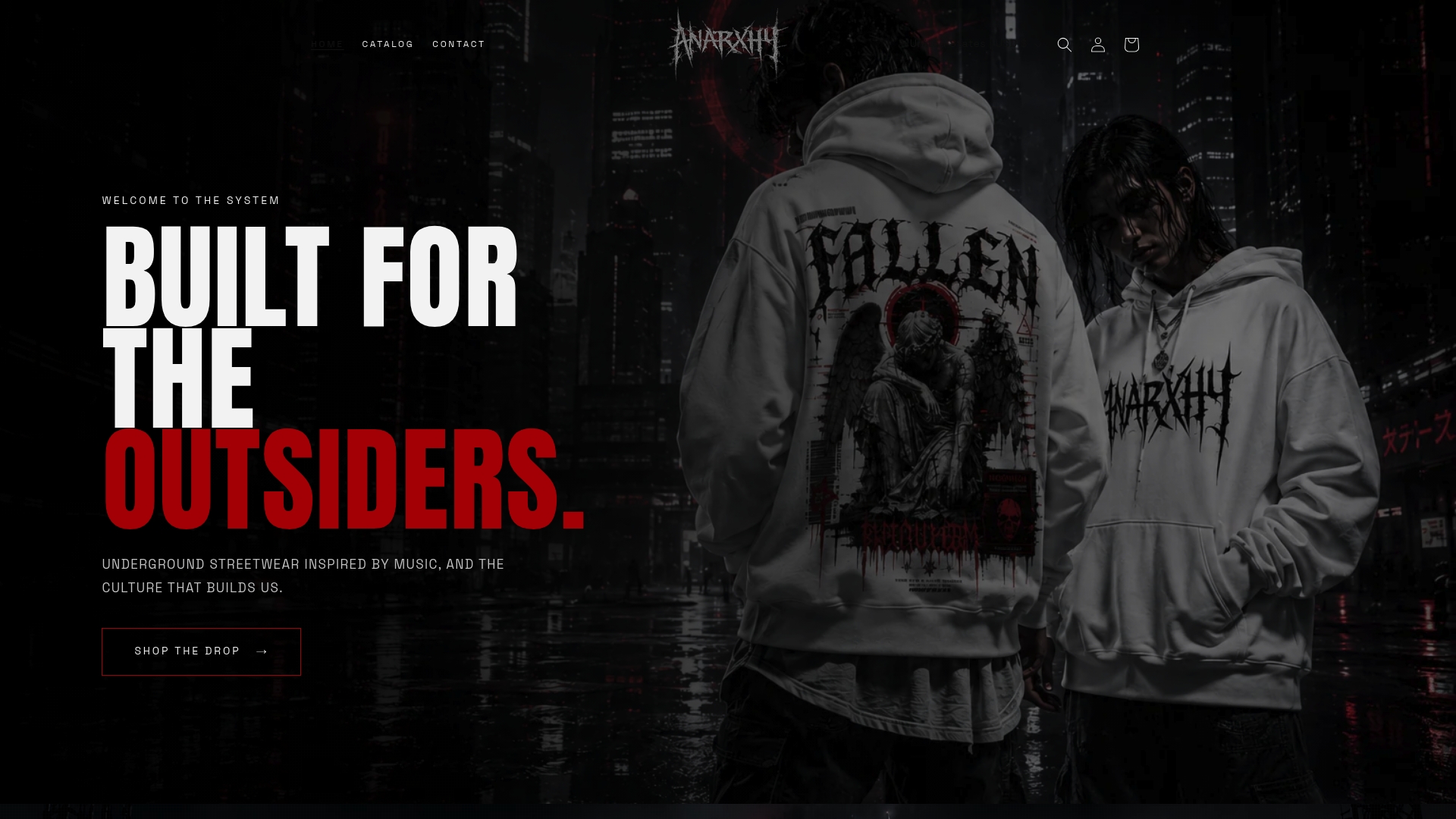
Anarxhy’s unisex hoodies are built for exactly this kind of creative use. The DIGITAL DECAY hoodie gives you a clean, quality foundation that takes paint, patches, and embellishments without losing its structure. The SYSTEM ERROR hoodie carries Anarxhy’s dystopian aesthetic out of the box, making it a strong starting point for electronic or punk-adjacent DIY projects. Both are made with eco-friendly materials, so your creative work sits on a garment that aligns with the values behind the DIY ethos itself. Anarxhy drops limited quantities, so the piece you customize stays genuinely rare.
FAQ
What are the easiest types of DIY music-inspired clothing to start with?
Vintage band tee modifications are the most accessible starting point. Cropping, bleach tie-dye, and overdyeing require minimal tools and produce strong results on a first attempt.
How much does a DIY concert outfit typically cost?
A rhinestone-heavy DIY stage outfit costs under $50 using thrifted base garments and bulk embellishments, completable within three days. Simpler projects like distressed denim or embroidered folk pieces cost even less.
How do I make DIY clothing durable enough for concerts?
Secure heavy hardware using industrial-strength fabric adhesive followed by hand-stitching or rivet pressing. Glue alone fails under the friction and heat of active concert use.
What is the difference between a costume and a curated music outfit?
A costume copies a specific artist’s look directly. A curated music outfit uses genre-aligned color palettes, silhouettes, and custom details to signal subculture knowledge without replicating any one person’s style.
How do I test if my DIY outfit will hold up at a show?
Wear the finished piece and move in it for at least 10 minutes, including sitting, walking, and dancing. Any embellishment that shifts or detaches during that test needs reinforcement before you wear it out.