

Unique clothing brands for artists are defined by three non-negotiable qualities: handcrafted or limited-edition production, a design philosophy rooted in artistic expression, and ethical sourcing that rejects the disposability of fast fashion. The industry term for this category is wearable art fashion, a segment where labels like Milana Marhel, Vidou London, and SAUVEREIGN operate. These brands treat each garment as an artifact, not a unit of inventory. If your wardrobe is an extension of your creative identity, the brands below are the ones worth knowing.
1. What makes unique clothing brands for artists different
Most clothing brands design for the broadest possible market. Artist-focused labels do the opposite. They design for a specific sensibility, then find the people who share it. The result is clothing that functions as a statement of values, not just a style choice.
The defining features of this category are exclusivity, collaboration, and production integrity. Made-to-order production has become the standard for serious artist brands, eliminating excess inventory entirely. That means every piece exists because someone wanted it, not because a factory needed to fill a run. For creatives who think carefully about what they consume and create, that distinction matters.
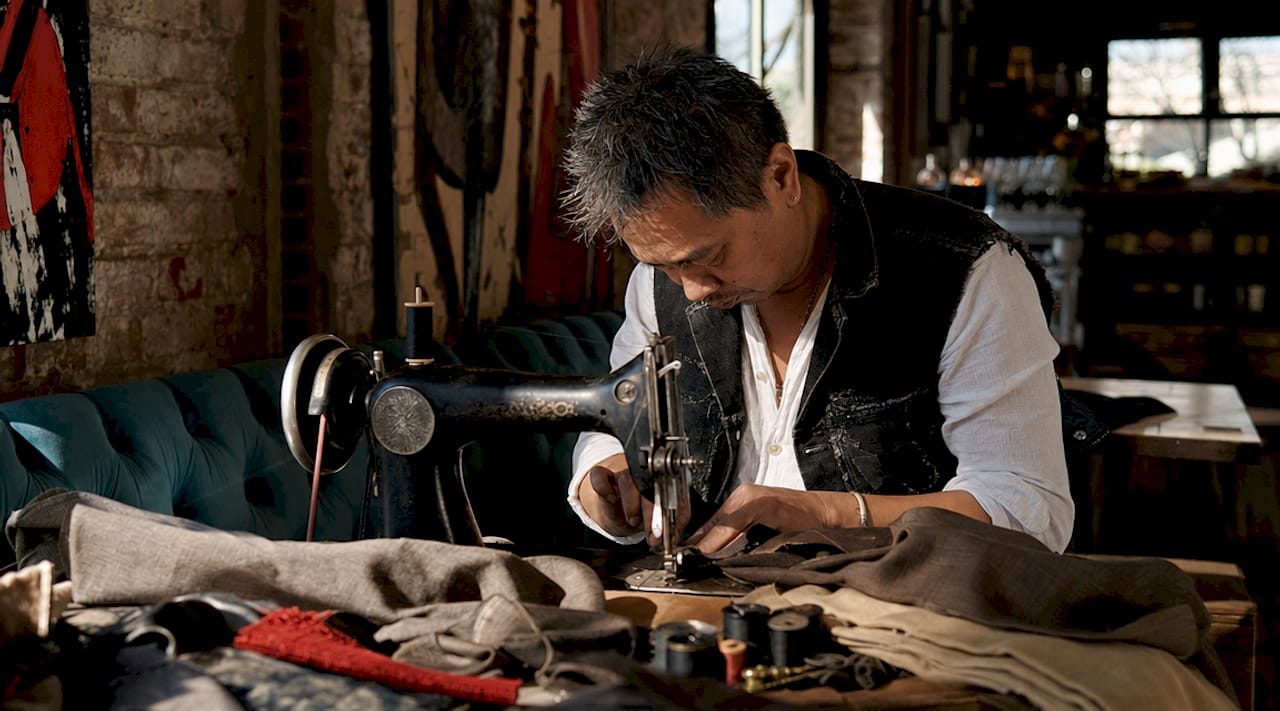
2. Milana Marhel: the apply-to-buy model
Milana Marhel operates one of the most unconventional purchasing systems in fashion. The brand uses an apply-to-buy model that requires prospective buyers to submit an application before purchasing. This filters the audience to people who are genuinely invested in the work, not casual shoppers chasing a trend.
The design philosophy matches the exclusivity of the process. Milana Marhel focuses on architectural silhouettes over visual complexity, building garments designed for versatility across social contexts. A piece works in a studio, at an opening, and on the street. That wearability is intentional, not accidental.
Pro Tip: If you apply to a brand like Milana Marhel and get accepted, treat the purchase as an investment. These pieces are produced in genuinely small runs and rarely reappear.
3. Vidou London: handcrafted limited editions
Vidou London, founded by costume designer Olivia Vidou, approaches fashion from the perspective of a working artist. The brand prioritizes material longevity over print novelty, selecting fabrics that age well and hold their shape after repeated wear in real studio and travel conditions. That is a fundamentally different standard than most clothing brands apply.
The sourcing philosophy reinforces this. Vidou London uses deadstock and natural fibers not only for sustainability but for how those materials perform over years of actual use. Luxury here is defined by durability and evolution, not by a logo or a price point. For artists who wear their clothes hard, that approach produces a wardrobe that improves with time.
4. SAUVEREIGN: where luxury meets fine art
SAUVEREIGN sits at the intersection of fashion and fine art in a way few labels attempt. The brand uses 24-carat gold leaf and master craftsmanship to produce pieces that belong as much in a gallery as on a body. Each collection is a limited production run, and the brand makes no apologies for the price point that level of craft demands.
For artists who work in visual media, SAUVEREIGN offers something rare: clothing that references the same material vocabulary as their own practice. Gold leaf, texture, and surface treatment are tools of the trade. Wearing them is a coherent extension of that sensibility.
5. Wildka: ethical production with a conservation commitment
Wildka builds its entire model around confirmed orders. No piece goes into production without a buyer, which means zero excess inventory by design. That is not a marketing claim. It is a structural commitment to eliminating waste at the source.
The brand also donates roughly 10% of gross profits to conservation and charitable initiatives. For artists who care about where their money goes after a purchase, that level of transparency is rare in fashion at any price point. Wildka proves that ethical production and strong design are not competing priorities.
6. Galartsy: affordable artistic clothing with real access
Not every artist-focused brand requires a luxury budget. Galartsy operates as a platform for art-inspired clothing and gifts, offering first-order discounts and seasonal sales that bring prices down by 33% to 45%. That range makes genuine artistic fashion accessible to creatives who are earlier in their careers or working with tighter budgets.
The trade-off is that Galartsy operates at higher volume than labels like Milana Marhel or Vidou London. The pieces are less exclusive, but the design sensibility remains artist-driven. For building a wardrobe that reflects creative values without committing to investment-level purchases, it is a practical starting point.
7. Anarxhy: streetwear built on the outsider ethos
Anarxhy occupies a specific and underserved position in the clothing lines for creatives space. The brand is built around an outsider identity, drawing on music, rebellion, and dystopian aesthetics to produce streetwear that rejects mainstream fashion entirely. The “Signal Lost” series is the clearest expression of that philosophy, with designs that read as cultural commentary as much as clothing.
What separates Anarxhy from generic streetwear labels is the combination of eco-friendly materials and exclusive limited drops. The brand does not chase volume. It builds community among people who feel disconnected from mainstream culture, and the clothing reflects that. You can explore how graphics shape streetwear identity to understand why Anarxhy’s visual language hits differently than mass-market alternatives.
8. How sustainable production practices define these brands
The brands in this category share a production philosophy that mainstream fashion has largely ignored. The list below captures the core practices that separate ethical artist labels from conventional apparel companies.
- Made-to-order manufacturing. Every confirmed order triggers production. No speculative inventory, no end-of-season clearance, no landfill contribution.
- Deadstock and natural fiber sourcing. Materials are chosen for longevity and real-world performance, not just environmental optics.
- Small production runs. Volume is deliberately capped to preserve the integrity of each piece as a limited artifact.
- Profit allocation to causes. Brands like Wildka direct a percentage of revenue to conservation or humanitarian work, making each purchase a contribution beyond the garment itself.
- Craftsmanship over speed. Production timelines are longer because quality is the constraint, not throughput.
“Luxury in creative fashion is rooted in sourcing natural fibers and deadstock fabrics for long-lasting wearable art that evolves with the wearer.” — Vidou London
Understanding upcycled streetwear concepts gives you a clearer picture of how these production choices translate into actual garments and why they matter beyond the marketing language.
9. Style and design features that appeal to artists
The design language of artist-focused brands follows consistent principles. The table below compares the approach of wearable art fashion against conventional streetwear and fast fashion.
| Feature | Wearable art fashion | Conventional streetwear | Fast fashion |
|---|---|---|---|
| Silhouette focus | Architectural, structured | Logo-driven, graphic-heavy | Trend-reactive |
| Production scale | Limited runs or made-to-order | Seasonal bulk production | Mass production |
| Material standard | Natural fibers, deadstock | Mixed synthetics | Low-cost synthetics |
| Design lifespan | Seasons to years | One to two seasons | Weeks to months |
| Cultural reference | Art history, personal narrative | Music, sport, pop culture | Current trend cycles |
The pattern is clear. Designer apparel for artists prioritizes longevity and meaning over novelty. Architectural silhouettes work across contexts because they are not dependent on a single trend moment. A well-constructed piece from Vidou London or Milana Marhel remains relevant because the design is not tied to a specific cultural instant.
10. How to choose the right brand for your style and values
Choosing among the best brands for artist outfits requires matching a brand’s production model and design philosophy to your own priorities. The questions below cut through the noise.
- What is the production model? Made-to-order and apply-to-buy systems signal genuine commitment to exclusivity. High-volume platforms offer access but less rarity.
- What materials does the brand use? Natural fibers and deadstock indicate quality and sustainability. Synthetic blends at low price points usually mean the opposite.
- Does the design philosophy match your practice? A painter who works with texture and surface will connect differently with SAUVEREIGN than a musician who identifies with Anarxhy’s outsider ethos.
- What is the entry point? Galartsy offers seasonal discounts of 33% to 45%. Anarxhy drops limited pieces at streetwear price points. Vidou London and SAUVEREIGN require a larger investment.
- Does the brand give back? Wildka’s 10% profit donation model is a benchmark. If a brand makes ethical claims without structural commitments, treat those claims skeptically.
Pro Tip: Before committing to a full-price purchase from a new label, check whether they offer a first-order discount. Many specialized artist brands offer 10% off your first order, which is worth capturing before you buy.
Understanding how to find underground fashion brands that are authentic rather than performatively niche will save you time and money when building a wardrobe that actually reflects your identity. For artists interested in luxury segments, Moreci Store is worth exploring as a source for lasting, evolving wardrobe pieces.
Key takeaways
The most effective approach to finding unique clothing brands for artists is to evaluate production model, material quality, and design philosophy before price.
| Point | Details |
|---|---|
| Made-to-order is the standard | Brands like Wildka eliminate excess inventory entirely by producing only confirmed orders. |
| Apply-to-buy preserves exclusivity | Milana Marhel’s model ensures pieces reach genuinely interested owners, not mass-market buyers. |
| Material quality defines longevity | Vidou London selects deadstock and natural fibers for how they perform over years, not just seasons. |
| Sustainable ethics are structural | Wildka’s 10% profit donation and Anarxhy’s eco-friendly materials show commitment through systems, not slogans. |
| Budget access exists | Galartsy’s 33% to 45% seasonal discounts make artistic fashion accessible at entry-level price points. |
Why wearable art fashion is worth the investment
I have spent years writing about fashion, and the single most consistent mistake I see creatives make is treating clothing as an afterthought while spending serious money on every other tool of their practice. A painter invests in quality pigments. A musician invests in a good instrument. The logic of investing in clothing that reflects your creative identity is identical, yet most artists default to whatever is cheapest and most available.
The brands in this guide are not selling you a product. They are selling you a position. When Milana Marhel requires an application to buy, that is not pretension. It is a signal that the piece you receive has been protected from casual consumption. When Vidou London selects a fabric for how it ages in a studio, that is a designer thinking about your life, not a trend cycle.
What I find most interesting about this category in 2026 is that sustainability and artistry have stopped being separate conversations. The brands doing the most interesting design work are also the ones with the most rigorous production ethics. That is not a coincidence. The same discipline that produces a well-constructed garment also produces a well-considered supply chain. Anarxhy’s limited drops and eco-friendly materials are a direct expression of that convergence. The role of identity in fashion has never been more legible in the actual structure of how clothes are made.
— Johnathan
Dress like the work you make
Anarxhy was built for exactly the kind of creative this guide is written for. The brand’s outsider ethos, dystopian aesthetics, and limited drops are not a marketing angle. They are a genuine design philosophy that treats clothing as cultural statement.
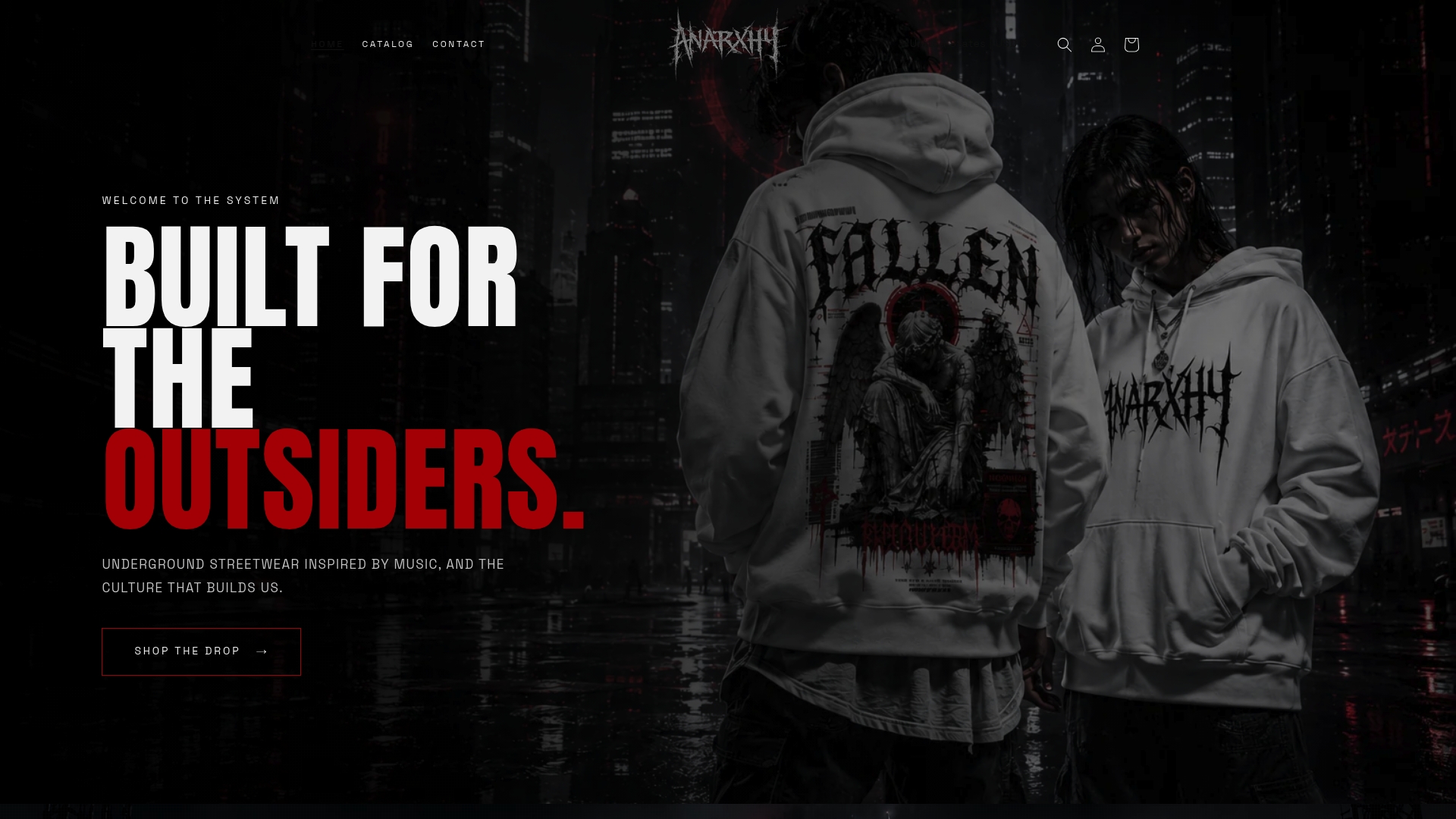
The DIGITAL DECAY DNR hoodie is one of the clearest expressions of that philosophy in a single piece. Constructed from eco-friendly materials and released in limited quantities, it is the kind of garment that does not show up in every closet. The FALLEN//001 hoodie carries the same ethos with a different visual language. If you want to see what is dropping now, the new arrivals collection is where Anarxhy puts its most current work. Browse it before the run sells out.
FAQ
What defines a unique clothing brand for artists?
A unique clothing brand for artists is defined by limited or made-to-order production, a design philosophy rooted in artistic expression, and ethical sourcing that prioritizes material quality over volume. Brands like Milana Marhel and Vidou London are the benchmark examples of this category.
Are artist-focused clothing brands affordable?
Some are. Galartsy offers first-order discounts and seasonal sales that reduce prices by 33% to 45%, making artistic fashion accessible at entry-level budgets. Brands like Anarxhy also release pieces at streetwear price points with limited drops.
What is an apply-to-buy model in fashion?
An apply-to-buy model requires prospective customers to submit an application before purchasing, ensuring pieces reach genuinely interested owners rather than casual buyers. Milana Marhel pioneered this approach to protect the integrity of small production runs.
Why do artist brands use made-to-order production?
Made-to-order production eliminates excess inventory entirely by triggering manufacturing only after a confirmed order. This model reduces waste, preserves exclusivity, and aligns with the ethical production standards that define serious wearable art fashion labels.
How do I find authentic underground clothing brands as an artist?
Start by evaluating production transparency, material sourcing, and whether the brand has a clear design philosophy beyond aesthetics. Brands with structural ethical commitments, such as profit donations or confirmed-order manufacturing, are more likely to be genuine than those making vague sustainability claims.