

Band merch culture is the practice of wearing and collecting band merchandise to signal identity, claim community membership, and express a lived relationship with music. It goes far beyond buying a T-shirt at a show. The phenomenon sits at the intersection of cultural psychology, subcultural belonging, and a music economy that increasingly depends on direct fan support. Understanding what band merch culture means reveals why a worn-out concert tee carries more weight than almost any item in a fan’s closet, and why artists treat merch as both a creative statement and a financial lifeline.
What does band merch culture mean for identity and cultural capital?
Band merch culture is, at its core, a system of cultural signaling. Fans buy merch not for clothing needs but to claim membership in a musical community. That distinction matters. The transaction is less about fabric and more about belonging.
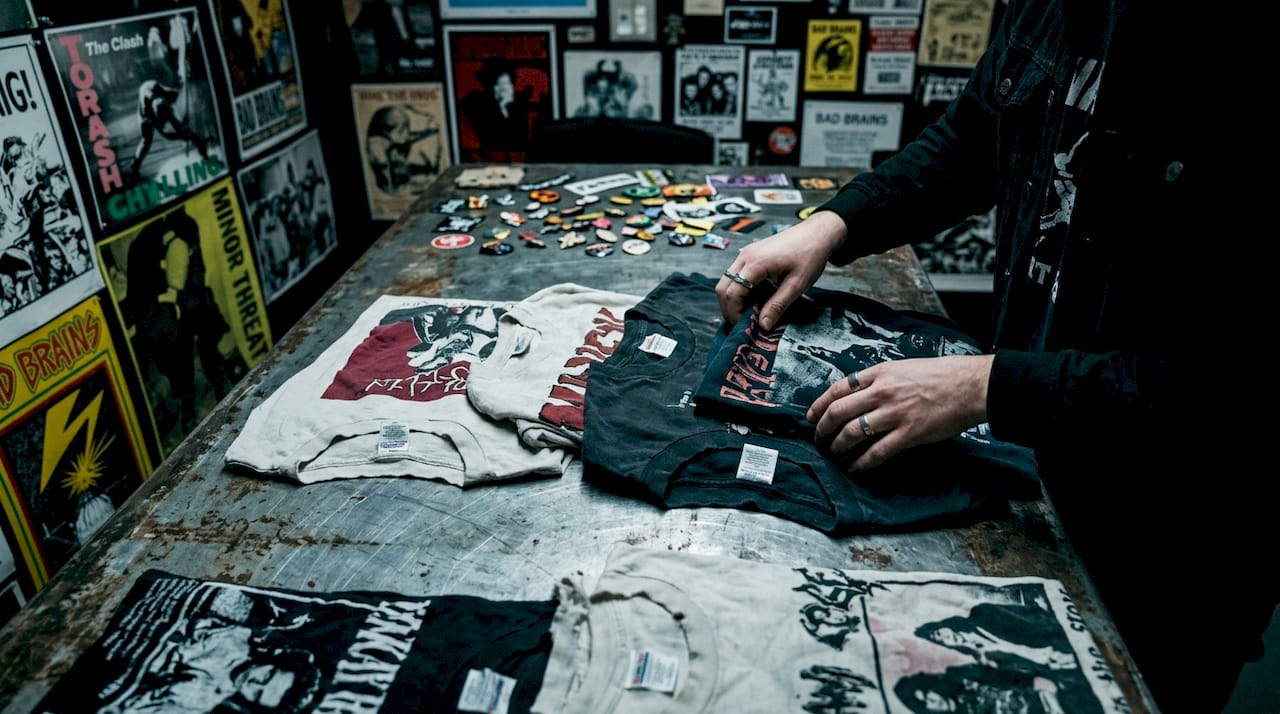
Sociologists call this kind of signaling “cultural capital.” When you wear a band tee, you broadcast taste, values, and tribal affiliation without saying a word. Psychologists describe a related effect called “enclothed cognition,” where clothing actively shapes the wearer’s self-perception and behavior. Wearing a band’s shirt does not just tell others who you are. It reminds you.
The most powerful merch tends to avoid loud, obvious branding. Subtle, insider designs create in-group recognition that only fellow fans can decode. A cryptic lyric printed small on a black tee means nothing to a stranger and everything to someone who knows the record. That quiet exclusivity is the point.
There is also a meaningful difference between performative merch and identity-embedded merch. Performative merch is worn once for a photo. Identity-embedded merch gets washed until the print cracks, worn to unrelated places, and kept for years. The latter is what band culture and merchandise scholars and fans alike recognize as the real artifact.
- Merch signals taste and tribal affiliation without verbal communication.
- Enclothed cognition means the clothing shapes how the wearer feels, not just how others perceive them.
- Insider designs reward fans who know the music deeply, creating layered in-group recognition.
- Authentic merch accumulates meaning over time, becoming a personal artifact rather than a product.
Pro Tip: Buy merch that references something specific to the music, a lyric, an album detail, or a tour date. Generic logo merch fades in cultural value. Specific merch grows in meaning.
What is the economic importance of band merch today?
Merch has become one of the most critical revenue streams in the modern music industry. Music merchandise can account for an average of 70% of an artist’s revenue and generates 8x more gross profit per live show than streaming royalties. That number reframes the entire conversation about how artists survive financially.
Streaming pays fractions of a cent per play. A single merch sale at a show can equal thousands of streams in artist income. A $35 merch T-shirt equals approximately 8,750 Spotify streams in artist revenue. That comparison makes the importance of band merch impossible to ignore.
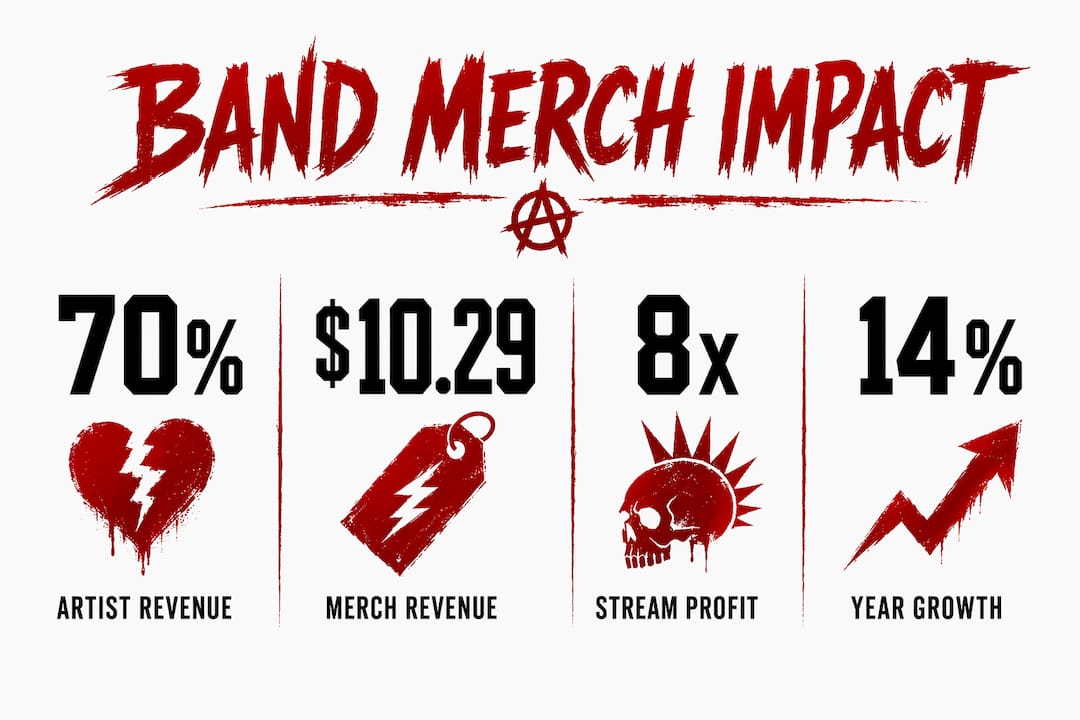
The numbers at live shows reflect this shift. Average merch revenue per head at live shows reached $10.29 in 2025, a 14% increase from 2024. Fans are spending more per show, and artists are designing products worth that spend.
| Metric | Figure |
|---|---|
| Merch share of artist revenue | Up to 70% |
| Gross profit vs. streaming per show | 8x more from merch |
| Avg. merch revenue per fan at live shows (2025) | $10.29 |
| Equivalent streams for a $35 merch tee | ~8,750 Spotify streams |
| Los Campesinos! shirts sold across 11 shows | 2,200+ |
Merch profit often determines tour viability for artists, providing post-show income that keeps careers moving. Los Campesinos! selling over 2,200 shirts across 11 shows is not an outlier. It is the model. Artists who treat merch as a creative extension of their music, rather than a souvenir afterthought, build the financial foundation that lets them keep touring.
The shift from generic logo merch to design-led, community-specific products reflects this maturity. Fans respond to merch that feels like it belongs to the music’s world, not just the artist’s name.
How does band merch build community and belonging among fans?
Merch functions as a membership card. Band merch functions as a community identifier across venues and everyday life, sparking recognition between strangers who share the same musical history. That recognition is not trivial. It is the starting point for real human connection.
“Merch collapses art, identity, and commerce, allowing fans to feel entitled to cultural ‘rooms’ where meaning is made. It is not just clothing. It is a claim on shared experience.”
The social mechanics of merch work on several levels. A fan wearing a shirt from a 2019 tour signals not just taste but presence. They were there. That specificity creates instant credibility and opens conversations that would not otherwise happen between strangers.
Here is how merch builds community across different fan contexts:
- At shows: Merch creates immediate visual tribe formation. Fans scan the crowd for familiar designs and feel less alone before the first note plays.
- In everyday life: Wearing merch outside of music contexts invites recognition from other fans. A chance encounter over a shared band can become a lasting friendship.
- Online: Fans photograph and share merch as a form of cultural participation. The item becomes content, extending the community into digital spaces.
- Over time: Merch accumulates personal history. A shirt worn to a first concert, a formative show, or a difficult period becomes a wearable memory that connects the fan to a specific moment in their life.
Merch gains true cultural power only after “time-distance,” when it shifts from commodity to personal artifact signifying genuine fan experience. That transformation is what separates a meaningful piece of band culture and merchandise from a product that ends up in a donation bin. The role of identity in fashion is never more visible than in the way fans treat their most treasured merch.
What trends and ethical issues are shaping band merch culture in 2026?
The most significant shift in merch culture right now is the move toward design-led, context-rich products among younger fans. Generic logo tees no longer carry the cultural weight they once did. Fans under 35 want merch that reflects the aesthetic world of the music, not just the artist’s name in a font.
This preference connects directly to band merchandise significance in subculture fashion. Merch that references specific albums, visual motifs, or community-specific references earns loyalty. Merch that feels mass-produced loses it.
Ethical concerns are growing alongside this aesthetic shift. The practice of weaponized scarcity, where artists release extremely limited drops to trigger panic-buying, is drawing criticism from fans and industry observers alike. Ethical merch strategies avoid weaponized scarcity and focus on genuine connection and sustainable fan relationships. Scarcity can build hype once. Trust builds a career.
- Design specificity: Fans reward merch that references the music’s visual and lyrical world, not just the artist’s brand.
- Sustainable pricing: Overpriced merch alienates the core fans who matter most to long-term artist sustainability.
- Fan co-creation: Artists who involve fans in merch design, through polls, community input, or limited fan-made editions, build deeper loyalty.
- Ethical scarcity: Limited drops are valid. Manufactured panic is not. The difference lies in whether the scarcity serves the art or just the sales figure.
- Eco-conscious materials: Fans increasingly expect merch to reflect the values they associate with the music, including environmental responsibility.
Pro Tip: If you are an artist building a merch strategy, price for your actual fan base, not for the resale market. Fans who can afford your merch at a fair price become long-term advocates. Fans priced out become resentful.
Artists turn to merch as a business channel that builds direct, sustainable relationships beyond streaming algorithm volatility. The artists who get this right treat merch as an extension of their artistic identity, not a revenue extraction tool.
Key Takeaways
Band merch culture is a system of identity, community, and economic exchange where the most meaningful pieces transcend commerce and become personal artifacts that connect fans to music, memory, and each other.
| Point | Details |
|---|---|
| Identity signaling | Fans wear merch to signal cultural membership and values, not just to cover clothing needs. |
| Economic weight | Merch can account for up to 70% of artist revenue and earns 8x more gross profit per show than streaming. |
| Community building | Merch functions as a membership card, sparking fan recognition and connection across venues and daily life. |
| Cultural artifact over time | Merch gains its deepest meaning after years of wear, shifting from product to personal memory. |
| Ethical merch matters | Fair pricing, design specificity, and avoiding manipulative scarcity tactics build lasting fan trust. |
Why merch culture is more than nostalgia
I have spent years watching fans treat certain pieces of merch with a reverence that has nothing to do with the item’s monetary value. A faded shirt from a club show that no longer exists. A hoodie from a tour that ended a band’s run. These things do not belong in the same category as branded merchandise. They are closer to photographs.
What strikes me most about band merch culture is how badly the commerce side misreads it. The assumption is that fans want more product, more drops, more limited editions. What fans actually want is meaning. They want to feel that the item connects them to something real, something the artist made with intention and the fan received with genuine feeling.
The brands and artists who understand this produce less and mean more. They price fairly because they respect the people buying. They design specifically because they know their audience is paying attention. Anarxhy operates from exactly this position. The “Signal Lost” series is not a product line. It is a statement about who the wearer is and what they reject.
The risk in merch culture right now is over-commercialization. When every artist has a merch drop timed to an algorithm, the signal gets noisy. Fans start to feel like targets rather than community members. The solution is not less merch. It is more honesty about what the merch is for.
— Johnathan
Anarxhy and the merch that actually means something
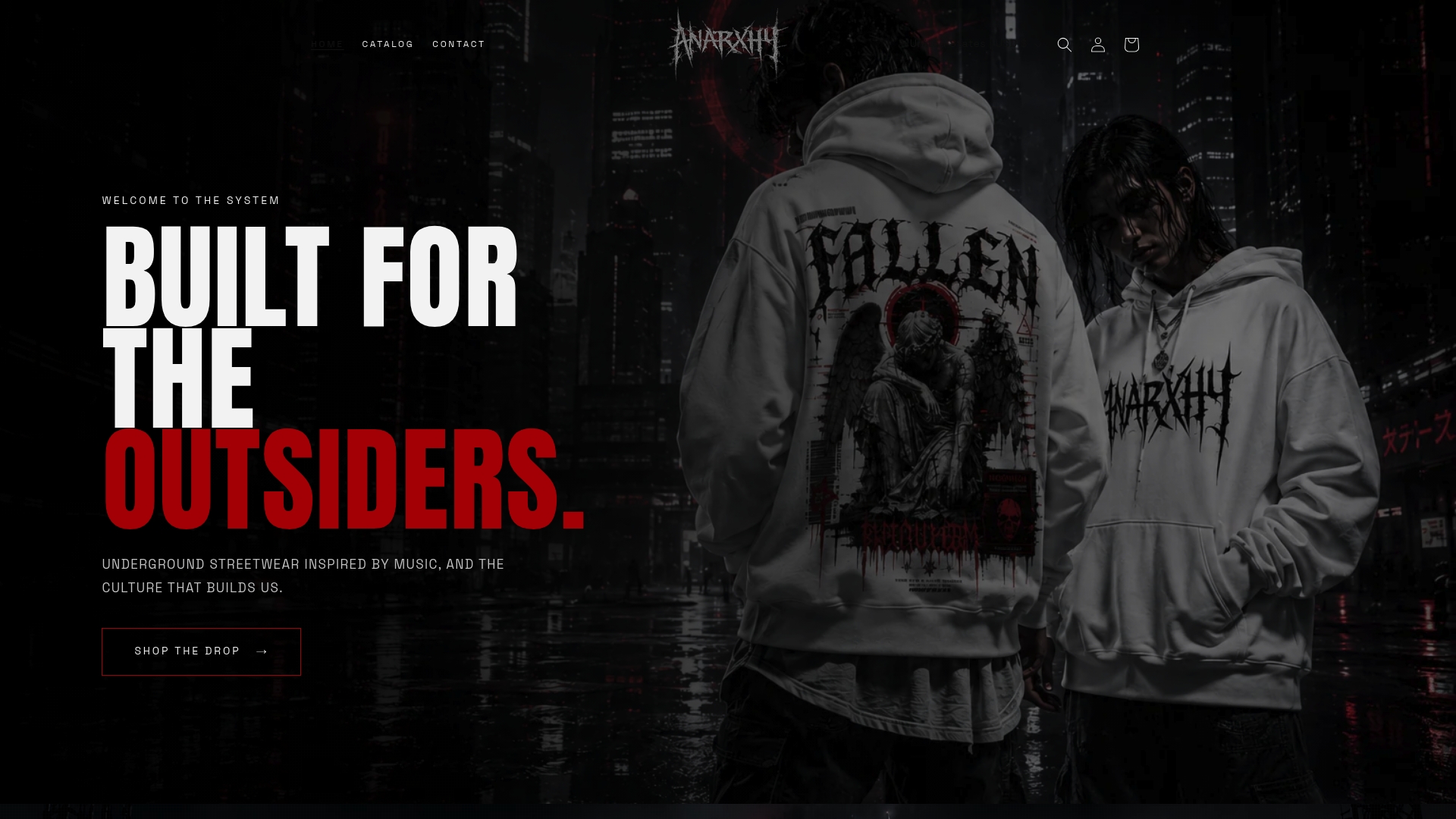
Anarxhy builds merch for fans who are done with generic. Every piece in the collection, including the limited “Signal Lost” series, is designed to reflect the outsider ethos that drives the brand. The materials are eco-friendly. The designs are specific. The drops are intentional, not manufactured panic.
If you are looking for band-inspired streetwear that carries real cultural weight, the Anarxhy store is the place to start. The new arrivals collection brings fresh pieces that speak to fans who wear their identity without apology. This is merch built for people who know the difference between a product and an artifact.
FAQ
What does band merch culture mean?
Band merch culture is the practice of wearing and collecting band merchandise to express identity, signal community membership, and maintain an emotional connection to music. It functions as a system of cultural signaling that goes well beyond fashion or commerce.
Why is band merch so important to artists financially?
Merch can account for up to 70% of an artist’s revenue and generates 8x more gross profit per live show than streaming royalties. A single $35 T-shirt sale equals approximately 8,750 Spotify streams in artist income.
How does band merch create community among fans?
Band merch acts as a visual membership card, helping fans recognize each other at shows and in everyday life. Shared merch sparks conversations, signals common values, and builds the kind of in-group recognition that strengthens fan communities over time.
What makes band merch culturally significant beyond its design?
Merch gains its deepest cultural value through time and personal experience. A shirt worn to a formative show becomes a wearable memory, shifting from a purchased product to a personal artifact that marks a specific moment in a fan’s life.
What ethical issues affect band merch culture today?
Weaponized scarcity, where artists manufacture panic-buying through artificially limited drops, is the most criticized practice in modern merch culture. Ethical merch strategies prioritize fair pricing, genuine design intent, and fan trust over short-term sales spikes.